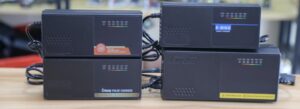
A battery charger factory audit should verify whether the supplier can reproduce an approved charger consistently—not just whether the workshop looks busy. Buyers should trace one product from incoming materials through SMT/DIP and PCBA inspection, assembly, electrical testing, dielectric withstand, full-load burn-in, final order verification and packing. They should also review calibration, records, traceability, change control, nonconformance handling and the connection between sample approval and mass production.
The strongest battery charger factory audit follows real evidence: an approved specification, the corresponding bill of materials and work instructions, production and test records, labelled material and finished-goods status, and operators performing the defined process.
What a Charger Factory Audit Must Prove
A factory tour answers only one question: what is visible today? A procurement audit must answer a harder question: can this manufacturer repeatedly build and release the exact charger your project approved?
That requires evidence in four connected areas:
- Capability: the factory has the people, equipment and controlled processes required for the product.
- Consistency: production follows approved specifications instead of undocumented operator knowledge.
- Verification: electrical and safety-related checks are defined, performed and recorded.
- Change control: materials, firmware, PCB, housing, cable, connector, label or packing cannot change without review.
Use the Linjia battery charger factory overview as a reference for the manufacturing areas that should be visible during a charger-specific audit.
Battery Charger Factory Audit Decision Matrix
| Audit area | Evidence to request | What a strong result looks like | Red flag |
|---|---|---|---|
| Specification control | Approved drawing, electrical specification, BOM and sample record | Documents identify the same revision and product configuration | Operators rely on a photo or memory |
| Incoming control | Inspection criteria, lot status and supplier records | Critical parts are identified and accepted before use | Unlabelled or mixed-status materials |
| PCBA process | SMT/DIP flow, inspection points and process records | Components, soldering, polarity and workmanship are checked | No link between board revision and finished unit |
| Assembly control | Work instructions, torque or wiring criteria, in-process checks | Connector, cable, housing and thermal assembly match the specification | Uncontrolled rework at the line |
| Finished testing | Test plan, limits, equipment status and records | Output and operating status are verified against approved limits | Only power-on or indicator check |
| Safety-related testing | Dielectric withstand or insulation procedure and result records | Applicable units are tested with defined settings and disposition | Equipment present but no usable records |
| Burn-in | Load conditions, duration, monitoring and failure disposition | Full-load burn-in follows a documented project or product plan | Units sit on a rack without defined load evidence |
| Final release | Order checklist, labels, accessories and packing approval | Product and shipment details are matched to the purchase order | Electrical model is right but connector or label is wrong |
1. Begin With Document and Revision Control
Ask the supplier to select one current charger model or your pilot sample and show the controlled documents used to build it. The drawing, electrical specification, bill of materials, PCB revision, firmware or charging-program version, connector pinout, label and packing specification should point to the same approved configuration.
Then compare those documents with the workstations and a physical unit. A polished document system has little value if the production line uses an older printout, an unapproved substitute or undocumented settings.
For a custom project, confirm who can approve changes and how the buyer is notified. The custom battery charger development process should connect sample approval to a locked production specification.
2. Audit Incoming Material Control
Charger consistency starts before assembly. During a battery charger factory audit, review how the factory receives, identifies, inspects and releases PCBs, electronic components, transformers, cables, connectors, housings, labels and packaging materials.
Useful evidence includes:
- Approved supplier or material specifications.
- Incoming inspection criteria for critical items.
- Lot, date or batch identification where applicable.
- Accepted, pending and rejected status labels.
- Storage controls for sensitive or easily mixed materials.
- A quarantine and disposition process for nonconforming material.
Choose a component from the line and trace it backward to its incoming status. Then choose a material in storage and trace it forward to the product or order that may use it. This two-way check is more informative than reviewing a blank inspection form.
3. Follow SMT, DIP and PCBA Inspection
For the electronic assembly stage, observe how component identity, placement, polarity, soldering and board revision are controlled. The exact flow can vary by product, but a battery charger factory audit should explain how the factory prevents the wrong component or wrong board revision from moving forward.

Ask where PCBA inspection occurs, what defects are checked, how failed boards are identified and who can authorize rework. Sample a repaired board and review whether the reason, action and reinspection are recorded. A high output count does not prove process control if rework is invisible.
4. Inspect Assembly, Potting and Housing Processes
At final assembly, compare the work instruction with the actual cable, connector, polarity, insulation, thermal interface, housing and fasteners. Look for fixtures or error-proofing that reduce dependence on operator memory.
If the product uses potting, ask how material identity, mixing, dispensing, curing and visual acceptance are controlled. If the supplier moulds housings in-house, review how the correct mould, resin, colour and appearance standard are identified. In-house capability can improve coordination, but it still requires controlled parameters and inspection.
Also check how work-in-process is labelled. Mixed models, loose labels or unlabeled rework near an assembly line create a practical configuration risk even when the written procedure looks complete.
5. Verify Finished Electrical Testing
A charger should not be released on the basis of a power indicator alone. During a battery charger factory audit, review the test plan and confirm which electrical parameters are checked for the selected product. These may include output voltage, charging current, operating status and charging-stage behaviour according to the approved specification.
Ask the auditor or quality engineer to select a finished unit, identify the current product revision, run the defined test and show how the result is recorded. The equipment display, test limit and record should agree. If a test fails, follow the unit through identification, analysis, rework and reinspection.
6. Check Dielectric Withstand and Insulation Controls
Dielectric withstand and insulation-related checks address a different risk from normal output testing. During the audit, verify the applicable procedure, test settings, fixture, operator authorization, equipment status and how pass or fail is recorded.
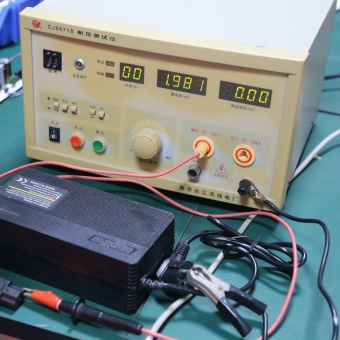
The presence of a tester is not enough. Ask which products require the test, at what stage it occurs, whether every applicable unit or a defined sample is tested, and what happens after a failure. The answer should match the approved product and quality plan rather than a generic factory statement.
7. Examine Full-Load Burn-in as a Controlled Process
Full-load burn-in is intended to operate chargers under defined load conditions so early abnormalities can be detected before packing. Audit the load, duration, monitoring method, unit identification and failure disposition. Do not assume that chargers placed on racks are undergoing a meaningful burn-in cycle.
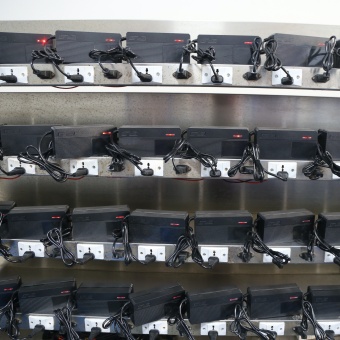
Review a completed batch record and select one unit or rack position. Confirm that its product model, quantity, start and finish status, and any abnormal result can be reconstructed. Ask how failures are separated and whether repaired units repeat the required checks.
8. Review Calibration and Test-Equipment Control
Test data is only useful when the equipment is suitable and its status is controlled. Sample the instruments used for electrical performance, dielectric withstand and other release checks. Review identification, calibration or verification status, due date and what the factory does when equipment is found outside acceptance.
Also compare the test equipment’s capability with the required product limits. A current calibration label does not prove that the fixture, software, range or resolution is appropriate for the charger being tested.
9. Test Traceability, Nonconformance and Corrective Action
Ask the factory to trace a finished charger or carton to the relevant order, product revision, production date or batch, inspection status and test records. Then reverse the exercise from a quality record to the affected units.
Review at least one real nonconformance example with sensitive customer information removed. A useful record should show the problem, containment, disposition, root-cause review when required, corrective action and verification. A factory that reports “no defects” but cannot show how it records problems is not demonstrating control.
The battery charger quality-control process provides a practical map of incoming, in-process, finished electrical, insulation-related, burn-in and final checks.
10. Separate Sample Approval From Mass-Production Approval
A good sample proves that one configuration can work. It does not prove that later batches will use the same materials, software, PCB, cable, connector, polarity, housing, label and test settings.
Before mass production, verify that the approved sample and all agreed details have been converted into controlled production documents. Ask how the supplier handles:
- Component substitution or supplier changes.
- PCB, transformer, firmware or charging-program revisions.
- Connector, cable, pinout or polarity changes.
- Housing, cooling, label or packaging changes.
- Buyer approval and revalidation requirements.
- Retention of golden samples or approved reference units.
Manufacturer’s view: Final testing can detect many defects, but it cannot replace configuration control. If the production specification is not locked to the approved sample, a passing test result may still belong to the wrong product variant.
11. Check Capacity With the Real Product Mix
In a battery charger factory audit, rated capacity should be evaluated against the product type, complexity, test time, changeover, yield, staffing and seasonal demand. Ask for the calculation behind the stated output and confirm which process is the constraint.
Linjia’s current approved company profile describes an approximately 10,000 m² operation with three SMT lines, two assembly lines, three injection-moulding units and annual capacity of about three million chargers. Those figures are useful context, but a buyer should still evaluate capacity for the exact model, test plan, order volume and delivery window.
Walk the battery charger manufacturing flow from incoming materials to finished-goods release and identify where your product will run, how changeovers are managed and what backup arrangements exist for critical equipment.
12. Audit Final Order Verification and Export Packing
The last audit stage should connect the finished charger to the purchase order. Sample cartons and verify model, electrical rating, connector, pinout, polarity, plug, cable, label, accessories, quantity and packaging. Confirm how mixed configurations are prevented and how final-release authority is assigned.
Export packing should also match the approved packing specification. Check carton markings, protective materials, accessory count and pallet or shipping requirements. A correct charger with the wrong connector, label or market plug is still a failed order.
Battery Charger Factory Audit Red Flags Buyers Should Not Ignore
- Documents, line labels and physical units show different revisions.
- Critical components or work-in-process have no clear status identification.
- The supplier refuses to trace a sampled unit to production and test records.
- Electrical testing is limited to power-on or LED indication.
- Dielectric withstand or burn-in equipment is shown, but no applicable settings or records can be produced.
- Rework is performed without identification, authorization or reinspection.
- Material, PCB, firmware or connector changes can be made without buyer review.
- Capacity statements are not connected to product mix, test time or current loading.
- Final inspection does not verify connector, polarity, label, plug and packing against the order.
Buyer Checklist for a Battery Charger Factory Audit
- Define the exact charger model, battery chemistry and project stage.
- Bring the latest approved specification, drawings and sample record.
- List critical-to-quality features: output, curve, BMS, connector, polarity, input, plug, housing and label.
- Request the manufacturing flow and quality plan in advance.
- Choose records and physical units by sampling instead of accepting only prepared examples.
- Trace at least one unit backward and one material forward.
- Witness electrical and safety-related tests for the selected product.
- Review a real nonconformance and change-control example.
- Confirm mass-production release criteria and buyer-approval points.
- Record owners and deadlines for each corrective action.
Frequently Asked Questions
How long should a battery charger factory audit take?
The required time depends on scope, factory size, product complexity and whether the audit includes record sampling and witnessed tests. Plan enough time to follow one product through the complete relevant flow rather than rushing through every workshop.
Is ISO 9001 certification enough to approve a charger supplier?
No. A current certificate can support the review, but buyers still need product-specific evidence: controlled specifications, actual manufacturing steps, applicable tests, traceability, change control and order release.
Should buyers audit before or after sample approval?
Either timing can be useful, but the strongest production-readiness audit uses an approved or near-final sample so the auditor can trace a real configuration into controlled documents and manufacturing records.
What test records should a buyer sample?
Sample records relevant to the product and approved plan, such as incoming inspection, PCBA or in-process checks, finished electrical testing, dielectric withstand or insulation checks, full-load burn-in, final inspection and shipment verification.
What is the biggest gap between a good sample and mass production?
Configuration consistency. The mass-produced charger must retain the approved electrical design, charging program, materials, connector, polarity, cable, housing, label and test limits unless a controlled change is reviewed.
Request Evidence Before a Battery Charger Factory Audit
Send Linjia Power your charger specification, battery and BMS requirements, connector details, target quantity and audit priorities. Ask for the relevant manufacturing flow, test plan or sample-approval process for your project, then use those documents to define the on-site or remote audit agenda. For a direct discussion, contact the Linjia team with the model and project stage.