72V Lead-Acid Battery Charger Manufacturerin China
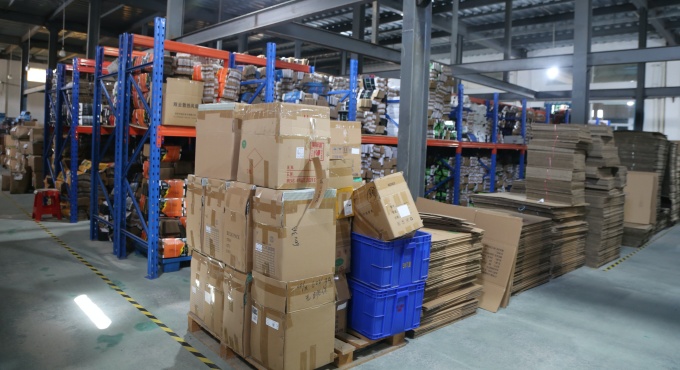
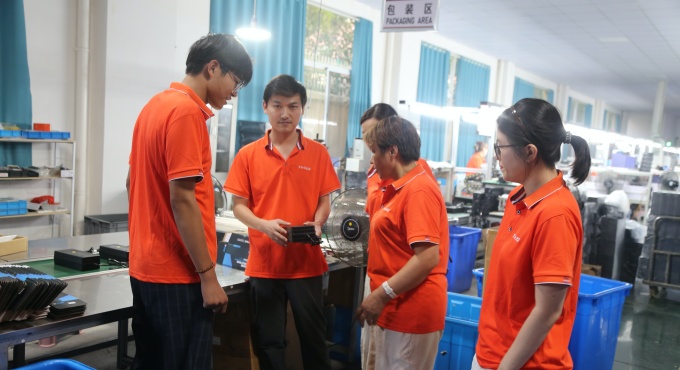
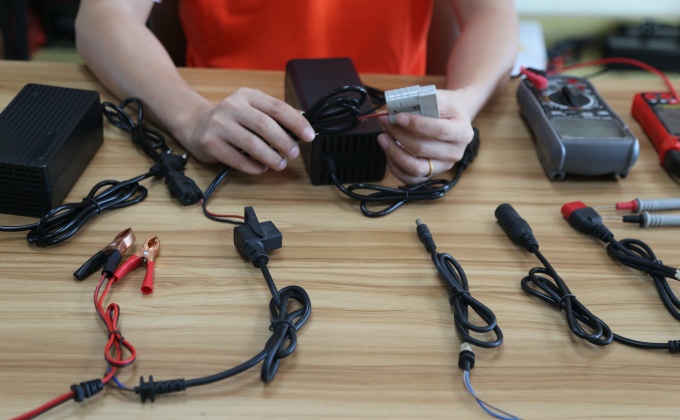
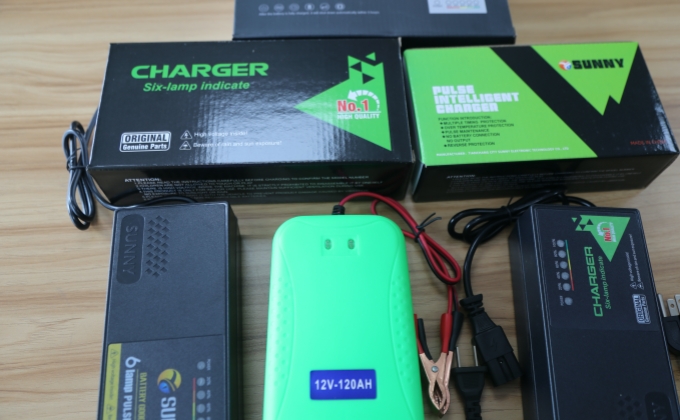
Linjia is a professional 72V lead-acid battery charger manufacturer supplying matched charging solutions for vehicle manufacturers, battery brands, importers, wholesalers, and distributors. Our catalog covers selected 72V 17–250Ah battery packs with 2.8A to 25A current options, including standard, battery-indicator, and high-current models. As a China-based manufacturer and supplier, we provide OEM and ODM services for charging specifications, input voltage, plugs, connectors, cables, housings, labels, and packaging, supported by controlled production and testing.
International Brands We Collaborate With



Professional 72V Lead-Acid Battery Charger Supplier in China
A 72V lead-acid battery charger should be selected from the complete battery specification, not from nominal voltage or a model name alone. Before recommending a model, Linjia confirms the lead-acid battery type, nominal voltage, full-charge voltage, capacity, recommended charging current, connector, polarity, and operating conditions. Our standard capacity-matched models cover selected 72V 17-70Ah packs with 2.8A, 3.5A, 4.0A, 5.0A, and 6.8A options. For larger packs, the 72V10A, 72V15A, and 72V25A models cover selected 70-100Ah, 100-150Ah, and 170-250Ah ranges respectively.
Different product formats address different purchasing requirements. MX7220 is a battery-indicator model rated at 2.8A for selected 17-24Ah packs. Standard and high-current 72V lead-acid models have a catalogued DC 72-88.8V output range, while MX7220 is listed at DC 88.2-88.8V. Final output voltage, current, and charging logic are checked against the battery manufacturer's requirements rather than inferred from the nominal 72V label alone.
This charger family can be configured for AC 110V, AC 220V, or AC 110-220V input at 50-60Hz. Regional plugs, output connectors, cable lengths, polarity, and pin definitions can be matched to the buyer's equipment and destination market. The catalogued operating-temperature range is -20°C to +50°C, but ambient heat, ventilation, dust, humidity, grid fluctuation, installation position, and charging duration must still be evaluated for the real application.
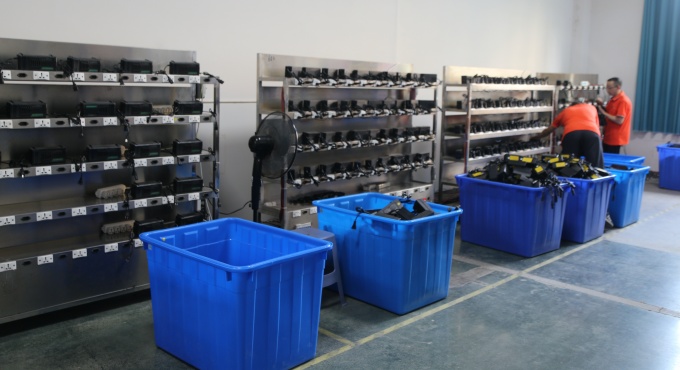
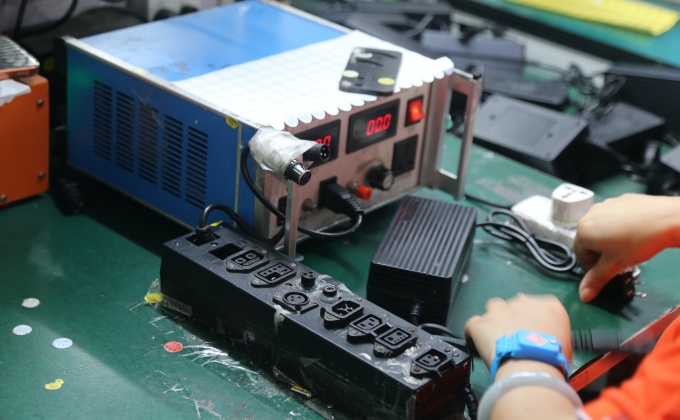
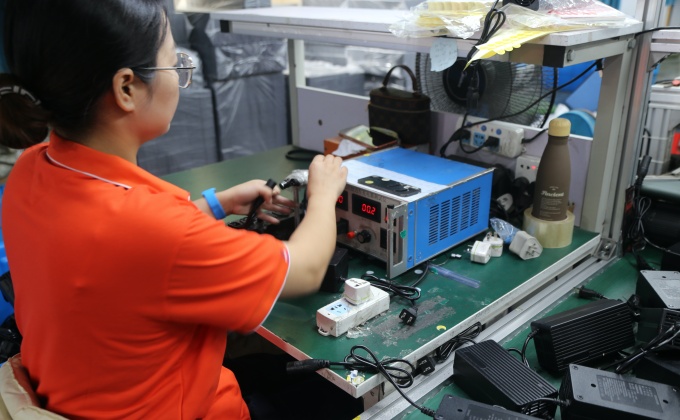
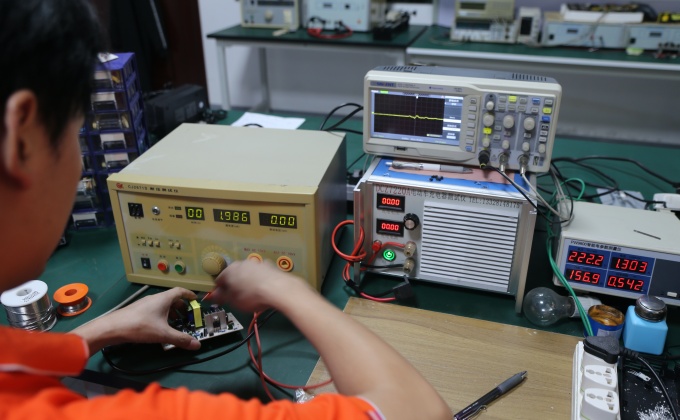
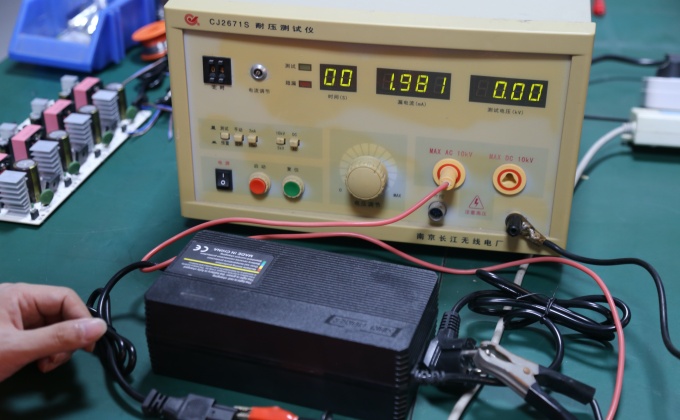
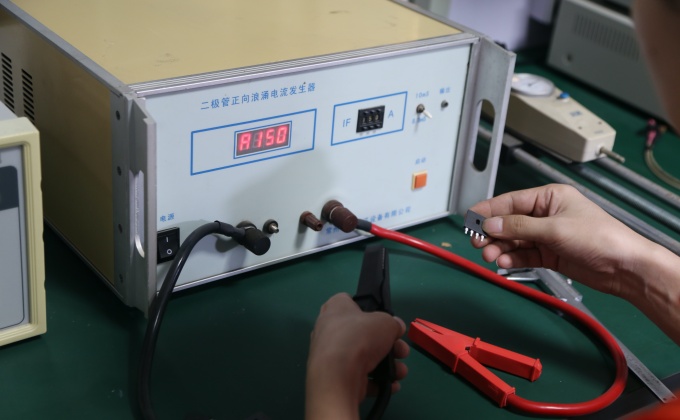
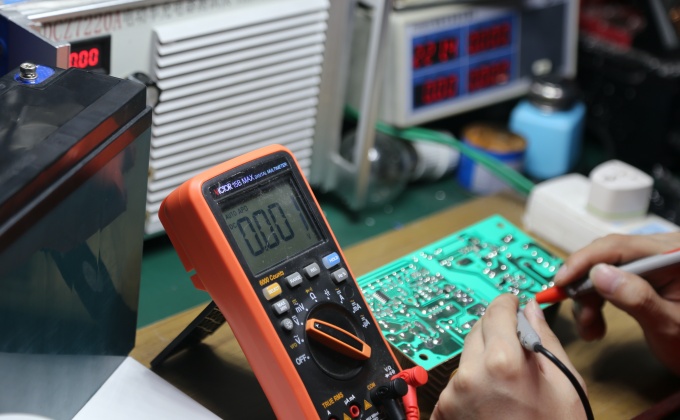
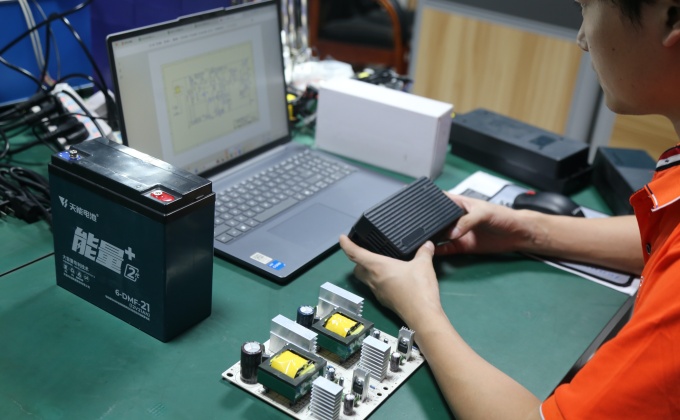
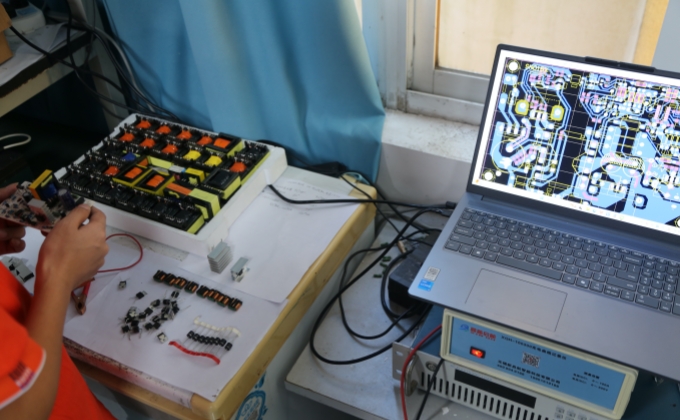
Linjia supports OEM and ODM 72V battery charger projects for electric two-wheelers, E-rickshaws, mobility and utility equipment, battery brands, and distribution channels. Depending on the model, listed functions include pulse maintenance, battery thermal-runaway prevention, over-temperature protection, multiple timing protection, soft start, reverse-connection protection, short-circuit protection, intelligent pulse, automatic power-off, and battery-level indication. Exact functions are confirmed model by model. Production control includes incoming-material inspection, PCB and semi-finished-product testing, finished-product electrical testing, high-voltage insulation testing, connector and polarity verification, and full-load burn-in testing.
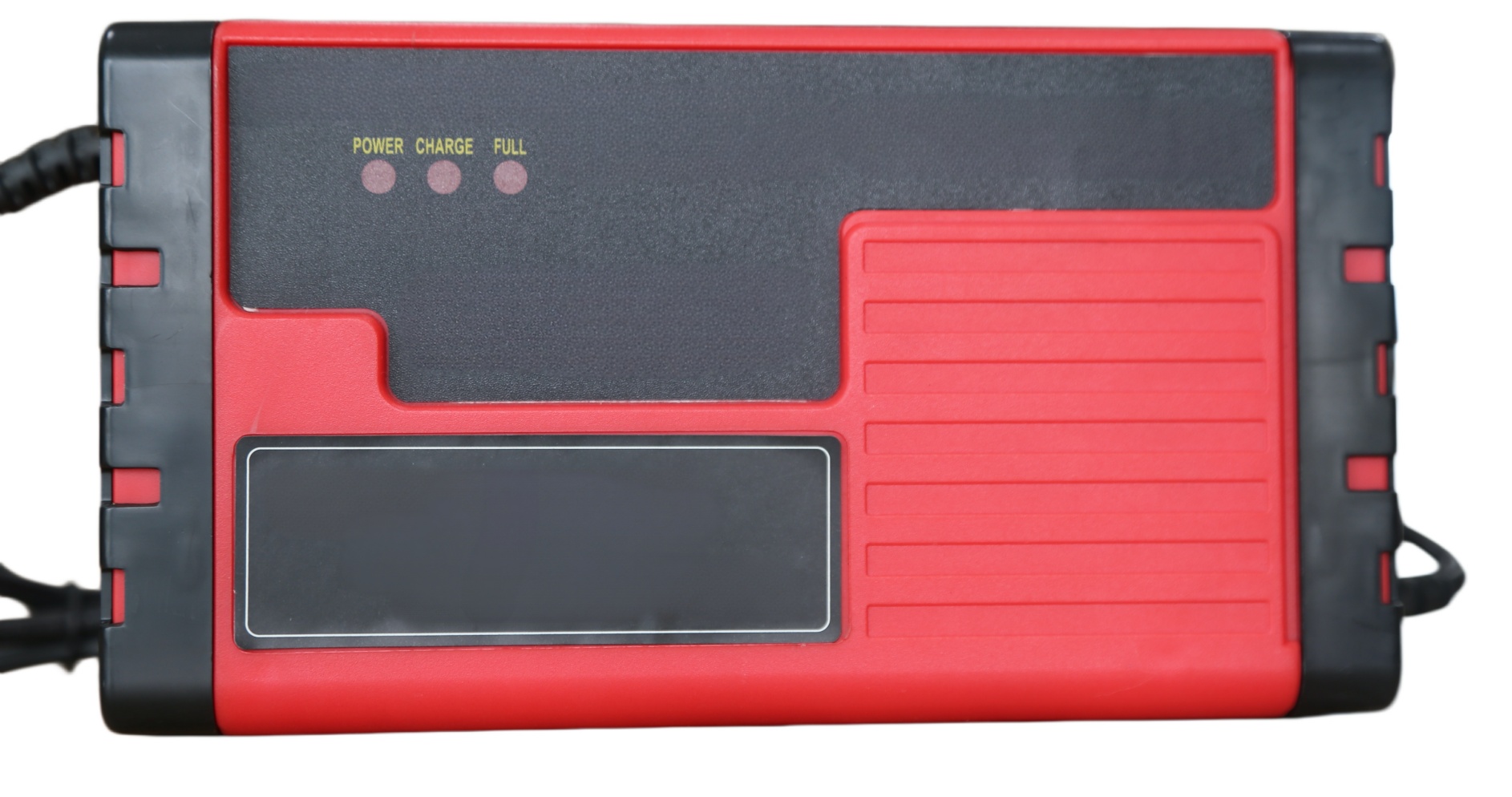
72V20Ah Lead-Acid Battery Charger
The Linjia 72V20Ah charger is designed for selected 72V 17-28Ah lead-acid battery packs. It provides a catalogued DC 72-88.8V output range and 2.8A +/- 0.2A current, with pulse-maintenance functions and configurable input, plug, connector, label, and packaging options for OEM orders.
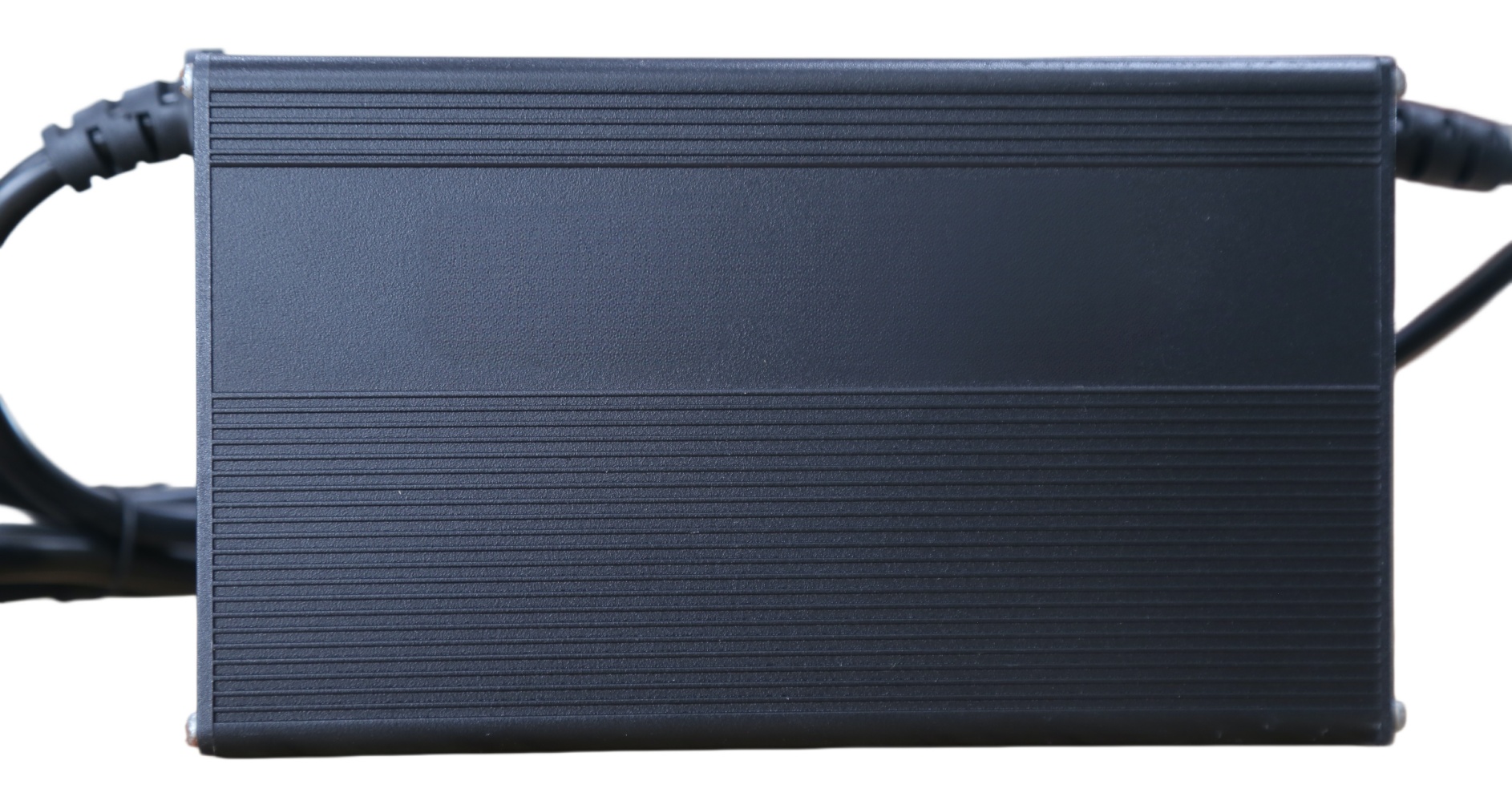
S72V32Ah Lead-Acid Battery Charger
The S72V32Ah model is matched to selected 72V 24-35Ah lead-acid battery packs. Its catalogued output is DC 72-88.8V at 3.5A +/- 0.2A, with OEM options for input voltage, regional plug, output connector, cable, label, and packaging after specifications are approved.
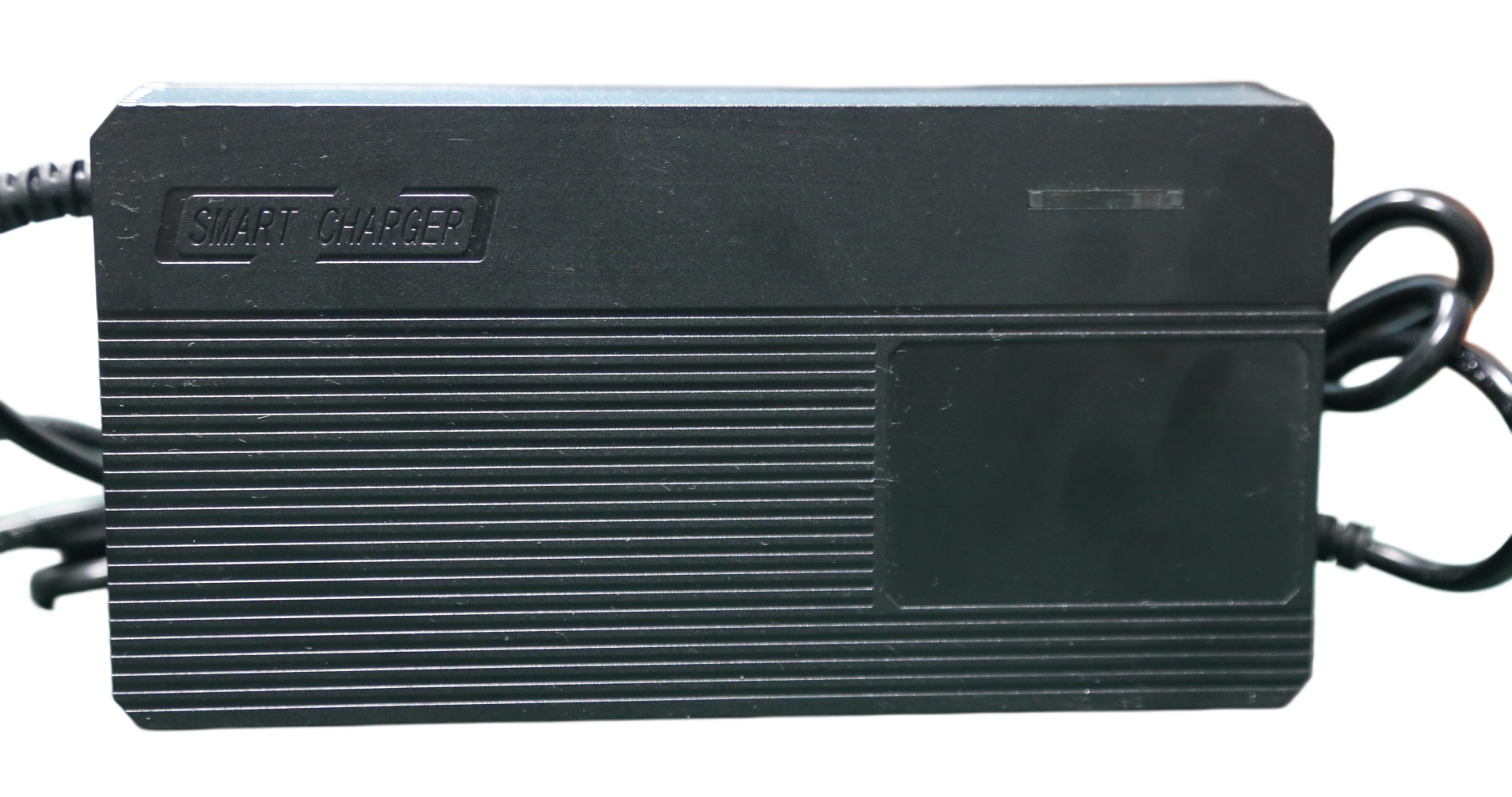
72V32Ah Lead-Acid Battery Charger
The Linjia 72V32Ah charger supplies 4.0A +/- 0.2A for selected 72V 28-40Ah lead-acid battery packs. The catalogued DC 72-88.8V output range, pulse-maintenance functions, and OEM interface options support distributors and equipment manufacturers requiring consistent model matching.
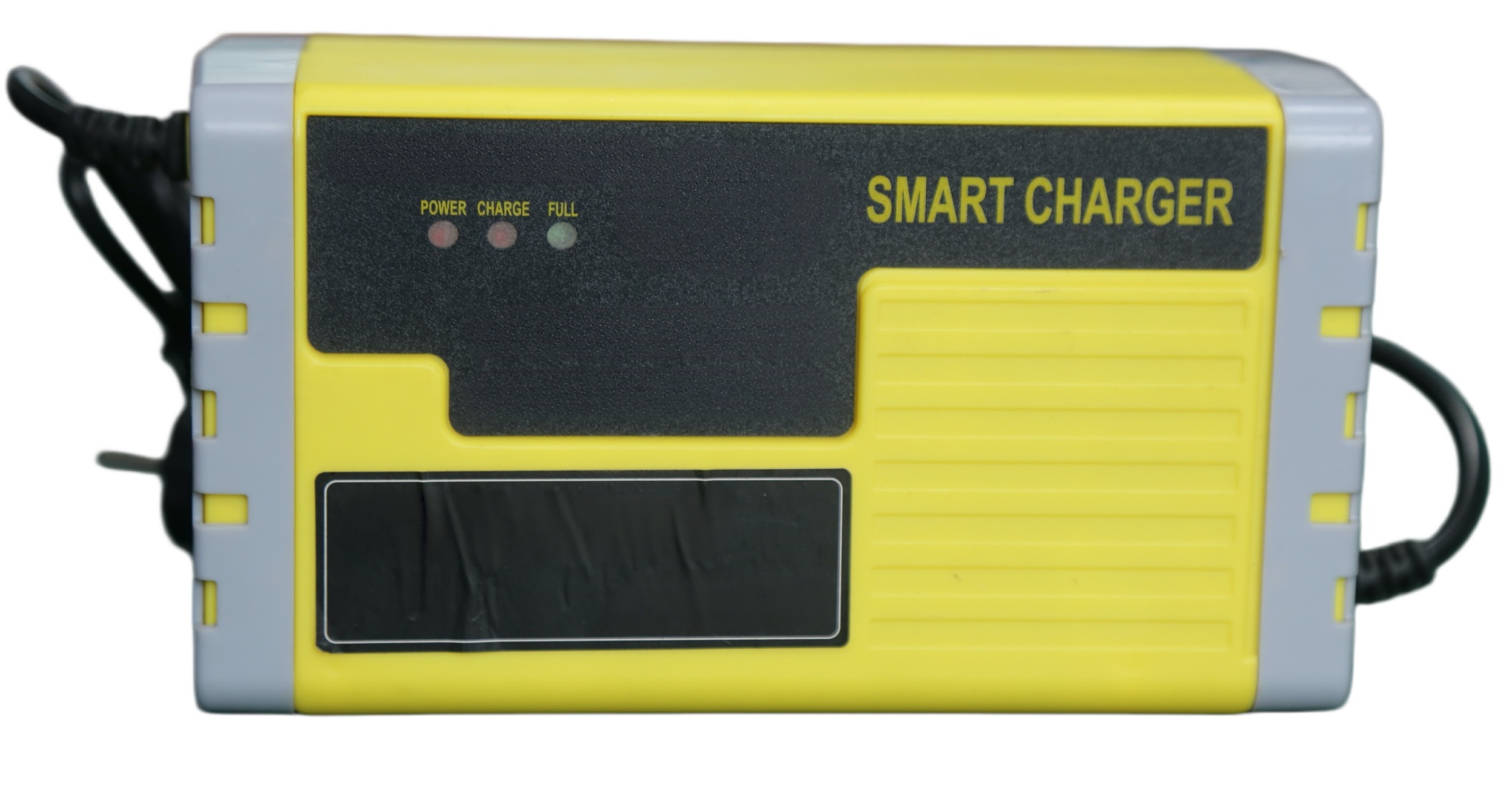
72V45Ah Lead-Acid Battery Charger
The Linjia 72V45Ah charger matches selected 72V 32-50Ah lead-acid battery packs and provides 5.0A +/- 0.2A charging current. Its catalogued DC 72-88.8V output range and configurable interface options help buyers reduce specification and connector mismatches before bulk production.
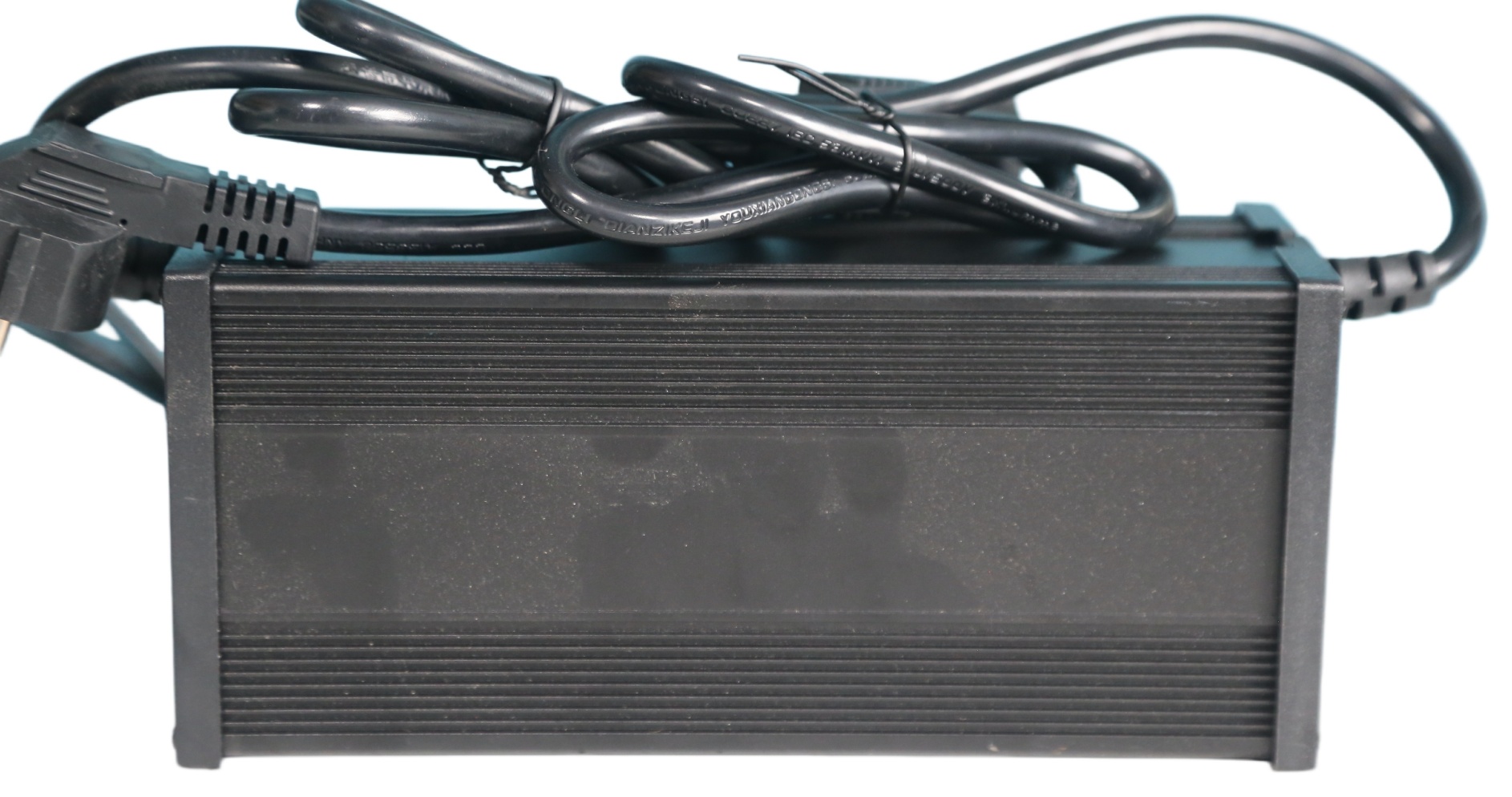
72V58Ah Lead-Acid Battery Charger
The Linjia 72V58Ah charger provides 6.8A +/- 0.2A current for selected 72V 45-70Ah lead-acid battery packs. Its catalogued DC 72-88.8V output range and configurable market and interface specifications support battery brands, importers, and distributors sourcing matched chargers in volume.
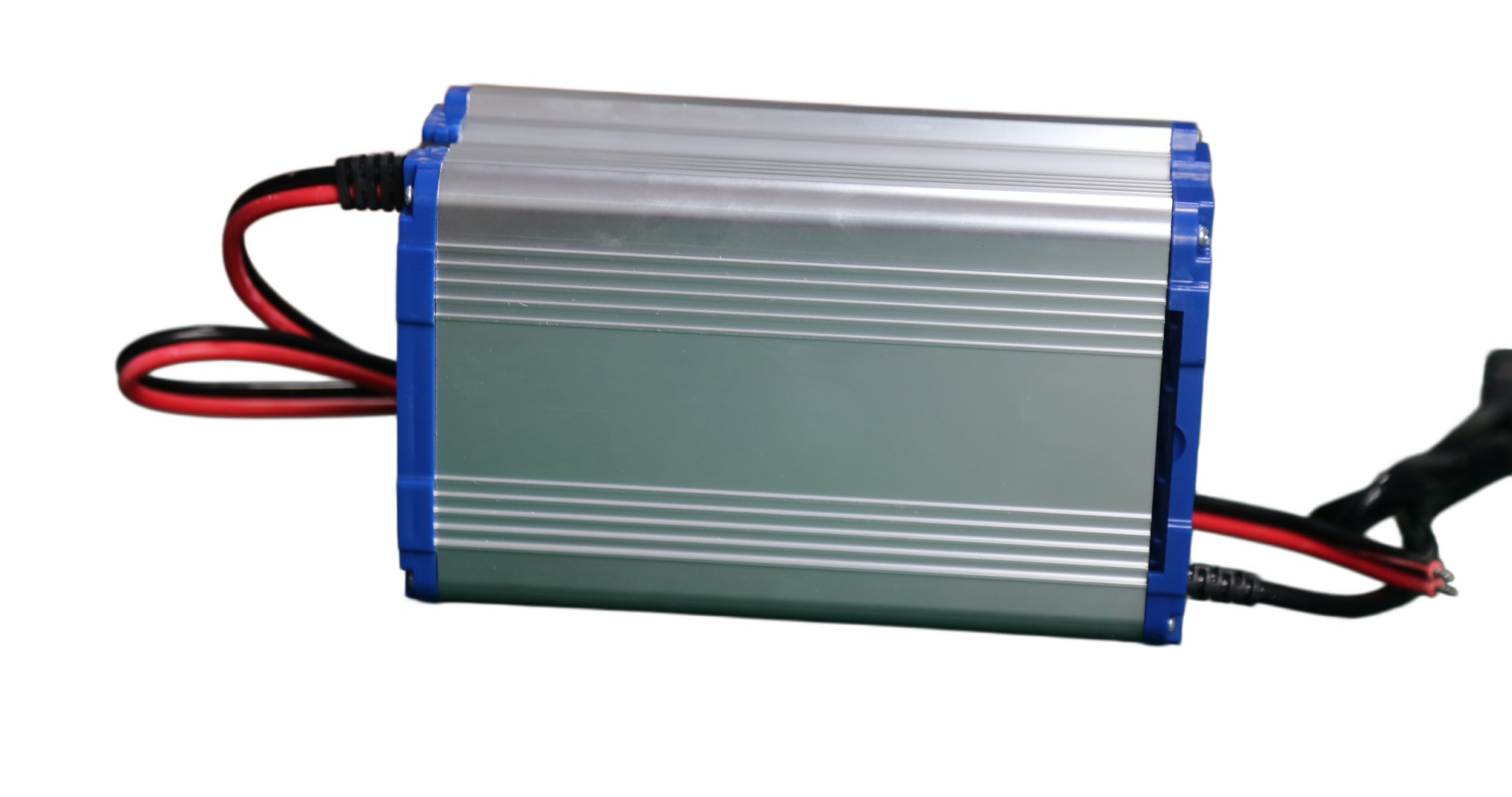
72V10A Lead-Acid Battery Charger
The Linjia 72V10A charger is designed for selected 72V 70-100Ah lead-acid battery packs. It provides DC 72-88.8V output and 10A +/- 0.2A current, with listed soft-start, reverse-connection, multiple-timing, over-temperature, and short-circuit protection functions for higher-current charging projects.
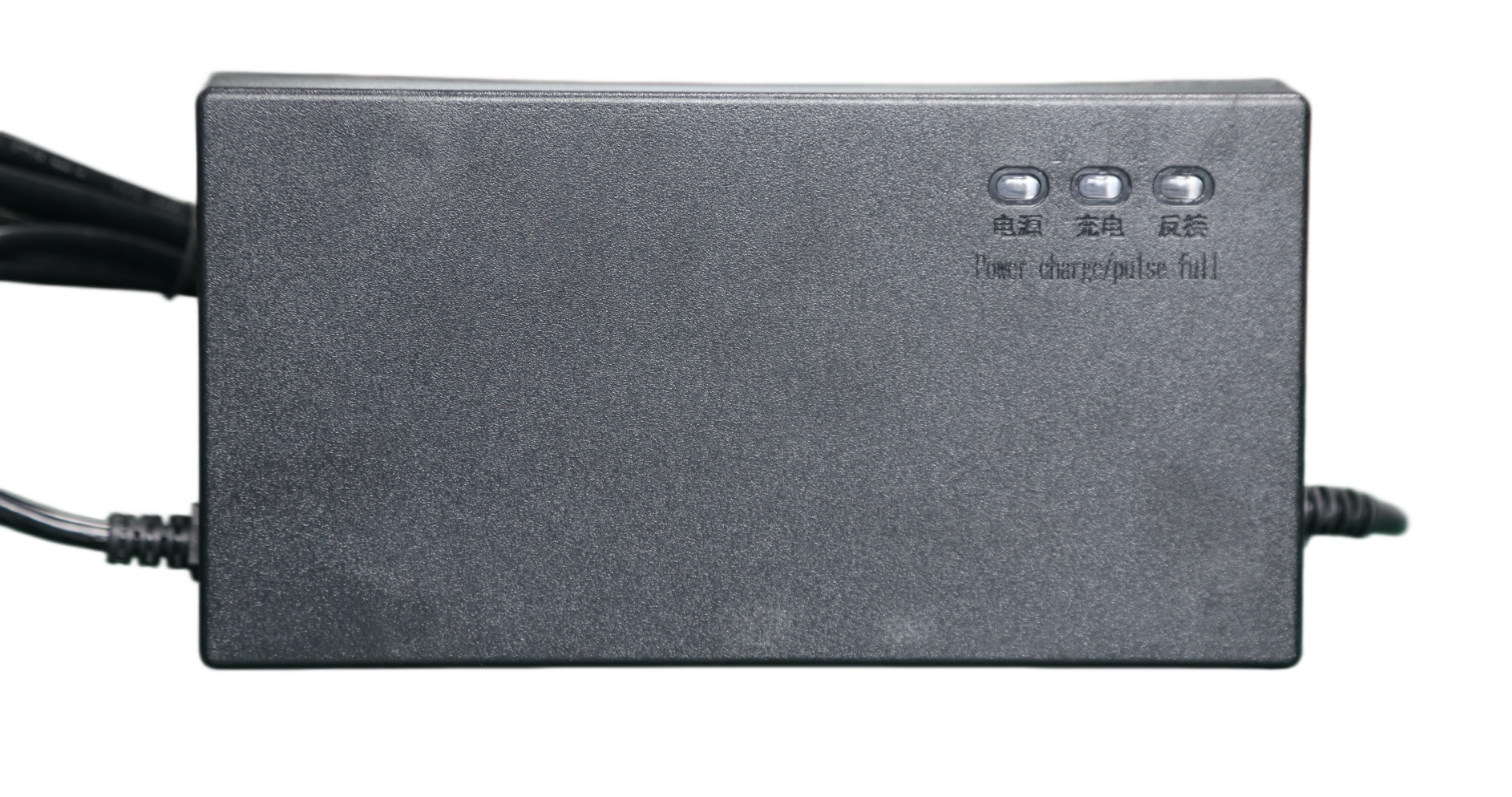
72V15A Lead-Acid Battery Charger
The Linjia 72V15A charger matches selected 72V 100-150Ah lead-acid battery packs with DC 72-88.8V output and 15A +/- 0.2A current. The higher-current platform supports configurable input, connectors, cables, labels, and packaging after thermal and application requirements are confirmed.
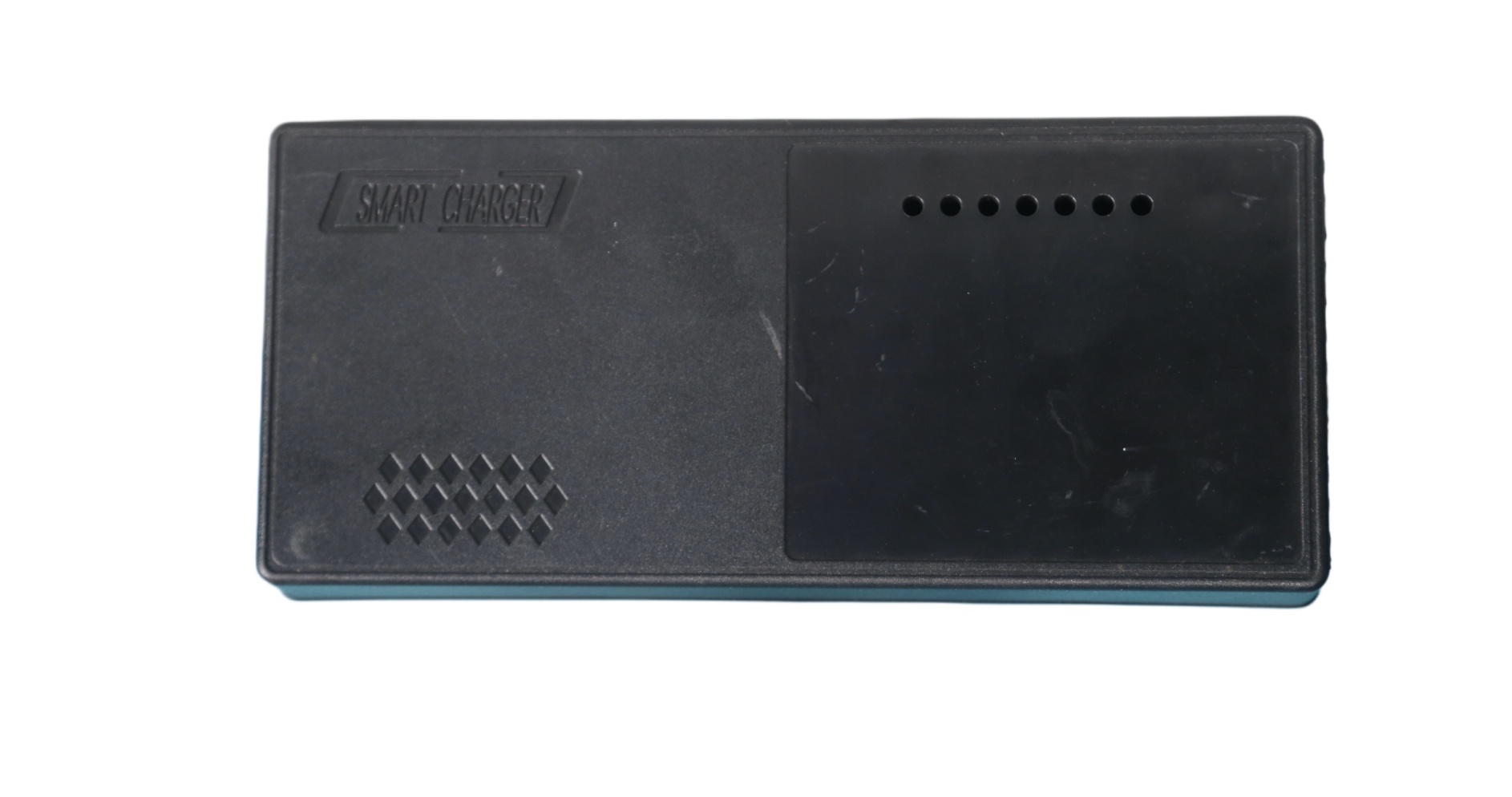
72V25A Lead-Acid Battery Charger
The Linjia 72V25A charger is intended for selected 72V 170-250Ah lead-acid battery packs and provides DC 72-88.8V output at 25A +/- 0.2A. Connector rating, cable specification, cooling conditions, battery requirements, and protection configuration are confirmed before sampling and bulk production.
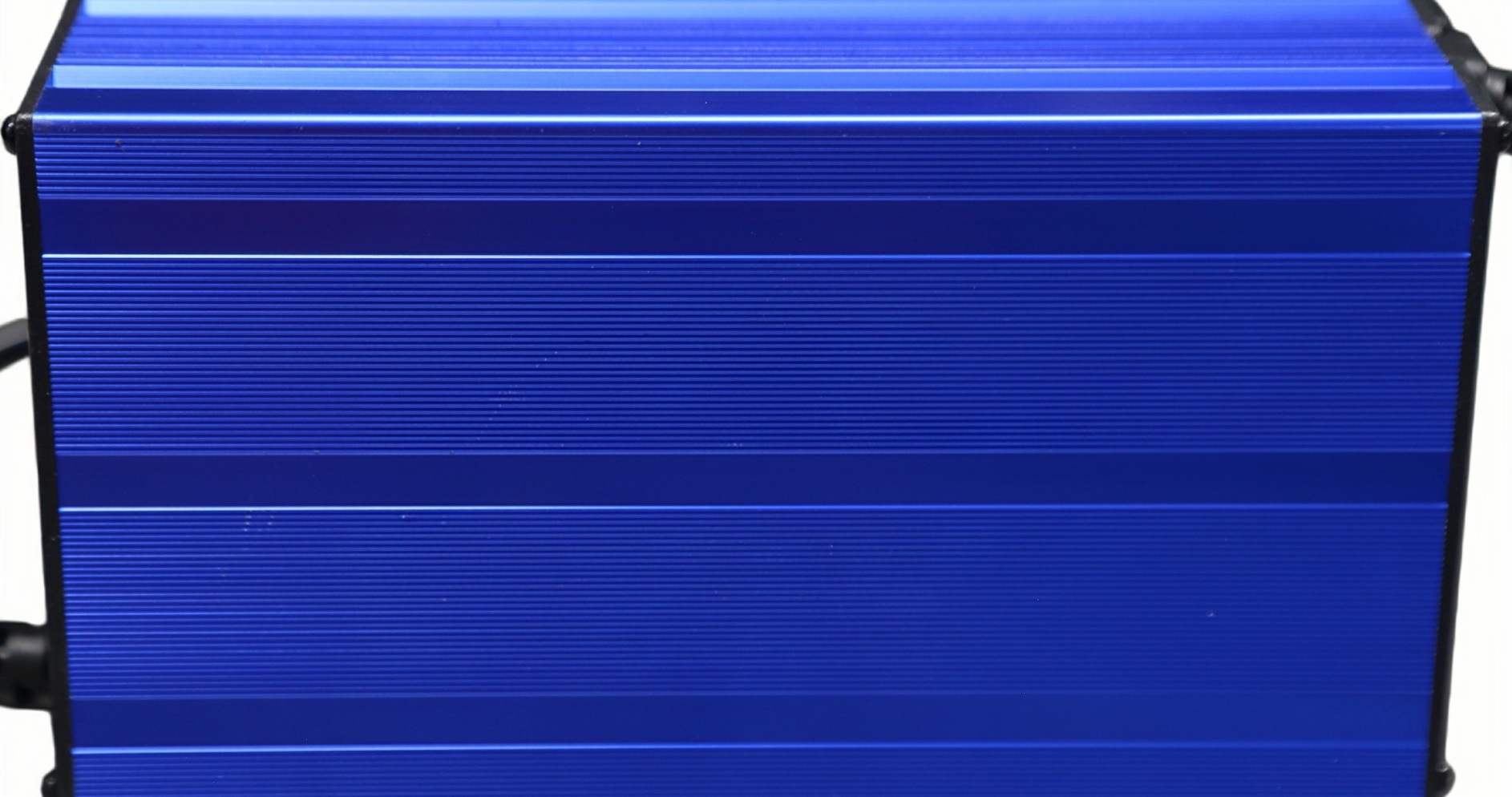
MX7220 Battery-Indicator Lead-Acid Battery Charger
The MX7220 is a battery-indicator charger for selected 72V 17-24Ah lead-acid battery packs. It provides DC 88.2-88.8V output and 2.8A +/- 0.1A current, combining visible battery-level indication with configurable input, plug, connector, cable, and private-label options.
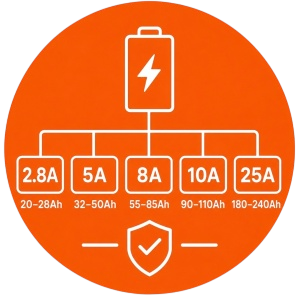
Model-Specific Battery Matching
Current options from 2.8A to 25A are assigned to defined capacity ranges, helping buyers reduce incorrect 72V charger selection.
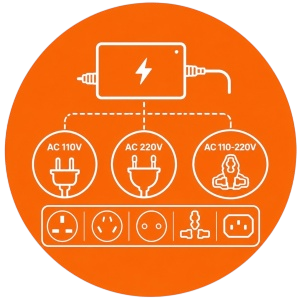
Market-Specific Input Configuration
AC 110V, AC 220V, or AC 110-220V input can be configured with the regional plug required by the destination market.
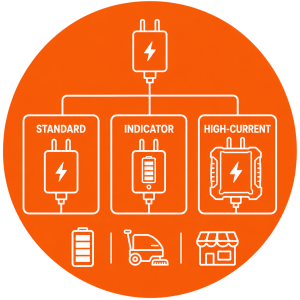
Multiple Charger Structures
Standard, battery-indicator, and high-current models let buyers match different battery capacities, equipment, and channel requirements.
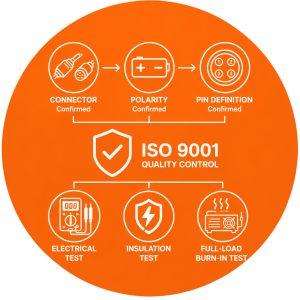
Controlled Interface and Batch Quality
Connector, polarity, and pin definitions are confirmed before production, while ISO 9001 procedures support electrical, insulation, and full-load burn-in checks.
How Correct 72V Charger Matching Reduces After-Sales Risk
A correctly matched 72V charger supplies the voltage, current, and charging logic required by the actual lead-acid battery pack. Confirming battery type, capacity, full-charge voltage, connector, polarity, cable rating, and operating conditions before production helps buyers avoid slow charging, excessive heat, interface errors, damaged connectors, and preventable field returns.
Configuration Options for Different Markets and Channels
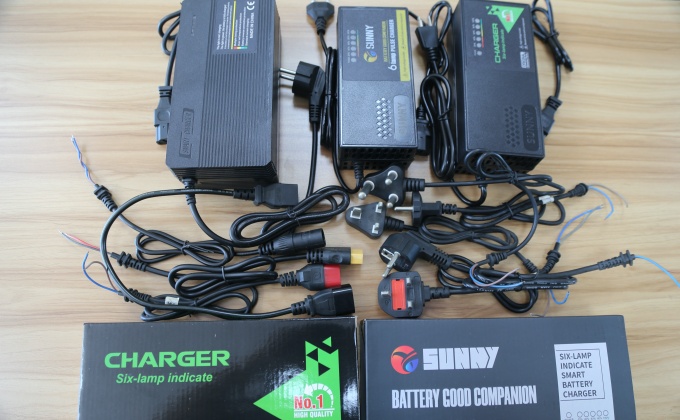
Different markets and sales channels may require fixed or wide input, a regional wall plug, a specific output connector, different cable lengths, local-language labels, private model codes, or branded packaging. Linjia supports OEM battery charger configuration so vehicle manufacturers, battery brands, importers, wholesalers, and distributors can keep approved specifications consistent across their product range.
Batch Stability Through Integrated Factory Control
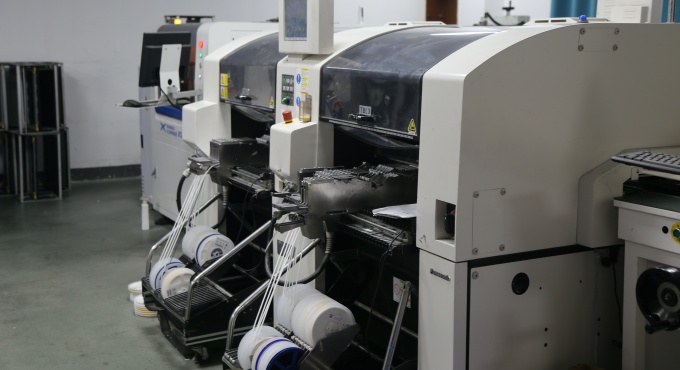
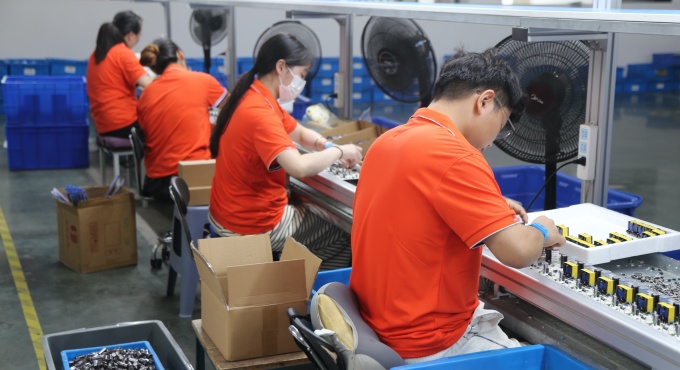
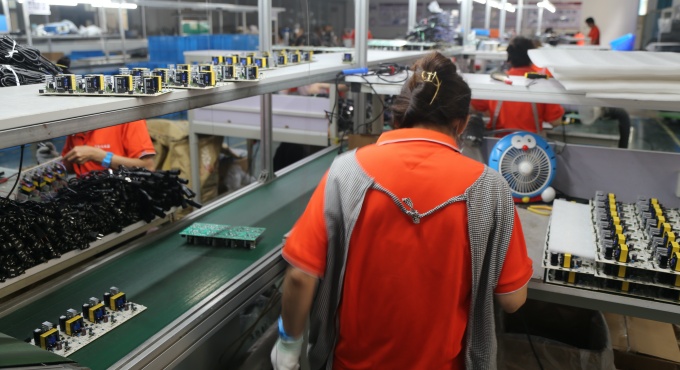
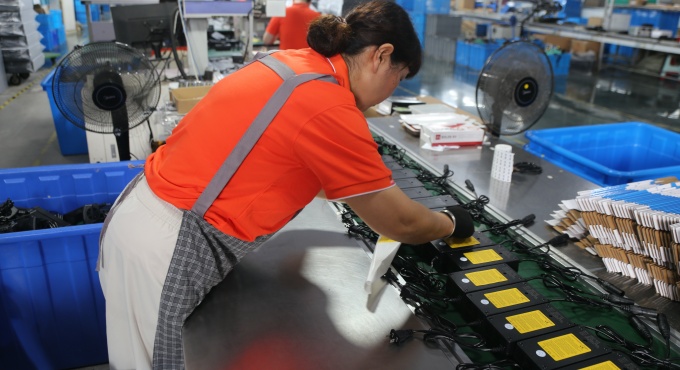
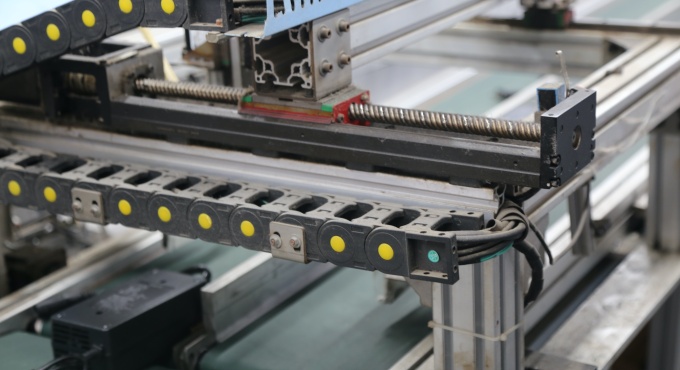
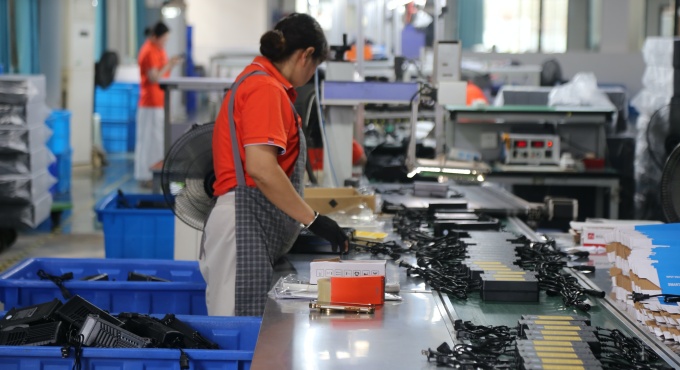
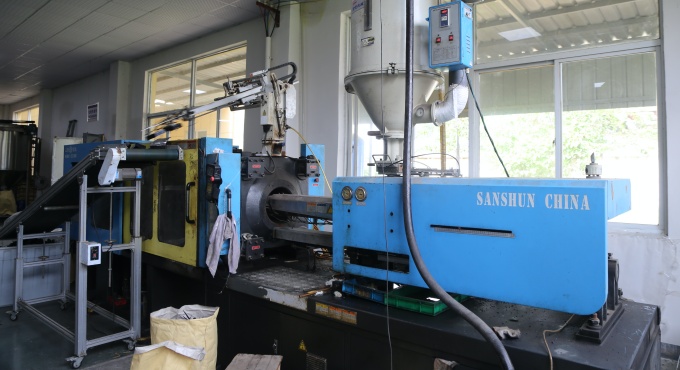
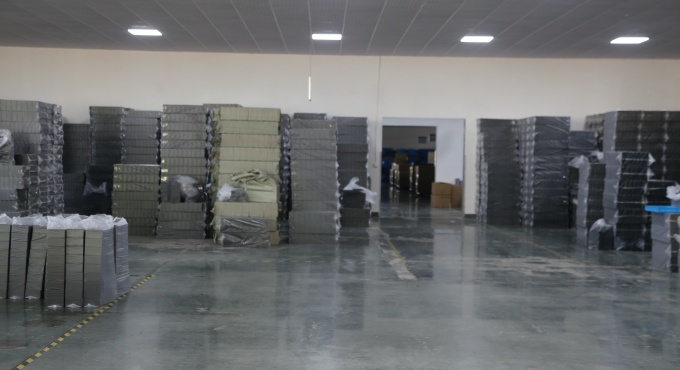
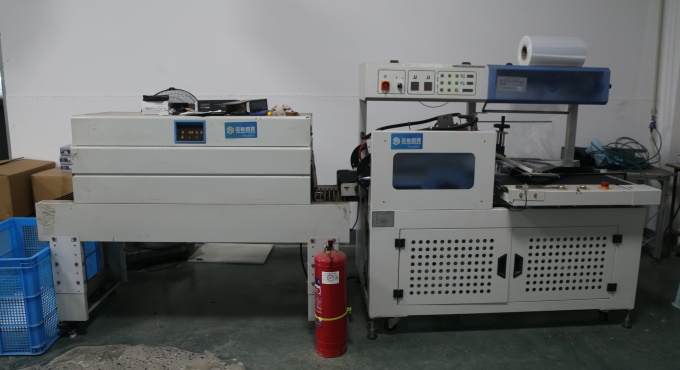
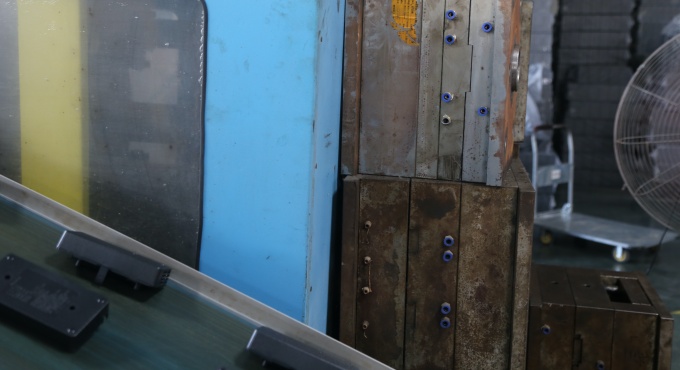
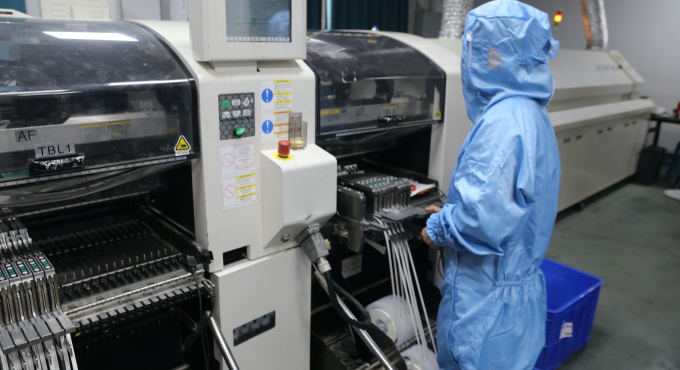
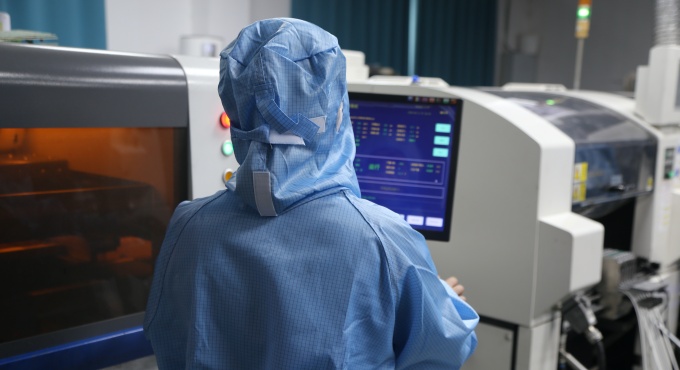
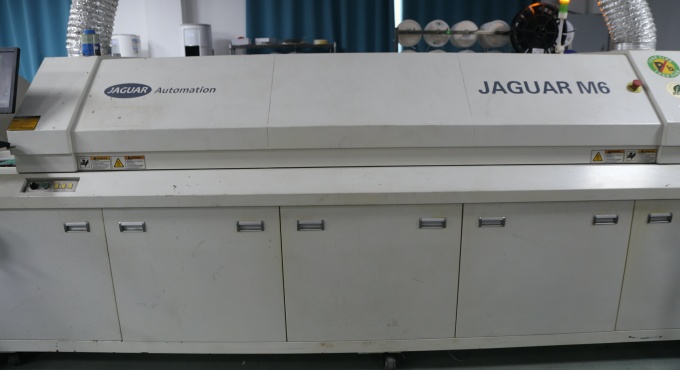
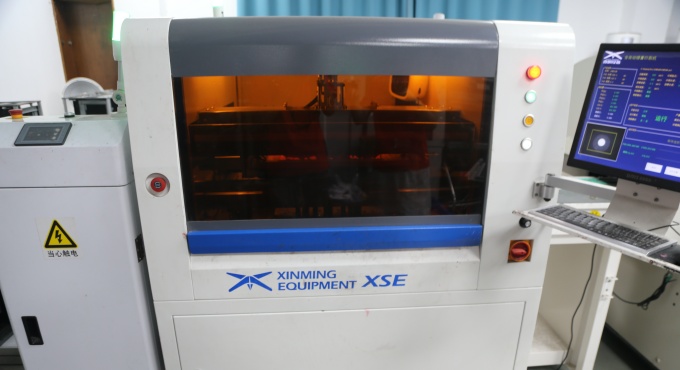
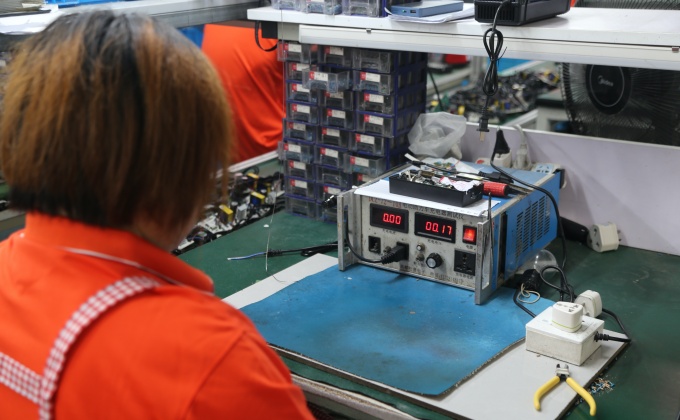
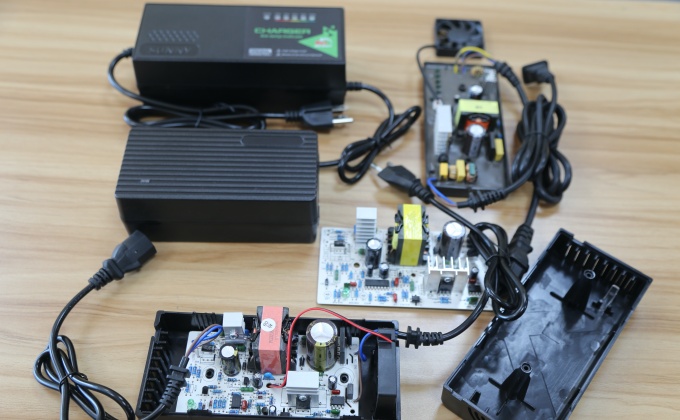
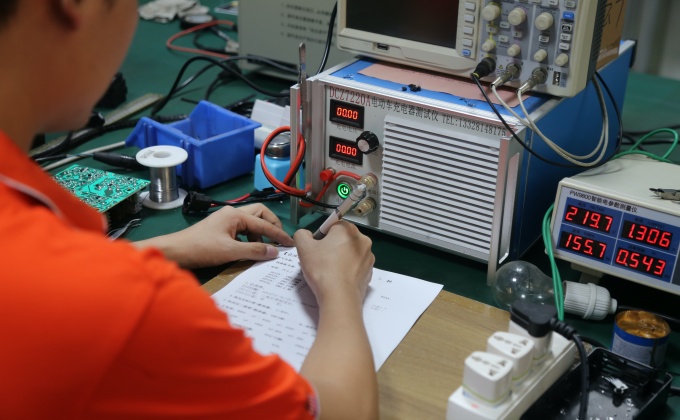
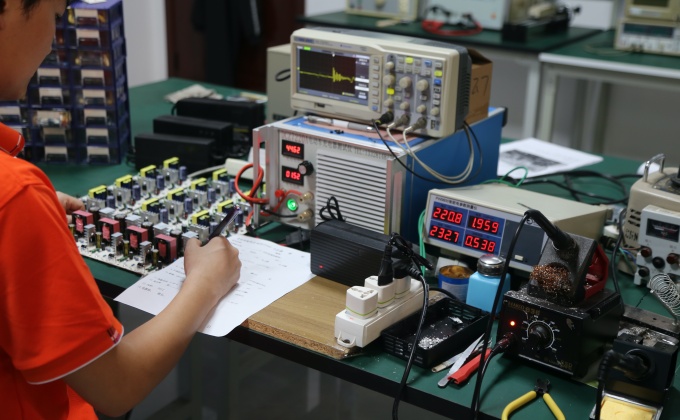
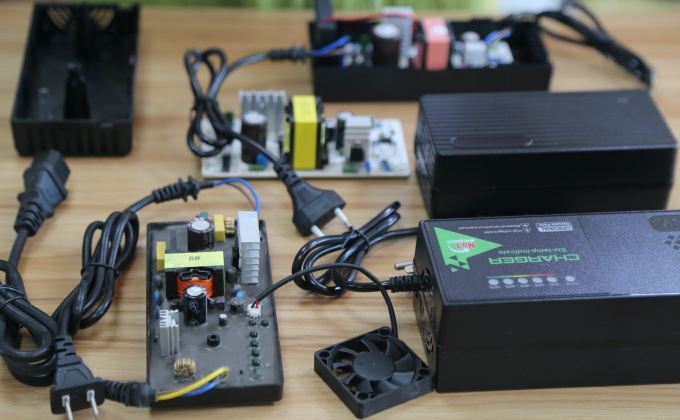
Linjia controls PCB production, in-house housing injection moulding, assembly, electrical testing, high-voltage insulation testing, and full-load burn-in within its manufacturing system. Approved specifications, connector samples, labels, and packaging references are used to control production, helping reduce variation between the confirmed sample and mass-produced 72V lead-acid battery chargers.
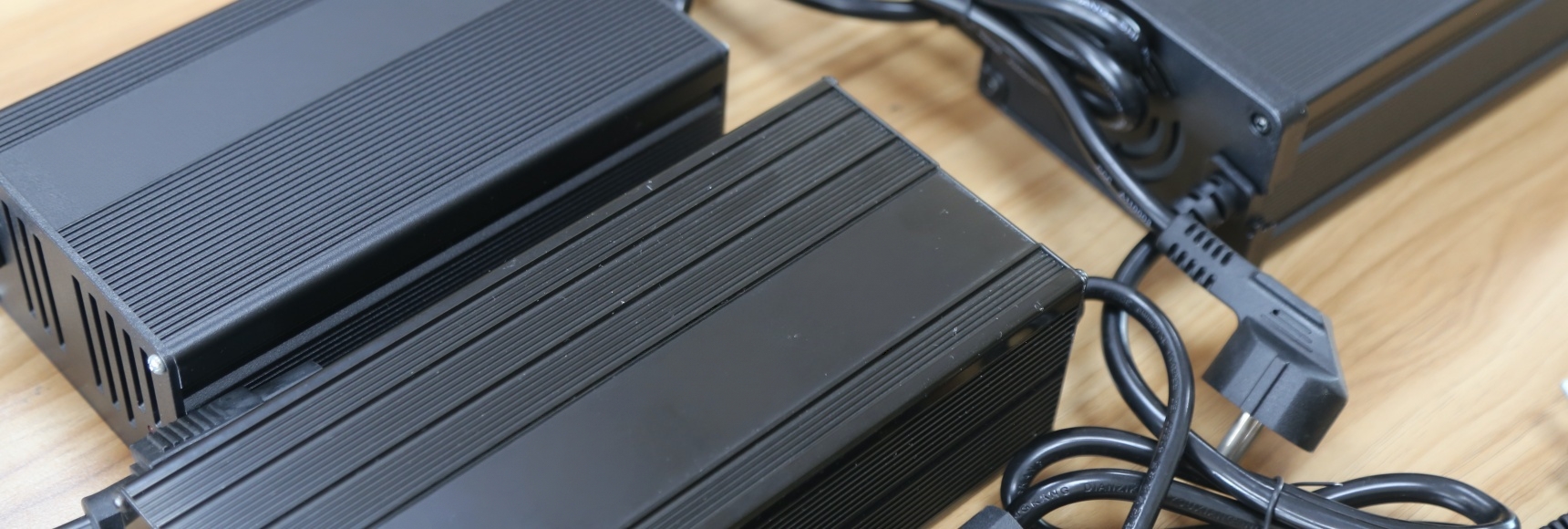
Professional 72V Lead-Acid Battery Charger Manufacturerin China
Frequently Asked Questions About 72V Lead-Acid Battery Chargers
What Are the Main Differences Among Linjia's 72V Lead-Acid Battery Chargers?
The 72V product family differs in recommended battery-capacity range, charging current, housing format, indication method, and listed protection functions. Standard capacity-matched models from 72V20Ah to 72V58Ah cover selected 17-70Ah packs at 2.8A to 6.8A. High-current models provide 10A, 15A, or 25A for selected larger packs.
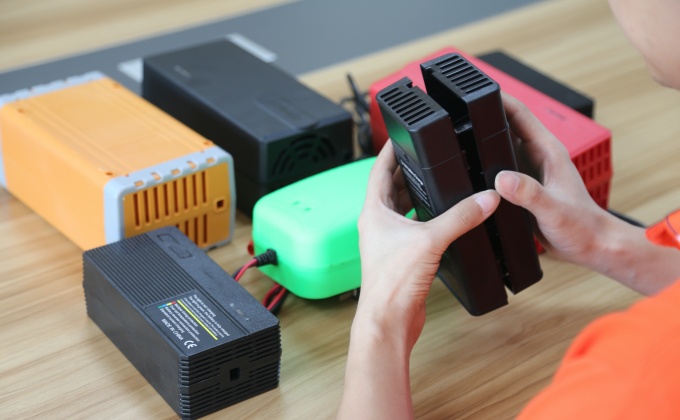
MX7220 adds battery-level indication and is listed at 2.8A for selected 17-24Ah packs. Its specified output-voltage range differs from the standard models. A suffix such as 20Ah, 32Ah, or 58Ah is a catalog model identifier, not a substitute for checking the actual battery specification.
In Which Applications Are 72V Lead-Acid Battery Chargers Commonly Used?
72V lead-acid battery chargers are commonly used with selected electric two-wheelers, electric scooters, E-rickshaws, mobility and utility equipment, battery-powered machinery, and other products built around 72V lead-acid battery packs. The correct charger depends on the battery configuration and duty conditions, not the equipment category alone.
For vehicle manufacturers, battery brands, importers, wholesalers, and distributors, the charger must also match the local power supply, wall plug, output connector, polarity, cable requirement, installation position, and expected charging duration. These checks reduce compatibility problems after the equipment enters the market.
Can a 72V Lead-Acid Battery Charger Be Customized for Our Equipment or Brand?
Yes. For qualified OEM and ODM projects, Linjia can configure charging current, charging profile, input voltage, input plug, output connector, cable length and specification, polarity, pin definition, housing, label, logo, model code, and packaging according to the approved requirement.
Customization begins with the battery type, nominal voltage, full-charge voltage, capacity, recommended current, equipment interface, controller or battery-management requirements, operating environment, and target market. New circuit, structure, mould, or housing development is evaluated separately when a standard model cannot meet the project.
What Are the Common and Recommended Specifications for These 72V Chargers?
For the standard capacity-matched group, the catalog lists 72V20Ah at 2.8A for selected 17-28Ah packs, S72V32Ah at 3.5A for 24-35Ah, 72V32Ah at 4.0A for 28-40Ah, 72V45Ah at 5.0A for 32-50Ah, and 72V58Ah at 6.8A for 45-70Ah.
The high-current group lists 72V10A for selected 70-100Ah packs, 72V15A for 100-150Ah, and 72V25A for 170-250Ah. MX7220 is listed at 2.8A for selected 17-24Ah packs. These capacity ranges are selection guidance; the battery manufacturer's full-charge voltage, approved current, and charging profile remain the final basis for approval.
What Are the Common Structural Options for a 72V Battery Charger?
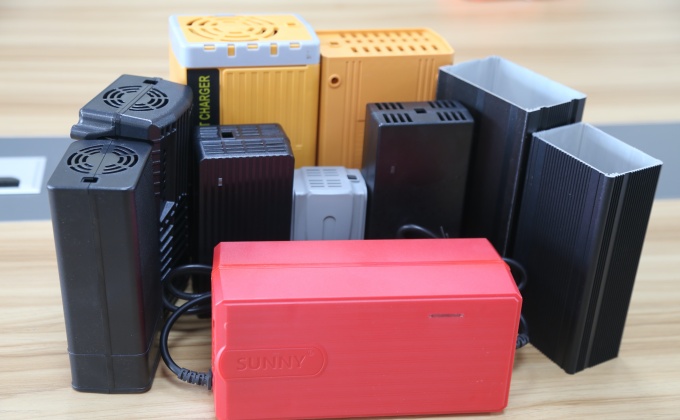
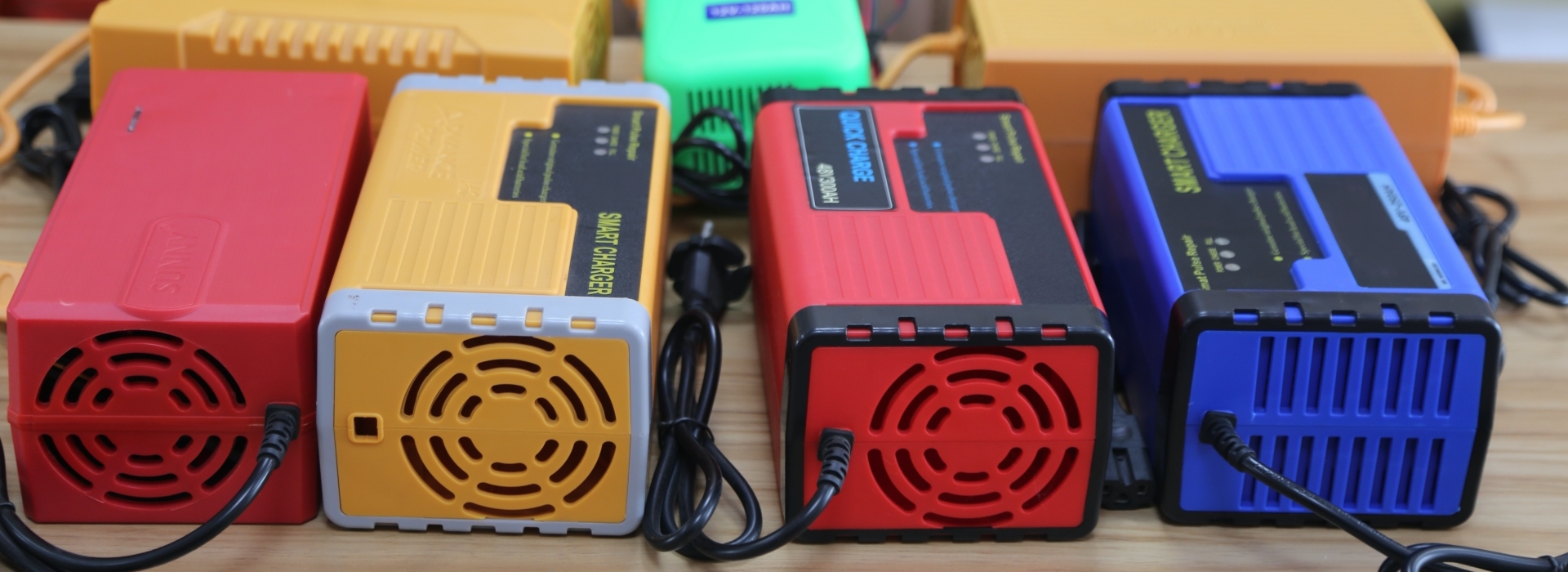
Common battery charger structures include enclosed injection-moulded plastic housings, aluminum housings, naturally cooled designs, fan-cooled designs, potted structures, and open-frame or semi-finished configurations for local assembly. Within this page, the catalog distinguishes standard, battery-indicator, and higher-current product formats.
The appropriate structure depends on power, ambient temperature, airflow, dust, humidity, vibration, installation position, charging duration, serviceability, and target cost. Not every electrical model is automatically available in every housing or cooling format; structural changes require engineering evaluation and sample validation.
Which Types of Lead-Acid Batteries Can Be Used with a 72V Charger?
72V lead-acid battery packs may use flooded, AGM, or gel batteries, but these battery types can require different full-charge voltages, charging stages, current limits, and temperature considerations. A charger should not be assumed to be interchangeable across all lead-acid batteries simply because the nominal voltage is 72V.
Before production, provide the battery manufacturer's specification or label information, capacity, recommended current, required full-charge voltage, and any special charging limits. The actual series configuration and age or condition of the battery should also be considered during validation.
Can the Same 72V Charger Be Used for Lead-Acid and Lithium Batteries?
Normally no. The same 72V nominal label does not mean that lead-acid, lithium-ion, and LiFePO4 battery packs use the same full-charge voltage, charging stages, termination logic, or protection strategy. Using the wrong charging profile can create performance and safety risks.
For a lithium or LiFePO4 pack, the charger must be matched to the cell series configuration, approved charge voltage and current, and BMS requirements. A 72V lead-acid charger should not be substituted for a lithium charger unless the charger platform has been specifically engineered and validated for that exact battery.
What Housing and Cooling Systems Are Available for 72V Chargers?
Linjia has in-house mould development and injection-moulding capabilities for charger housings. Depending on the model and project, an injection-moulded plastic enclosure, aluminum housing, natural cooling, fan cooling, potted structure, or open-frame configuration can be evaluated.
Housing and cooling selection should be based on output power, ambient temperature, airflow, dust, humidity, mounting position, duty cycle, and expected charging time. Higher-current 10A, 15A, and 25A projects require particular attention to cable rating, connector temperature, internal heat, and ventilation. A product should only be described as waterproof after the final structure and applicable test requirements have been confirmed.
Which Plugs, Connectors, and Cable Options Can Be Supplied?
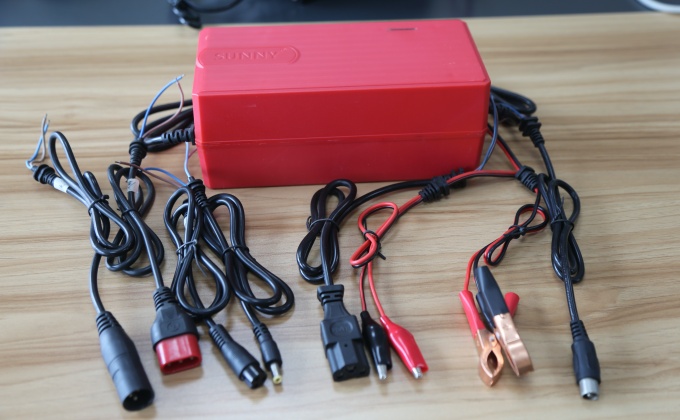
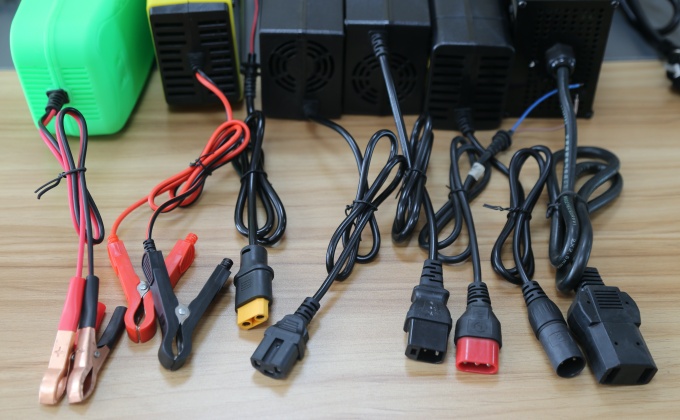
Input plugs can be configured for the destination market, while output connectors can be matched to the battery pack or equipment interface. Cable length, conductor specification, connector housing, polarity, pin definition, strain relief, and identification can be included in the approved OEM specification.
Buyers should provide a clear connector photo, interface drawing, or physical sample whenever possible. Connectors with similar external shapes may use different polarity, pin assignments, or current ratings. This is especially important for 10A, 15A, and 25A chargers, where an underrated connector or cable may overheat.
Can the Housing, Label, and Packaging Be Customized for Our Brand?
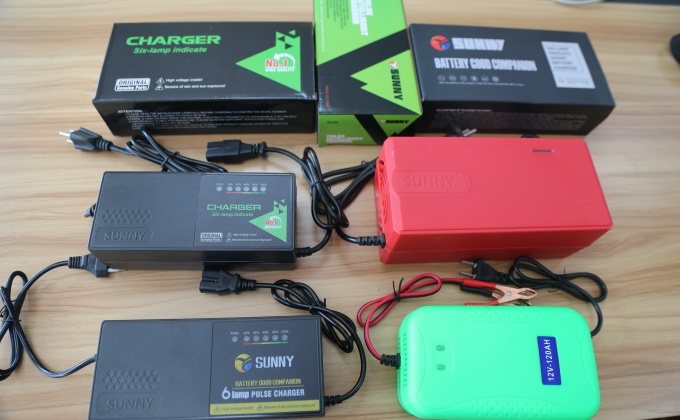
Yes. Linjia supports private-label requirements including product labels, logos, model codes, warning information, instruction content, carton marks, and branded packaging. Housing color, appearance, or private-mould development can also be evaluated according to project volume and technical scope.
All electrical ratings, protection statements, warnings, and certification marks on the product and packaging must correspond to the approved model. A certification logo should not be applied as a graphic element when that specific model is outside the relevant certification or test scope.
What Is the Difference Between Fixed-Voltage and Wide-Input Charger Versions?
A fixed-input charger is configured for a defined power market, such as AC 110V or AC 220V. It is suitable when the charger will remain in a destination with a known supply standard. An AC 110-220V version provides broader compatibility and can help buyers maintain one input specification across several markets.
However, frequency, plug type, the exact allowable voltage range, grid fluctuation, and surge conditions must still be confirmed. The catalog lists 50-60Hz input options, but the phrase "wide input" does not mean the charger can tolerate every unstable-grid condition without a project-specific review.
What Protection and Battery-Maintenance Functions Are Available?
The standard capacity-matched models list pulse maintenance, battery thermal-runaway prevention, over-temperature protection, and multiple timing protection. The 72V10A, 72V15A, and 72V25A models list soft start, reverse-connection protection, multiple timing protection, over-temperature protection, and short-circuit protection.
MX7220 lists intelligent pulse, battery thermal-runaway prevention, over-temperature protection, multi-stage timing protection, automatic power-off, and battery-level indication. Exact functions must be written into the approved specification and verified on the selected sample rather than assumed to apply to every 72V model.
How Is Charging Safety and Performance Checked Before Shipment?
Linjia applies standardized quality-control procedures that can include incoming-material inspection, PCB and semi-finished-product testing, finished-product voltage and current testing, high-voltage insulation testing, plug and connector verification, polarity confirmation, and full-load burn-in testing.
For customized orders, the approved specification, sample, connector, label, and packaging are used as production references. Linjia operates an ISO 9001 quality management system. Relevant CE certification or IEC testing support depends on the specific product model and target market and must be confirmed before the order is finalized.
How Long Does It Take to Charge a 72V Lead-Acid Battery Pack?
Charging time depends on usable battery capacity, depth of discharge, selected current, battery condition, charging efficiency, ambient temperature, and the current-reduction stage near full charge. Dividing battery capacity by charger current can provide an initial planning estimate, but it is not an accurate final charging-time guarantee.
The catalog offers 2.8A to 25A options for different selected capacity ranges. The highest available current is not automatically the correct choice. Buyers should follow the battery manufacturer's approved charging current and validate the complete charging curve and temperature performance with the actual battery pack before mass production.
What Is the Expected Service Life of a 72V Lead-Acid Battery Charger?
There is no responsible fixed service-life figure that applies to every charger and installation. Service life depends on component configuration, thermal margin, input-voltage stability, ventilation, dust and moisture exposure, charging frequency, load conditions, cable and connector quality, and user operation.
For a B2B project, reliability should be managed through a suitable component specification, adequate thermal design, approved-sample testing, full-load burn-in, and correct installation guidance. If the charger will operate in unusually hot, dusty, humid, poorly ventilated, or unstable-grid conditions, these requirements should be disclosed before development.
What Common Problems Can Occur During Long-Term Use?
Common risks include using the wrong charging profile, unsuitable current, incorrect connector polarity, an underrated cable or connector, unstable input voltage, damaged cords, loose connections, blocked airflow, excessive ambient heat, moisture or dust entry, and repeated operation outside the approved specification.
These risks can be reduced by confirming the battery and interface before production, selecting a suitable thermal and protection configuration, controlling connector assembly, and providing clear operating instructions. Field returns should be analyzed by production batch, environment, failure mode, connector condition, and actual battery data rather than attributed to one component without evidence.
How Should a 72V Lead-Acid Battery Charger Be Used and Maintained?
Use the charger only with the approved battery type, voltage, capacity range, charging current, connector, and polarity. Operate it in a dry, ventilated location within the specified environmental limits. Do not cover the housing, block the cooling path, or use an indoor-rated charger in rain or standing water.
Inspect the power cord, output cable, plug, connector, and housing regularly. Stop using the charger if cables are damaged, the connector becomes loose, abnormal heat or odor appears, the fan stops on a fan-cooled model, or the housing is cracked. Disconnect power before cleaning, use a dry soft cloth, and leave internal repair to authorized technical personnel.
Get an Instant Quote Now
We're Here to Answer All Your Questions
What Is Your Typical Production Lead Time?
Lead time depends on the selected 72V model, order quantity, customization depth, material preparation, sample approval, and testing requirements. Standard repeat orders normally require less preparation than new ODM projects. The confirmed production schedule is provided after specifications and order details are reviewed.
Do You Supply Plugs, Connectors, and Cables with the Chargers?
Yes. Input plugs, output connectors, cables, polarity, and pin definitions can be supplied according to the approved battery, equipment interface, current rating, and target-market requirements.
Can You Produce Chargers for Our Local Electrical Standards or Market Requirements?
Yes. Linjia can configure input voltage, frequency, regional plug, charging parameters, cables, labels, packaging, and required protection functions for the target market. Applicable certification or testing support must be confirmed for the specific model and destination before the order is finalized.
Do You Support OEM, ODM, or Private-Label Orders?
Yes. We support OEM and ODM services covering charging specifications, plugs, connectors, cables, housings, labels, logos, model codes, and packaging. New circuit, structure, cooling, or private-mould development can be evaluated for qualified projects.
What Are Your Payment Terms?
Payment terms are confirmed in the proforma invoice and may vary according to order value, customization requirements, material preparation, and cooperation history. Please contact Linjia for the terms applicable to your specific project.