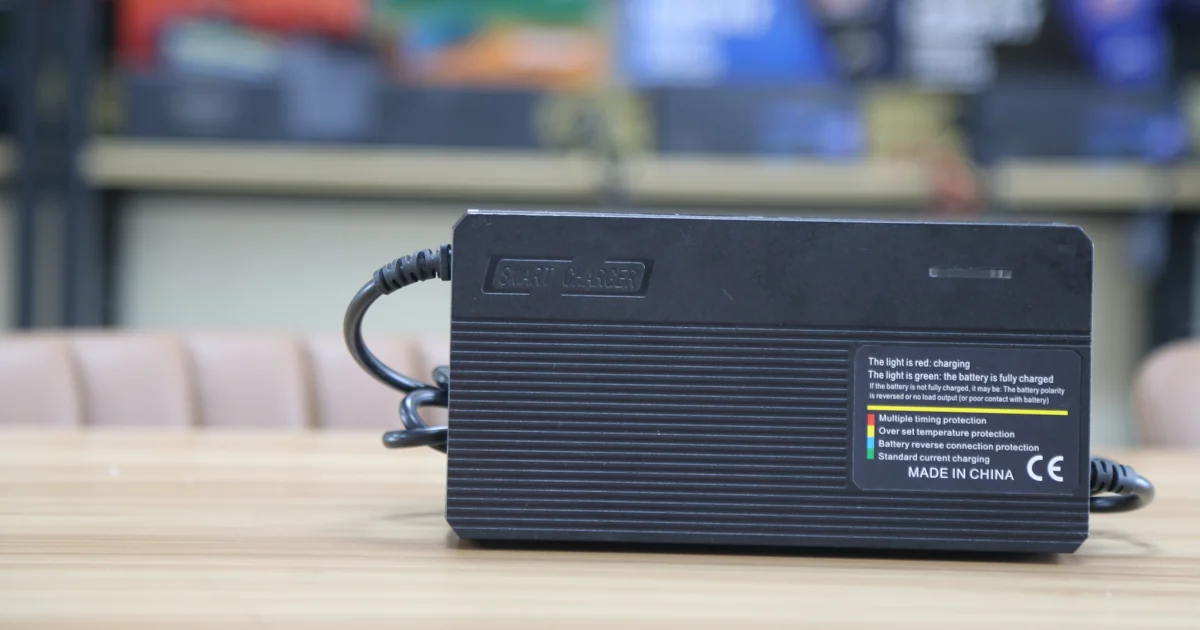
Voltage fluctuation changes what a charger must tolerate at its AC input—not the battery’s approved charging voltage. A falling supply can increase input current and losses, reduce available output or trigger an orderly shutdown. A brief interruption may cause the charger to restart, while a high-voltage event needs a different…
A charger can complete a short demonstration in an air-conditioned office and still be the wrong configuration for a hot charging room. For an OEM buyer, the useful question is what output the finished unit can sustain through the required charging duty at the intended site.
Direct answer: Hot climates reduce the temperature m…
A kick scooter is listed as “36V,” while its charging specification says “42V.” A buyer may assume that one of those numbers is wrong and request a charger with exactly 36V output. That request can turn a normal battery designation into the wrong purchasing specification.
Direct answer: A kick scooter’s 36V designation normall…
A vehicle brand may source chargers for a pedal-equipped e-bike and a seated electric scooter from the same factory. That does not make the two charging systems interchangeable. The useful comparison of e-bike vs seated e-scooter charger requirements starts with where the battery is charged, how the user reaches its connector…
A passenger three-wheeler may need to be ready for the evening rush. A cargo three-wheeler may have to leave the depot before the first delivery round. Both need a charger matched to their battery, but the useful charging window, daily energy demand and way the equipment is handled can be different. For vehicle manufacturers…