Electric Motorcycle Battery Charger Selection, Customization, and Use Guide
What Are the Main Differences Between a Lithium Electric Motorcycle Charger and a Lead-Acid Electric Motorcycle Charger?
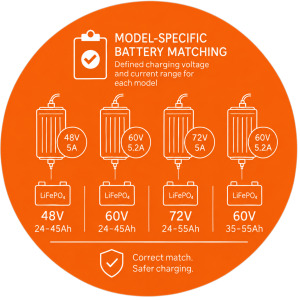
Lithium and lead-acid batteries require different charging profiles and full-charge voltages. The lithium chargers on this page provide 54.6 +/- 0.2V, 71.4 +/- 0.2V, or 84.0 +/- 0.2V output for the corresponding 48V, 60V, or 72V pack. The 60V lead-acid model uses a lead-acid charging profile, provides 5.2 +/- 0.2A current, and has a catalogue output range of DC 60-74V. The 60V lithium and 60V lead-acid chargers are not interchangeable simply because both batteries carry a 60V nominal label. The wrong profile can cause incomplete charging, BMS cut-off, excess heat, battery damage, or a safety risk. Battery chemistry, nominal voltage, full-charge voltage, capacity, and allowable charging current must all be confirmed before selection.
In Which Applications Are Electric Motorcycle Battery Chargers Usually Used?
These chargers are commonly supplied for electric motorcycles, electric mopeds, commuter two-wheelers, delivery fleets, vehicle assembly projects, battery replacement channels, and private-label distribution. The correct model depends on the battery system rather than the motorcycle style alone. Manufacturers and importers should confirm the battery chemistry, required charging time, connector, local input voltage, operating environment, and expected daily charging frequency before placing a bulk order.
Does the Electric Motorcycle Battery Charger Support Customization for Vehicle or Brand Requirements?
Yes. For vehicle, battery, or private-label projects, Linjia can customize charging current, charging logic, AC input, regional plug, output connector, cable, polarity, pin definition, housing, label, logo, product code, and packaging. New circuit solutions, structural design, and private-mould housings can also be evaluated for ODM projects. Customization starts with a confirmed battery specification or sample. Any requested certification or market-specific test must be identified by model and destination before production.
What Are the Common and Recommended Charger Ratings on This Page?
The 48V, 60V, and 72V lithium models all provide 5.0 +/- 0.2A current and are recommended for selected 24-45Ah packs. Their output voltages are different: 54.6 +/- 0.2V for the 48V model, 71.4 +/- 0.2V for the 60V model, and 84.0 +/- 0.2V for the 72V model. The 60V45Ah lead-acid charger is intended for selected 60V 35-52Ah packs and provides 5.2 +/- 0.2A current across a catalogue output range of DC 60-74V. These are reference matching ranges, not universal rules. Final selection must consider battery chemistry, cell configuration, battery condition, BMS charge-current limit where applicable, desired charging time, and thermal design.
What Charger Structures Are Common for Electric Motorcycle Projects?
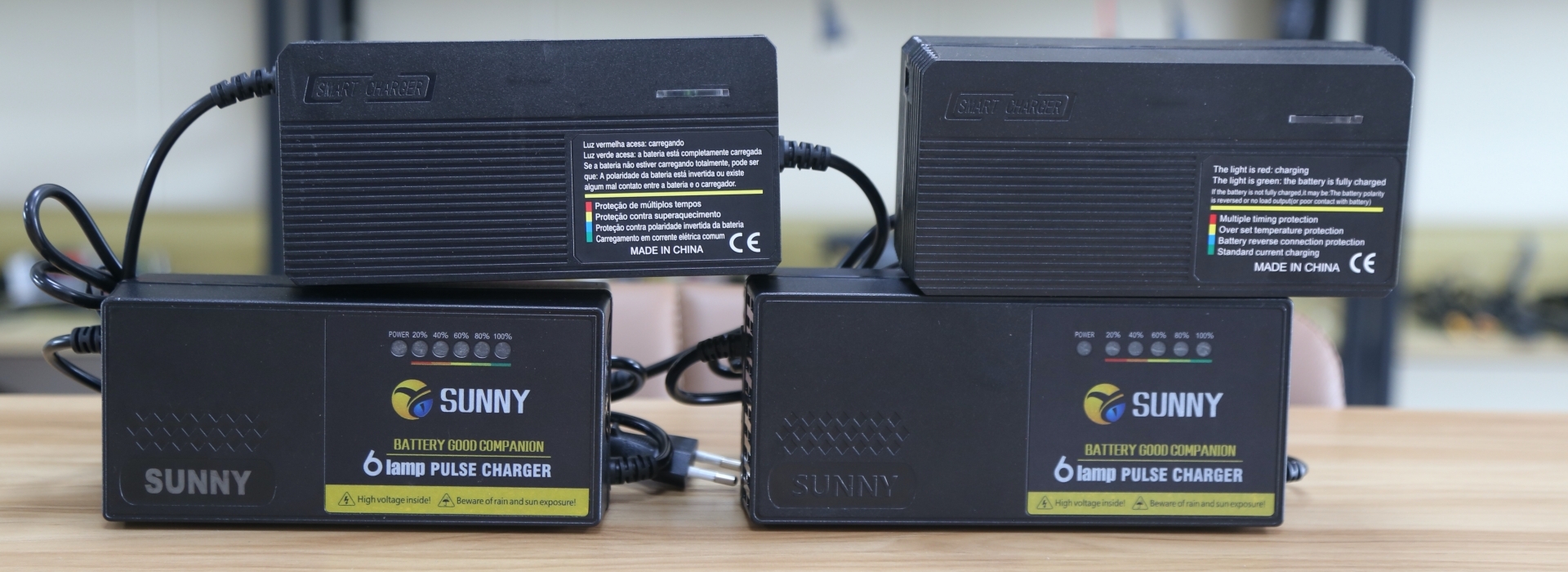
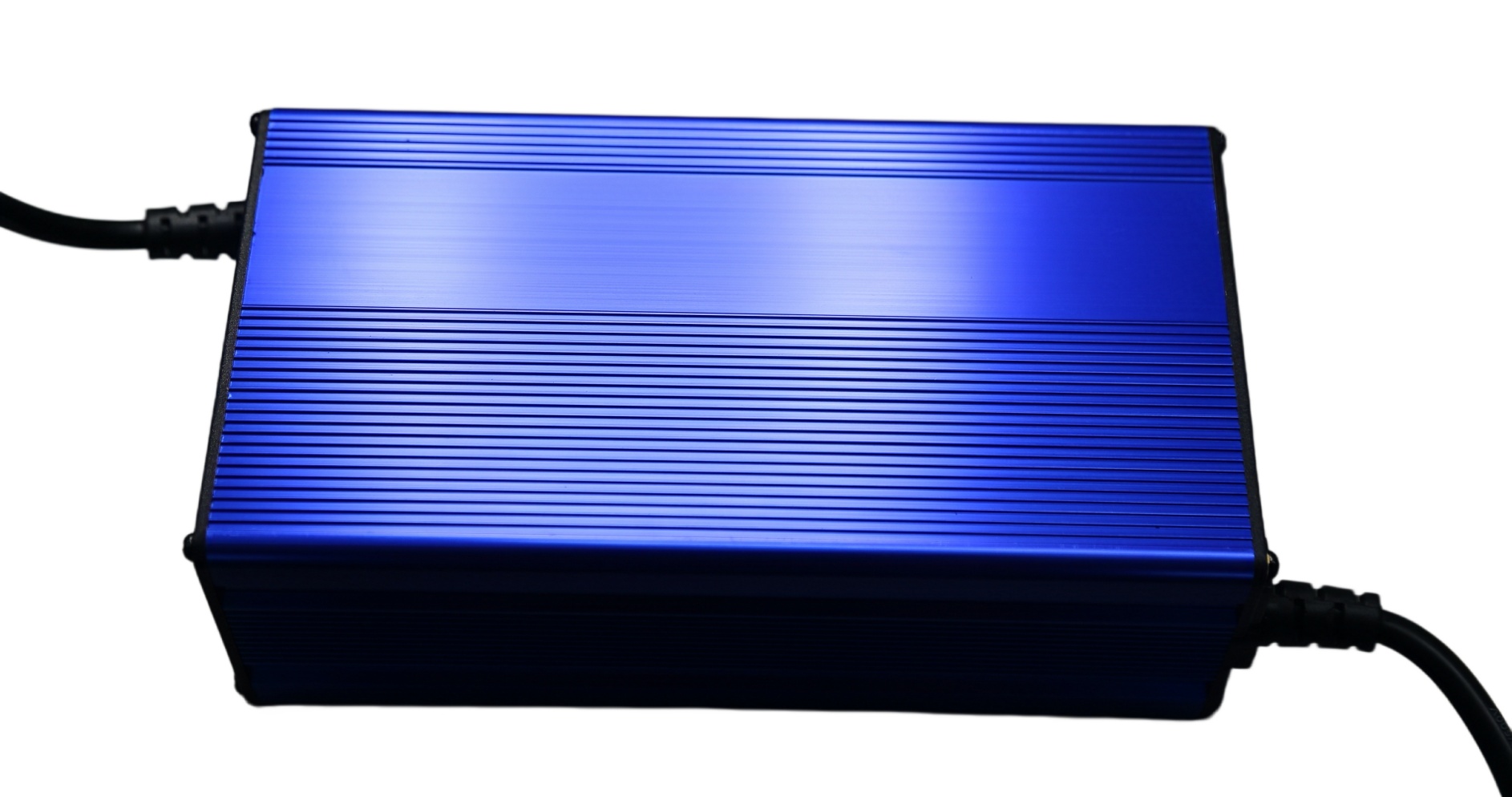
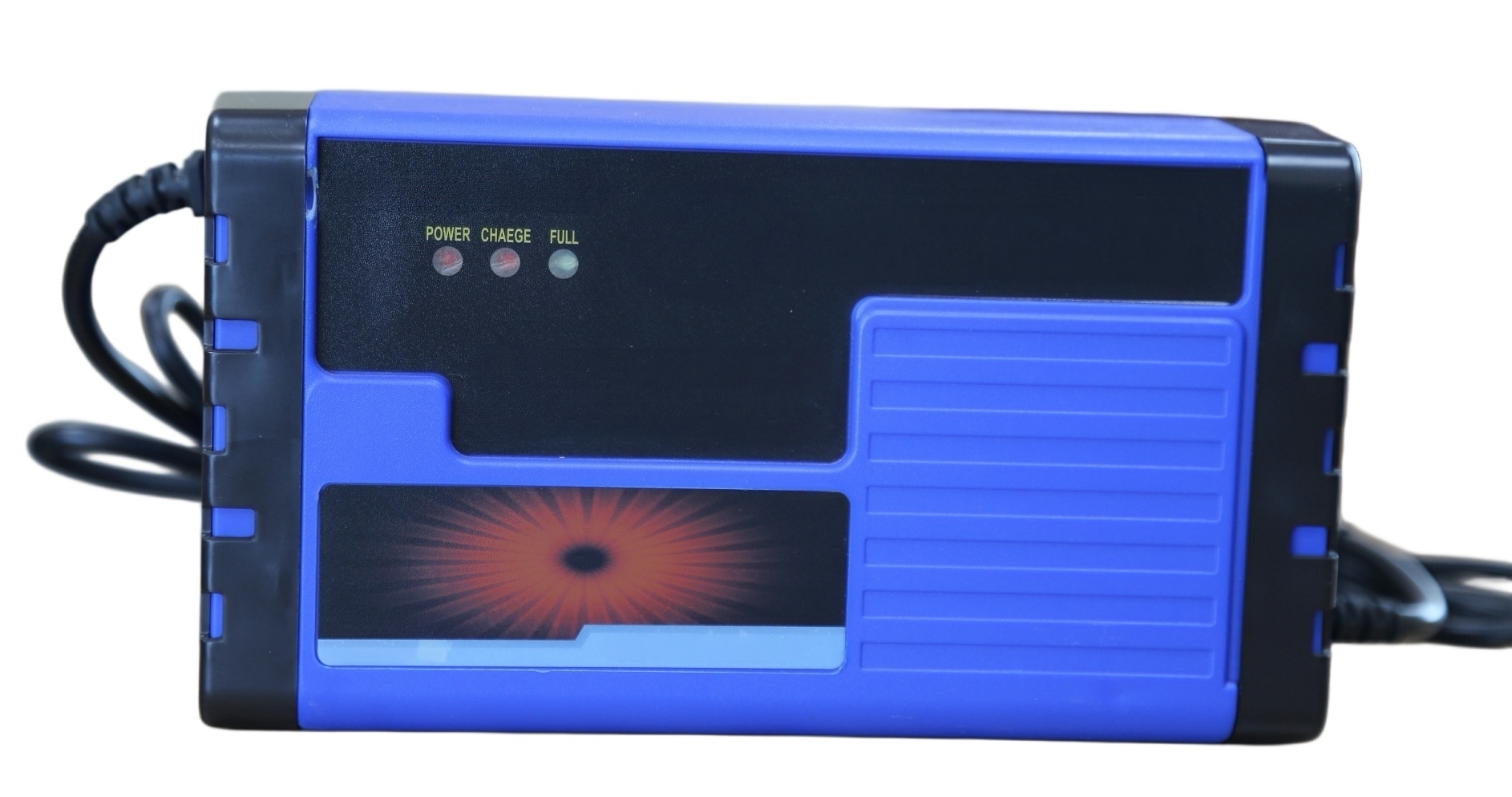
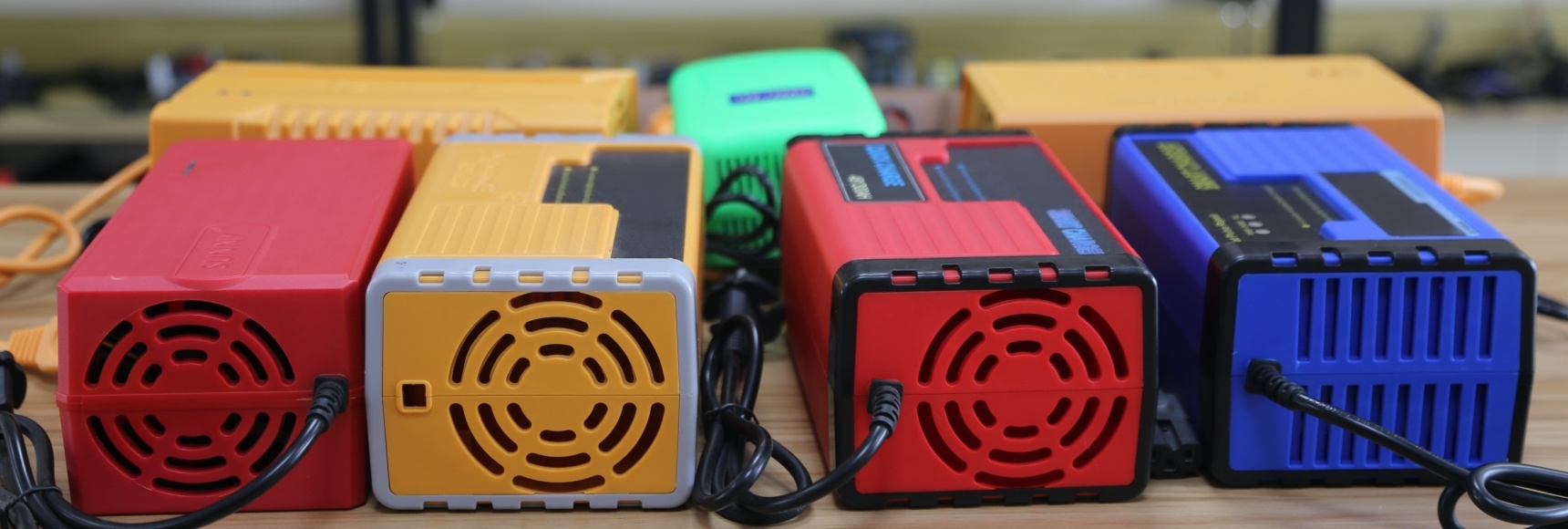
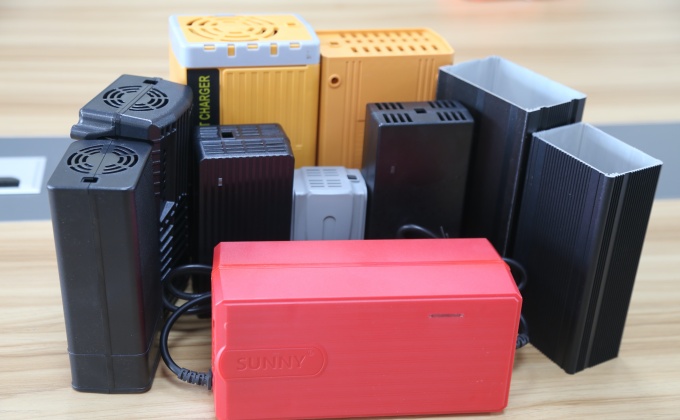
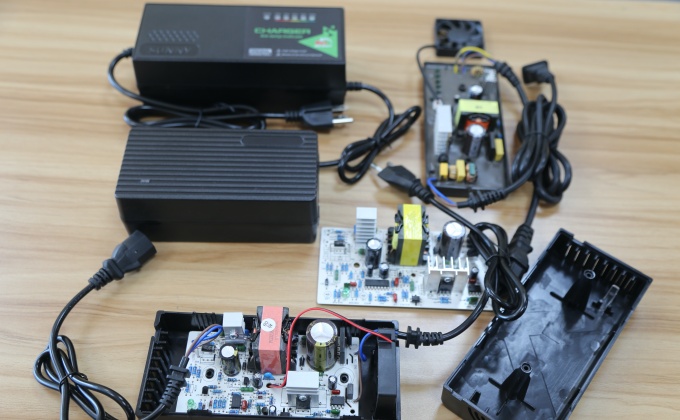
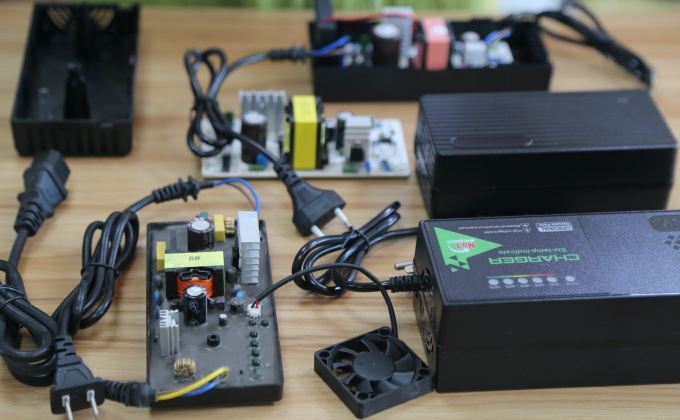
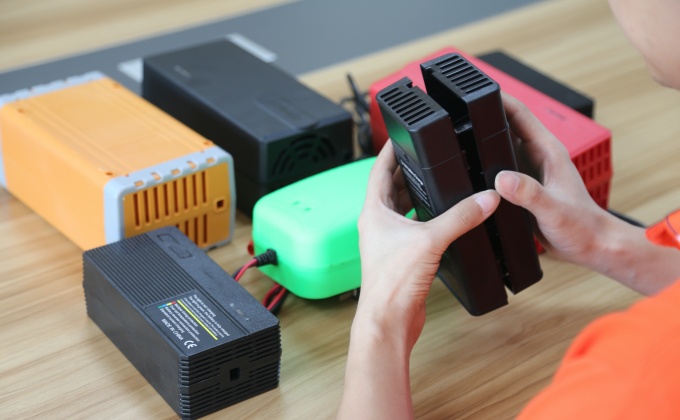
Enclosed chargers with natural cooling are commonly used where output power and thermal conditions allow a fanless design. Aluminum housings and fan-cooled structures can provide additional thermal support for higher-power or demanding applications. Potted or sealed structures can be developed for projects exposed to dust or moisture, and open-frame, SKD, or CKD solutions can support qualified local assembly. The structure should be selected according to output power, installation space, airflow, ambient temperature, duty cycle, environmental exposure, serviceability, and target cost.
What Battery Information Is Required Before Selecting an Electric Motorcycle Charger?
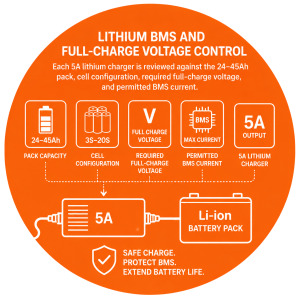
At minimum, the buyer should provide the battery chemistry, nominal voltage, required full-charge voltage, capacity in amp-hours, and allowable charging current. For a lithium pack, the cell configuration and BMS charging-current limit must also be confirmed. Linjia also needs a clear connector photo, polarity and pin definition, local AC voltage, plug type, expected operating temperature, and order quantity. If the battery label does not show the full-charge voltage or cell configuration, the battery or BMS supplier should confirm it. A 60V label alone is not enough to determine whether a 71.4V lithium charger or a 60V lead-acid charger is suitable.
What Housing and Cooling Systems Are Common for Electric Motorcycle Chargers?
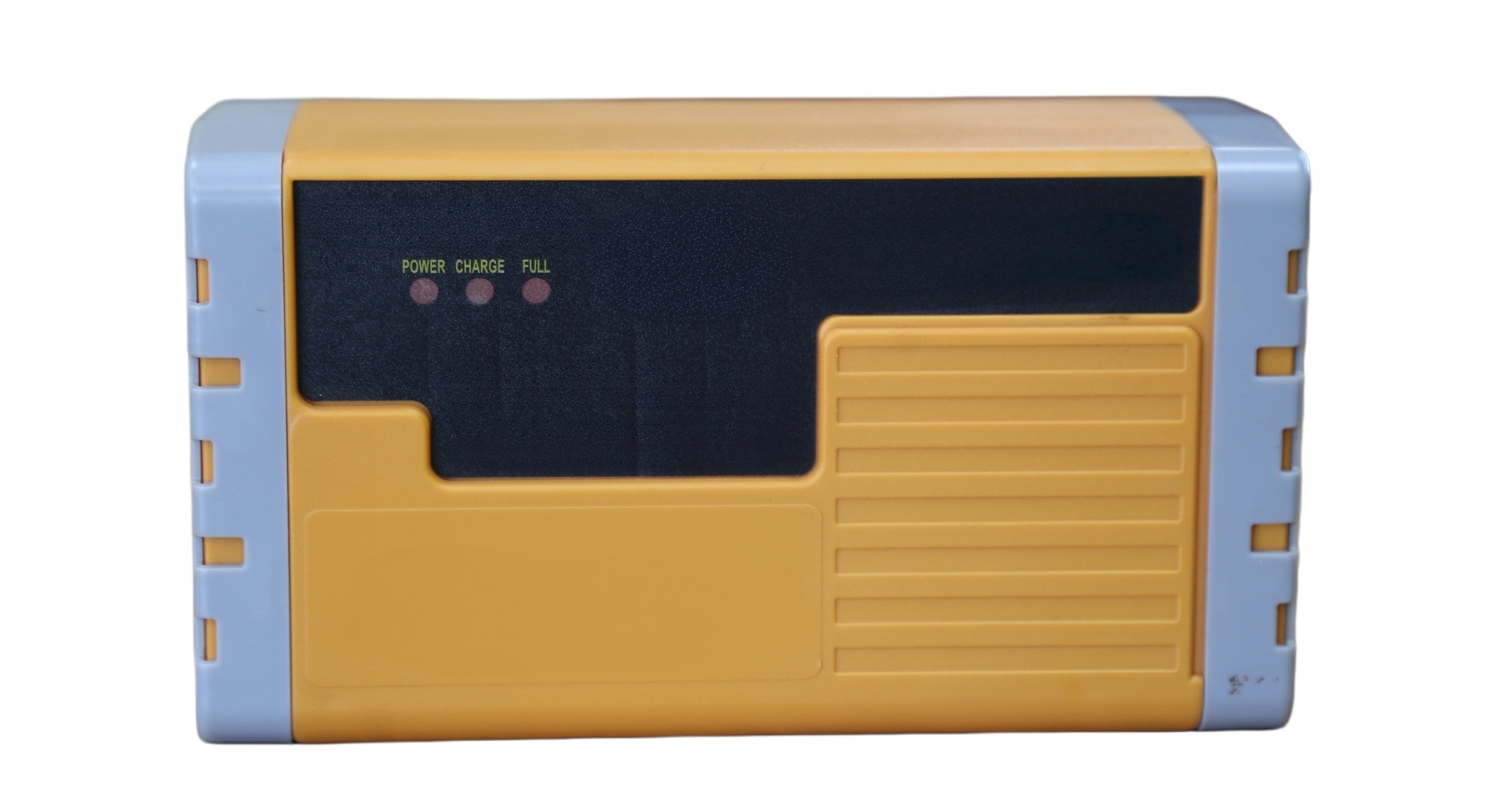
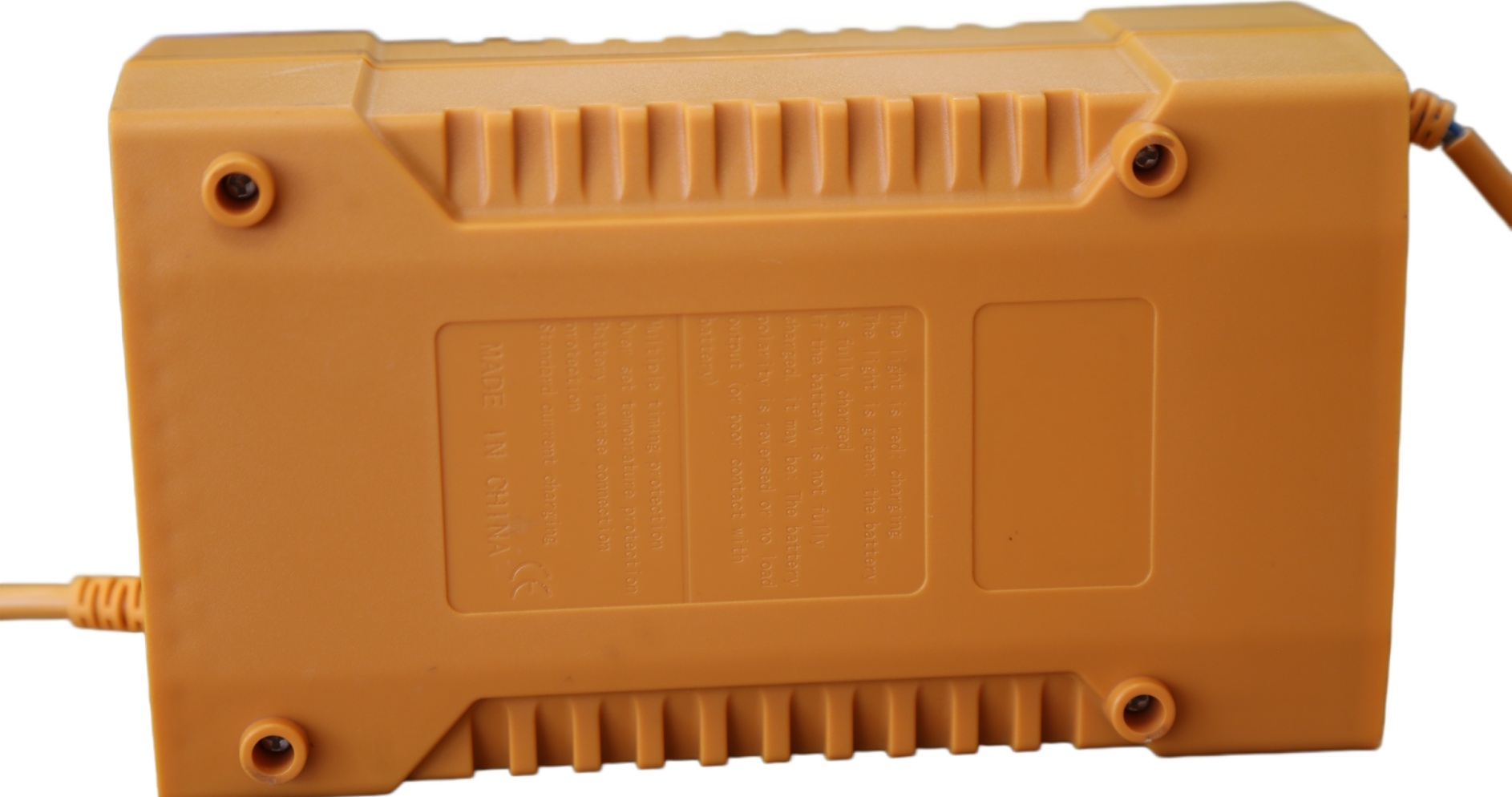
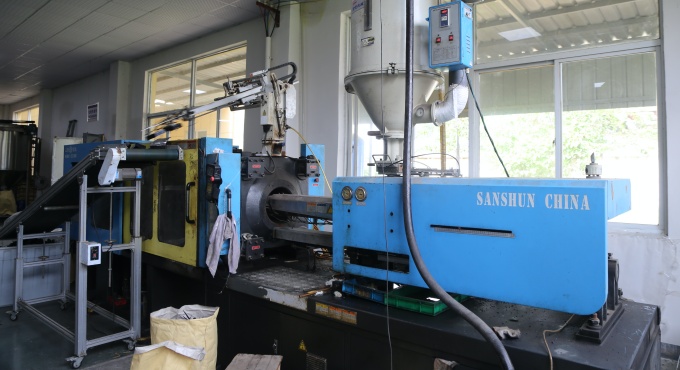
Plastic housings are widely used for compact chargers, while aluminum housings are often chosen where greater mechanical support or heat dissipation is required. Natural cooling reduces moving parts but needs adequate surface area and free airflow. Fan cooling increases airflow but adds noise and a component that must remain clean and functional. Potted designs improve resistance to dust and moisture but require careful thermal design and are less convenient to repair. Linjia selects the housing and cooling approach according to output power, ambient temperature, duty cycle, installation position, and project requirements.
Which Plugs, Connectors, and Cable Options Can Be Customized?
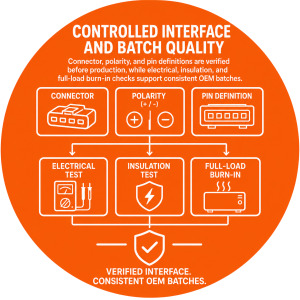
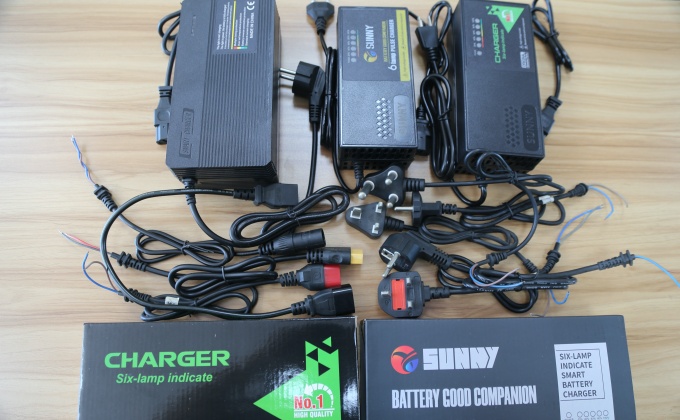
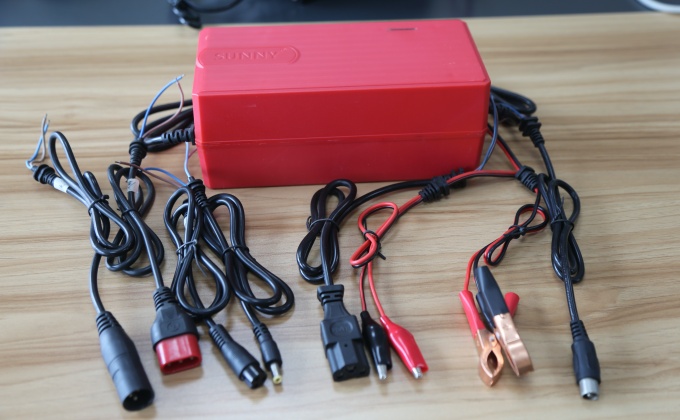
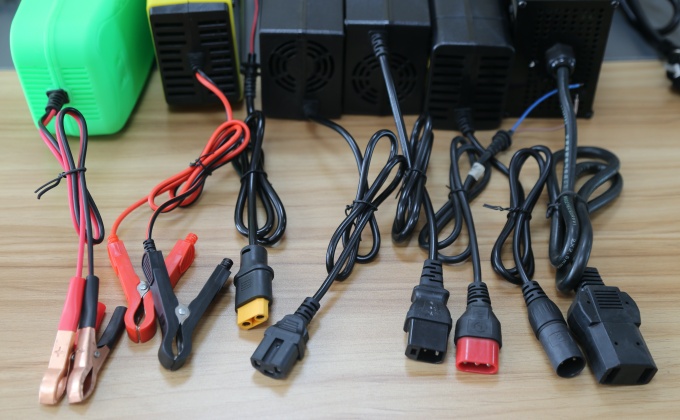
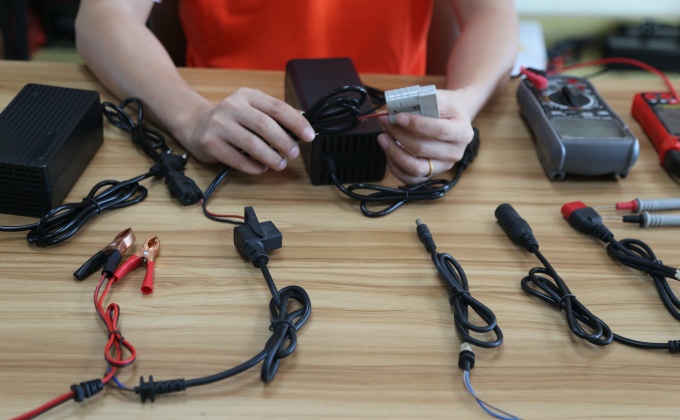
Input options can include plugs for the destination market, while the DC output can be matched to the motorcycle or battery connector. Cable length, cable specification, connector housing, polarity, and pin assignment can also be configured. Because connectors that look identical may use different polarity or pin definitions, a photo alone may not be sufficient. For an OEM battery charger, Linjia recommends confirming the connector drawing, marked sample, or electrical definition before sample production and repeating the check before mass production.
Which Charging-Profile Parameters Can Be Customized?
Depending on the battery system and project, charging current, full-charge voltage, charging stages, transition or cut-off logic, timing control, indicator behavior, and selected protection functions can be reviewed. These parameters must be developed around the battery chemistry and management requirements rather than copied from a charger with the same nominal voltage. For lithium projects, the charger output and BMS charge limit must agree. For lead-acid projects, the charging stages and final voltage must match the battery type and intended maintenance behavior.
What Are the Differences Between 48V, 60V, and 72V 5A Lithium Chargers?
The three models have the same nominal 5A current and the same reference capacity range of 24-45Ah, but they provide different full-charge voltages. The 48V model outputs 54.6 +/- 0.2V, the 60V model outputs 71.4 +/- 0.2V, and the 72V model outputs 84.0 +/- 0.2V. They are not interchangeable. The correct model is determined by battery chemistry, series cell count, required full-charge voltage, and BMS limit. Selecting by current alone can cause the BMS to reject charging or expose the battery to an incorrect voltage.
What Safety Protections Should an Electric Motorcycle Battery Charger Include?
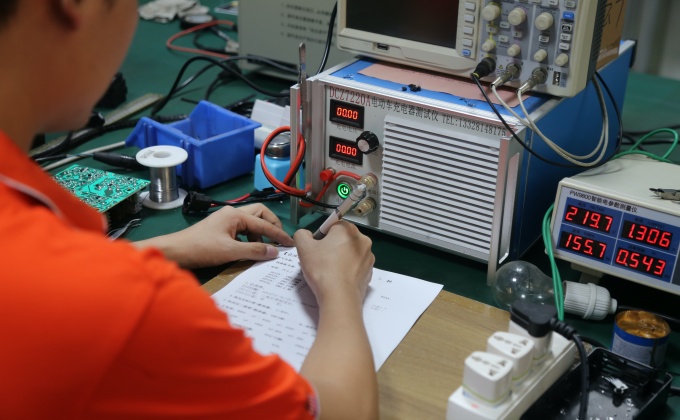
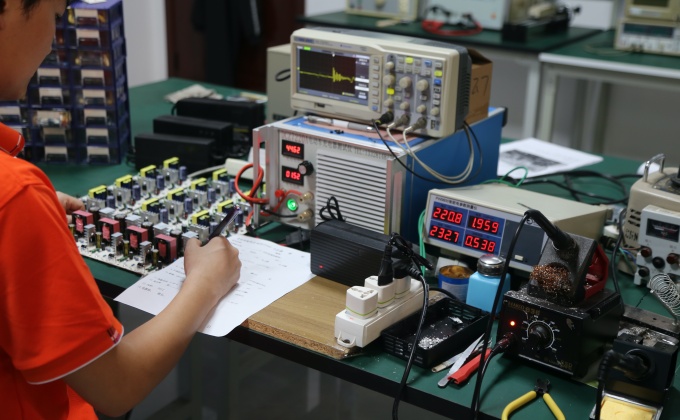
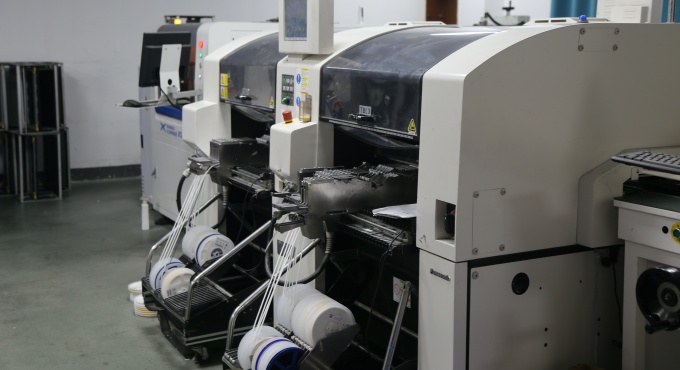
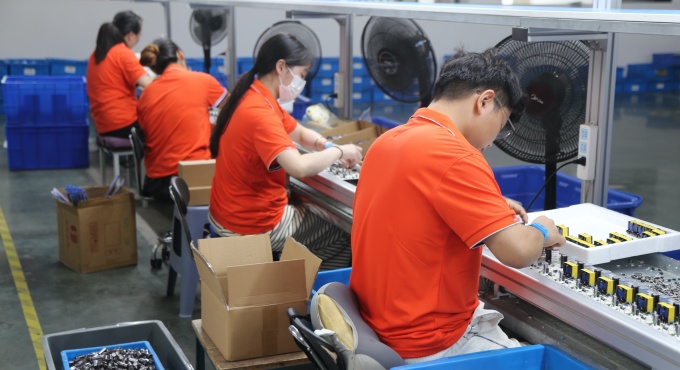
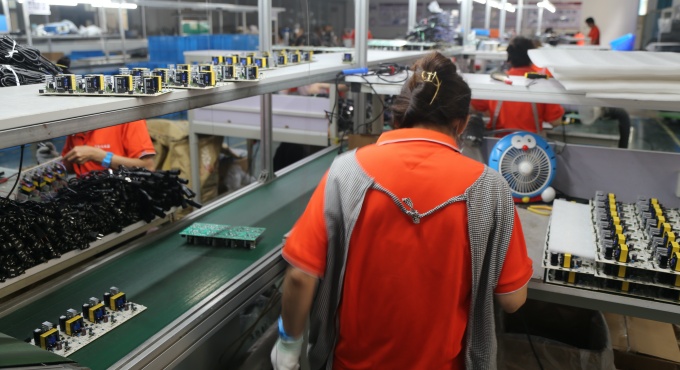
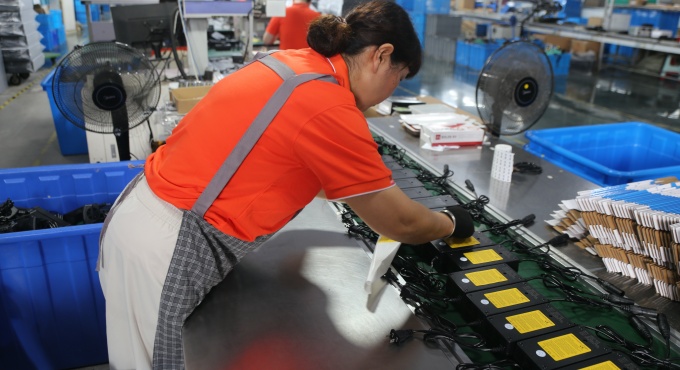
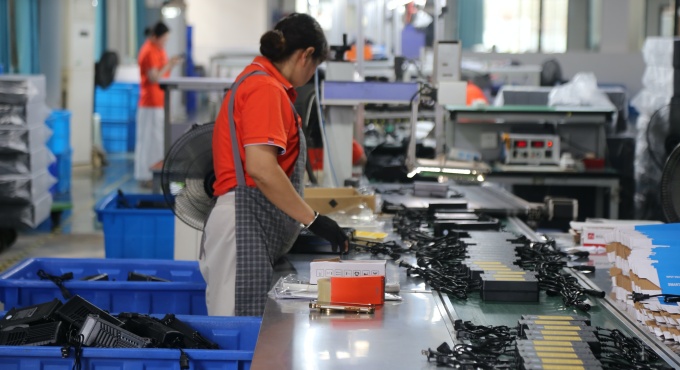
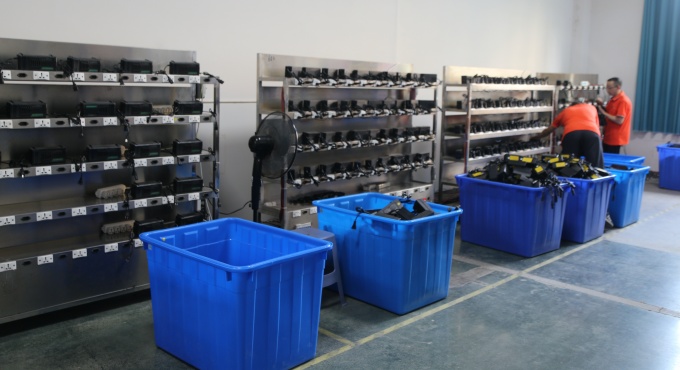
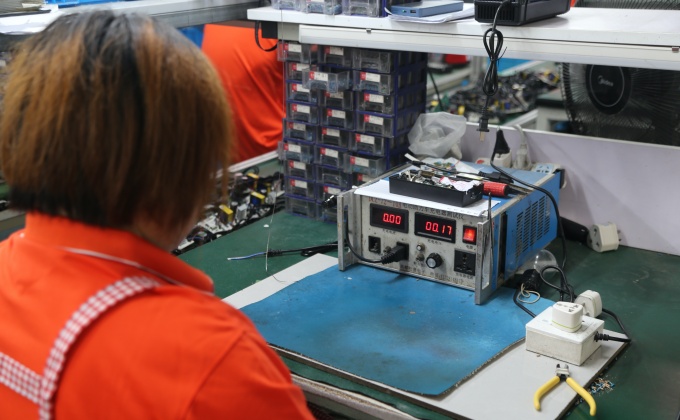
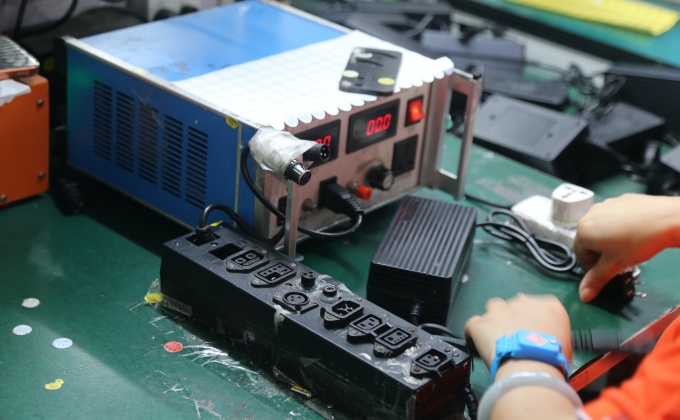
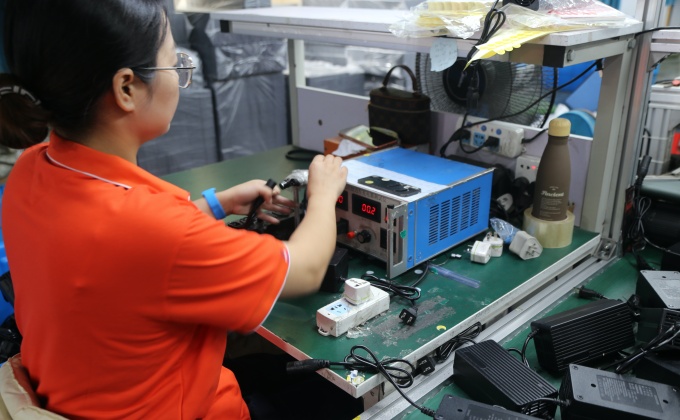
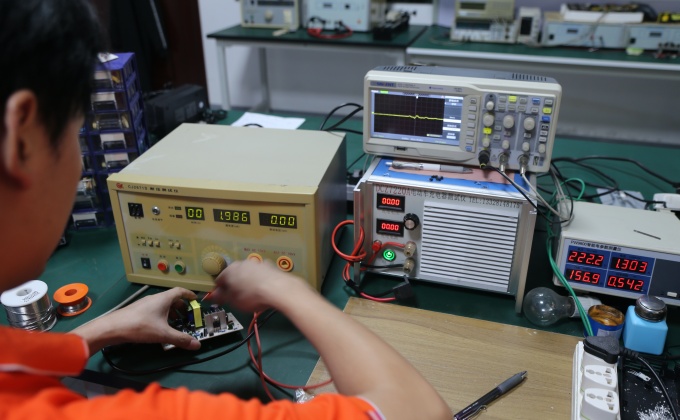
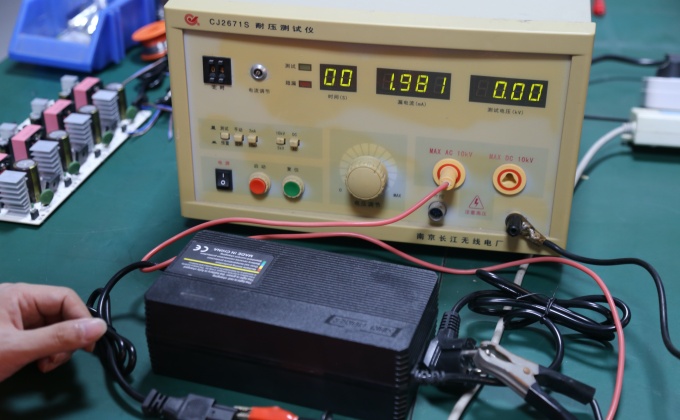
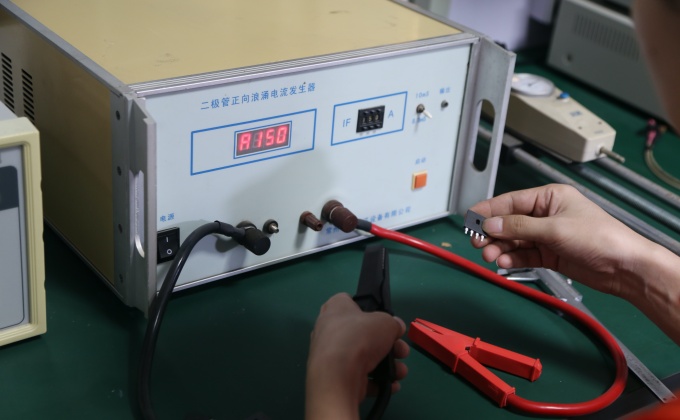
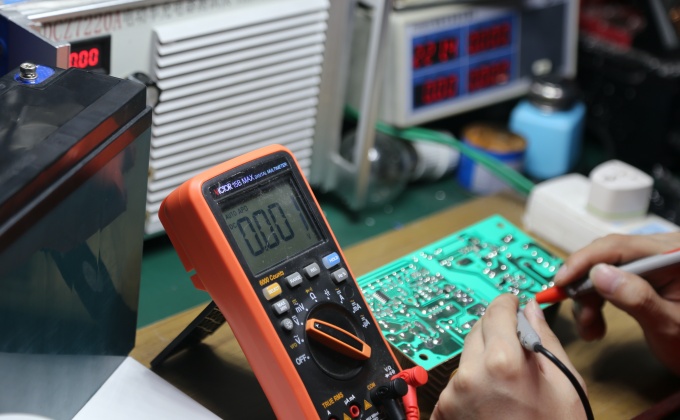
Protection requirements depend on the selected model and battery system. The lithium models on this page identify overvoltage, overcurrent, short-circuit, and timing protection. The catalogue describes pulse maintenance, prevention of battery thermal runaway, overtemperature protection, and multiple timing protection for the lead-acid model group containing the 60V45Ah charger. Other projects may require reverse-connection or additional protection logic. Protection functions should be written into the approved specification rather than assumed from a general product description. Linjia also applies standardized electrical performance, high-voltage insulation, and full-load burn-in checks to help identify output, insulation, assembly, and early-life problems before shipment.
How Do the Charger and the Battery BMS Work Together?
For a lithium battery, the charger supplies the voltage and current defined in the approved charging profile, while the BMS monitors the pack and may limit or interrupt charging when cell voltage, current, temperature, or another condition exceeds its programmed range. The BMS does not correct an incompatible charger specification. If charger voltage is too high, current exceeds the permitted limit, or the connector pinout is wrong, the BMS may repeatedly cut off or the system may become unsafe. Buyers should provide the BMS charge-current limit, required full-charge voltage, connector definition, and any communication requirement before development. A conventional lead-acid pack follows a different charging system and should not be treated as a lithium BMS application.
What Input Voltage Is Suitable for Different Markets?
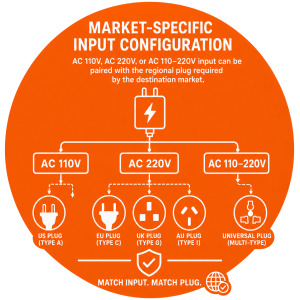
Linjia can configure AC 110V, AC 220V, or AC 110-220V input at 50-60Hz, together with the regional plug required by the destination. A single-voltage version may be suitable for a stable, defined market, while a wider input version can simplify distribution across more than one voltage region. Buyers should provide the country's nominal voltage, actual voltage fluctuation, frequency, plug standard, and any surge or grid-adaptation requirements. The approved input range must be confirmed on the product specification and label.
Can the Charger Be Used in High-Temperature, Dusty, or Voltage-Unstable Markets?
The catalogue models on this page list an operating range of -20 degrees C to +50 degrees C, but real suitability depends on airflow, duty cycle, enclosure, component configuration, and the actual environment. For markets with high heat, dust, moisture, voltage fluctuation, or long daily operating periods, Linjia can evaluate input tolerance, thermal margin, housing material, cooling, potting, cable, and protection requirements. These conditions should be disclosed before development. A charger should not be described as waterproof, high-temperature rated, or surge resistant unless the selected construction and validation support that claim.
What Is the Expected Service Life of an Electric Motorcycle Battery Charger?
There is no responsible fixed service-life figure for every charger and market. Actual life depends on component quality, electrical and thermal margin, input-voltage stability, ambient temperature, ventilation, charging frequency, battery condition, connector contact, and user handling. A correctly matched charger with sufficient thermal margin and controlled production is less likely to experience early failure. For a B2B project, the buyer should confirm the approved component level, test plan, operating conditions, warranty terms, and field-performance expectations for the specific model rather than relying on a general lifespan claim.
Are Electric Motorcycle Chargers Likely to Overheat or Fail During Long-Term Use?
Excess heat or premature failure is more likely when the charger is mismatched to the battery, operated near its limit for long periods, covered during charging, used in poor ventilation, exposed to unstable input power, or connected through worn plugs and cables. Component selection and thermal design also matter. Linjia can adjust key components, housing, cooling, and protection configuration according to the target use. During qualification, buyers should test the charger with the actual battery, connector, local input condition, ambient temperature, and expected charging cycle before approving mass production.
How Should an Electric Motorcycle Battery Charger Be Used and Maintained?
Use the charger only with the battery specification, connector, and polarity stated on its approved label or manual. Place it in a dry, ventilated area and do not cover the housing or block cooling openings during charging. Follow the model-specific connection and disconnection sequence, and do not open or modify the charger. Regularly inspect the plug, cable, connector, and housing for looseness, damage, discoloration, or abnormal heat. Stop using the charger if there is unusual odor, noise, repeated cut-off, excessive temperature, or visible damage, and have the battery and charger checked by qualified service personnel.