A charger can complete a short demonstration in an air-conditioned office and still be the wrong configuration for a hot charging room. For an OEM buyer, the useful question is what output the finished unit can sustain through the required charging duty at the intended site.
Direct answer: Hot climates reduce the temperature margin available inside a charger. This can change the required power rating, component selection, heat-transfer structure, derating strategy and installation instructions. The battery also needs its own temperature limits. A suitable design must meet the agreed charging-time requirement within both the charger’s operating envelope and the battery manufacturer’s charging limits.
This guide helps vehicle manufacturers, battery brands, importers and distributors turn “suitable for a hot market” into a specification that engineers can evaluate and buyers can compare.
Start with the charger’s local environment
A country’s summer temperature is context, not a complete design input. Specify the air reaching the charger during operation, its intended position and the duration of the hottest charging period. A shaded room, a sun-exposed cabinet and a busy charging bay can present different conditions in the same city.
Keep four values separate: outdoor weather, local air at the charger, temperatures inside the charger and battery temperature. Also distinguish operating limits from storage limits. Equipment that survives hot storage is not automatically approved to deliver full charging output at that temperature.
Include the starting condition. Does charging begin after the vehicle has been operating in the heat? Is the charger already warm from a previous cycle? These questions can affect the required charging schedule even when the electrical model number stays the same.
A useful requirement states the local temperature range, permitted mounting arrangement, daily duty and required output together. Ask the supplier to identify the conditions that remain unverified rather than replacing missing site information with a general “tropical” claim.
Buy the output available during the hottest charging period
An operating-temperature range does not necessarily mean full rated output throughout that range. A charger may have a documented reduction in current or power as temperature rises. This is thermal derating; the buyer needs to know its effect on the charging window before approving the model.
Ask for the full-output temperature range, any derating curve or table, and the conditions behind it. The record should identify AC input, actual DC voltage and current, mounting position and cooling arrangement. TDK-Lambda’s derating explanation shows why temperature, input voltage and installation can all affect available output. Its product values are not Linjia charger specifications.
A purchasing example: If a proposed 10A charger is documented to supply only 7A under the agreed hot-site condition, plan that part of the charging cycle around 7A. The constant-current time to deliver the same charge would be about 43% longer: 10 ÷ 7 ≈ 1.43. This is an illustrative calculation, not a Linjia rating or a prediction of total charging time; tapering, battery conditions and pauses also matter.
If the resulting turnaround is unacceptable, engineering can evaluate a larger thermal platform, a different installation or another approved configuration. Raising the battery charge current without battery approval is not a solution. Confirm the separate battery and BMS charge-current limits.
Separate charger cooling from battery temperature control
“Temperature protection” can describe several different functions. Put each function into the specification so a quotation cannot satisfy one requirement while leaving another unanswered.
| Function | What it does | What the buyer should confirm |
|---|---|---|
| Charger thermal derating | Reduces available output as the charger’s thermal conditions require. | Sensing method, output reduction, applicable conditions and charging-time effect. |
| Charger overtemperature protection | Limits or stops operation under a defined excessive-temperature condition. | Thresholds and tolerances, indication, restart conditions and recovery behavior. |
| Battery temperature control | Applies battery-specific permission, current limits or voltage compensation where required. | Battery limits, sensor location, any supported BMS interface and responsibility for stopping charging. |
For lead-acid batteries, temperature may change the approved charging-voltage requirement. Trojan’s maintenance guidance includes temperature compensation for its batteries. Obtain the coefficient, reference temperature and limits for the actual battery model. Do not apply one supplier’s values to every flooded, AGM or gel pack.
For lithium batteries, use the pack manufacturer’s permitted charging temperature range and control requirements. A BMS temperature cutoff does not establish the charger’s own thermal capability, and a charger sensor near a heatsink does not necessarily measure battery temperature. Do not assume that a proposed Linjia model has an external battery sensor, communication interface or automatic temperature compensation unless that function is specified and confirmed.
High temperature changes more than the fan decision
Give engineers a heat budget and a service duty
At the same output, lower conversion losses can reduce the heat that must be removed. Ask engineers to evaluate efficiency at the relevant input and charging load, then examine where the losses occur. A single headline efficiency value does not describe every stage of a charging cycle.
Component life also belongs in the review. Panasonic’s capacitor guidance explains the temperature-dependent aging of aluminum electrolytic capacitors. Request the selected components’ limits and a thermal assessment for the intended duty. A high temperature marking on one component does not establish the complete charger’s service life.
Approve the complete construction and its maintenance conditions
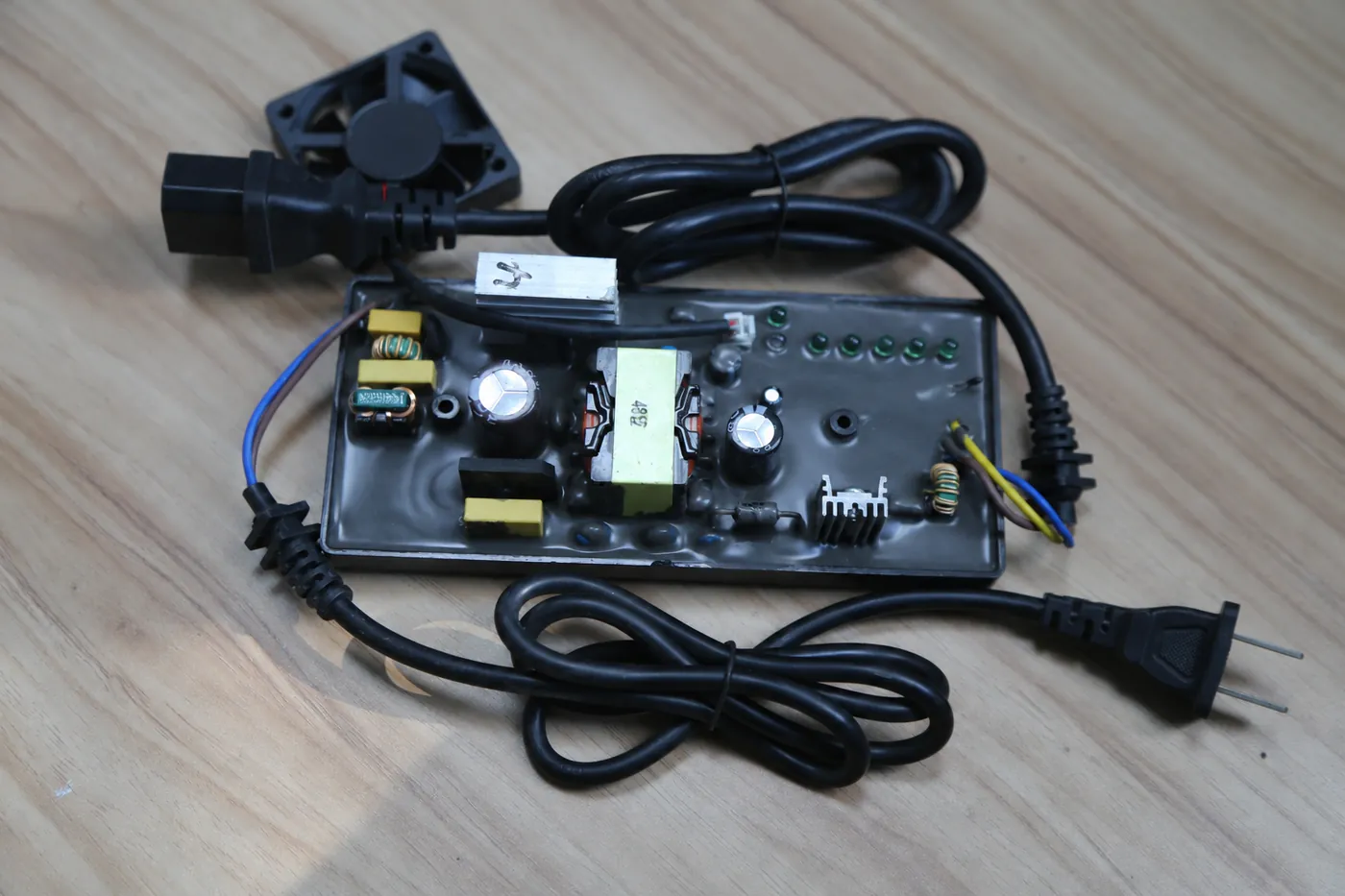
Linjia’s structure-selection approach: Our existing guidance treats fan cooling, natural cooling and potting as choices tied to power and the real operating environment. A fan adds airflow, noise and a moving part; natural cooling relies on the housing and thermal margin; potting changes heat transfer, weight and service access. For a hot-climate project, evaluate those tradeoffs against the required sustained output and the approved installation.
If dust or moisture protection is also required, assess that exposure alongside heat removal. Adding sealing, a cover, a filter or potting to an approved sample changes the construction and can require reassessment.
Use the natural cooling vs fan cooling guide and potted vs non-potted construction guide for those detailed comparisons. In a hot-climate project, the decision is whether the complete configuration sustains the required duty under the agreed exposure and service conditions.
Specify recovery behavior as well as the stop condition. Repeated reduction, shutdown and restart can disrupt fleet turnaround even where protection prevents damage. Have qualified engineers define and validate the intended response; users should not bypass protection to preserve charging speed.
Agree the hot-climate acceptance matrix before ordering
Test the combinations that can actually occur in service. Passing a room-temperature output check and a separate unloaded hot soak leaves sustained charging at high temperature unresolved. Where hot conditions and low AC input can coincide, include that combination in the assessment. The charger input-voltage guide explains why input coverage needs its own confirmation.
| Assessment | Conditions to define | Evidence needed |
|---|---|---|
| Sustained hot operation | Agreed local ambient, output load, duration and final mounting arrangement. | Output and temperature records against approved limits. |
| Combined input and temperature | Required AC operating points at the hot condition. | Available output and component assessment for the combined condition. |
| Warm starting and repeated duty | Initial temperatures and the required interval between charging cycles. | Startup, sustained output and completion behavior. |
| Battery coordination | Battery temperature limits and the specified sensing or control method. | Documented charge permission, any current change and approved voltage behavior. |
| Protection and recovery | Engineering-defined abnormal conditions and recovery criteria. | Observed response, indication and restart behavior. |
| Production release | Approved hardware, control settings and applicable routine checks. | Configuration references and traceable release records. |
This is a proposed project checklist, not a report of completed Linjia tests. Agree methods, instruments, stabilization criteria, measurement points and pass limits with qualified personnel before testing. Match the load to the question: a controlled load can characterize charger output, while battery charging completion needs the applicable battery or an agreed representative method.
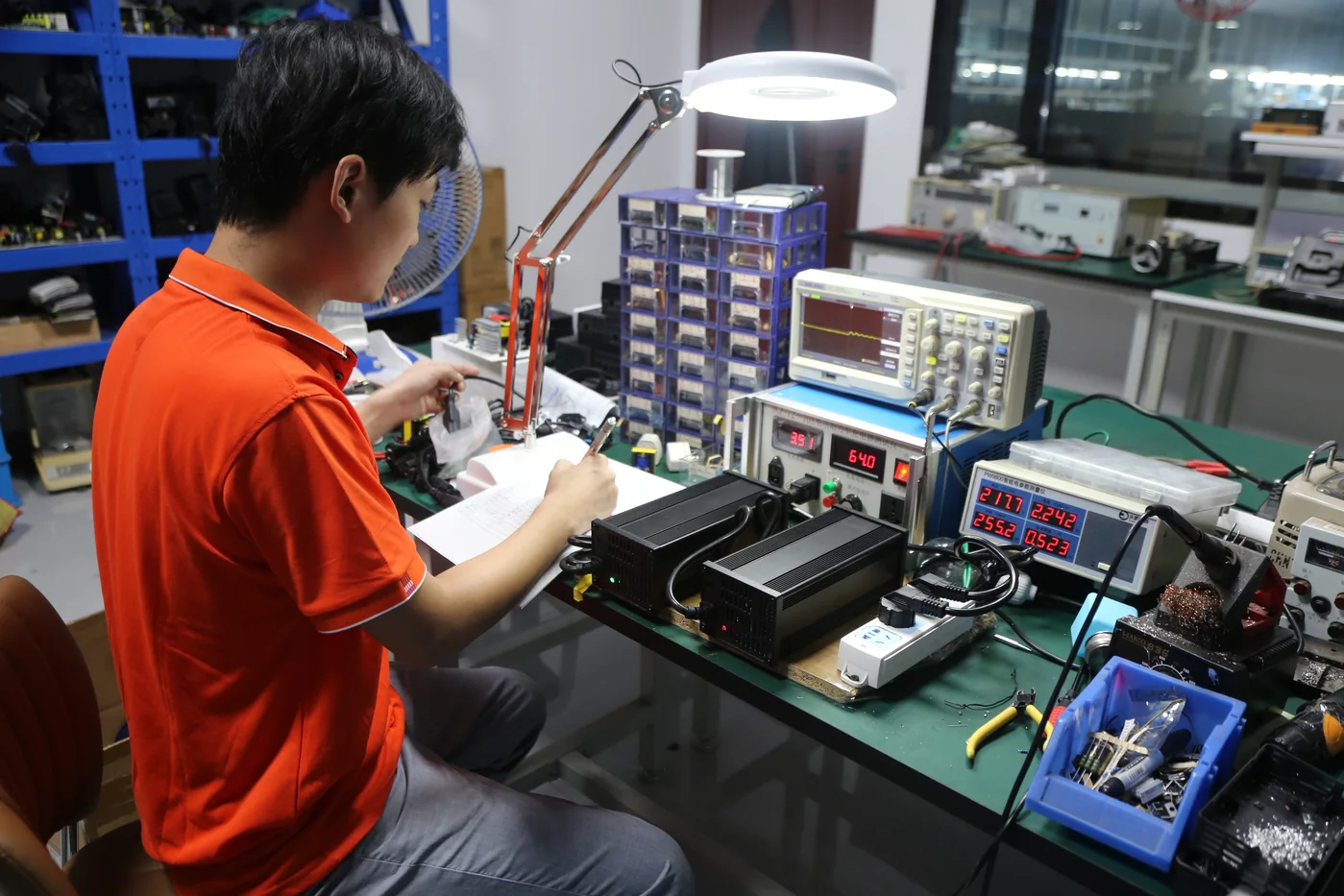
Linjia’s published production workflow includes electrical checks, insulation-related testing and full-load burn-in. Those stages support production control; they do not automatically prove hot-climate qualification. The full-load burn-in guide explains that distinction.
Turn the climate requirement into an RFQ and a production reference
Send these details before comparing prices:
- Battery: chemistry, charging-voltage specification, capacity, permitted current and temperature limits.
- Charging duty: starting battery condition, daily cycles, required completion time and any acceptable reduction in output.
- Site: local temperature range, solar exposure, charging-bay layout and mounting space.
- Supply and interface: AC operating requirements, plug, DC connector, pin definition and cable configuration.
- Control: required derating, protection, recovery and any battery-temperature or BMS functions.
- Acceptance: agreed conditions, pass criteria, supporting records, quantity and documentation requirements.
After sample approval, keep the fan, thermal interfaces, enclosure, compound where applicable, component references and relevant control settings tied to the approved revision. A substitution that preserves voltage and current can still change hot-condition performance. Route changes through engineering review before they enter repeat orders.
Common buyer questions
Does a higher operating-temperature limit mean more charging output in summer?
Not necessarily. Compare sustained output at the required temperature and installation. A broad operating range can include reduced-output operation.
Can nighttime charging remove the need for a hot-climate review?
It may reduce local ambient temperature, but confirm the actual charging location, battery starting temperature and daily schedule. Base approval on the conditions the project will encounter.
Should every charger for a hot market use the same design?
No. Charging power, installation, battery limits, dust exposure and service duty differ. Specify the operating requirement before selecting a thermal platform.
Discuss your hot-climate charger requirements with Linjia Power
For a 6V–72V lead-acid or lithium charger project, send your battery specification, required charging output, local temperature conditions, installation photographs and estimated quantity. Use Linjia’s custom charger development process to define the configuration and the evidence required before bulk approval.