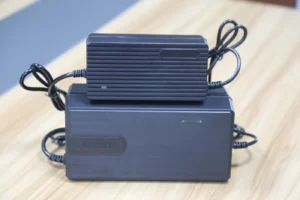
Potted chargers use an encapsulating compound around all or part of the electronic assembly. Non-potted chargers leave the assembly without that bulk fill. For OEM buyers, the choice depends on exposure, thermal performance, weight, service strategy and production control. Confirm the actual coverage and finished-unit test evidence: the word “potted” alone does not establish an IP rating or a better charger for every application.
Vehicle manufacturers, battery brands and importers often receive two quotations with similar electrical ratings but different construction. This guide compares potted vs non-potted chargers so buyers can define the structure they need, identify what a sample actually proves, and preserve the approved construction in repeat orders.
Potted vs non-potted chargers at a glance
Compare complete proposed configurations at the same required charging output. Adding compound to an existing design changes the construction and needs engineering review. Start with the custom battery charger development process when the required structure is still undecided.
| Buyer consideration | Potted construction | Non-potted construction |
|---|---|---|
| Environmental exposure | The specified compound protects the areas it covers; uncovered areas still need attention. | Protection depends on the enclosure, sealing and any specified board coating. |
| Heat transfer | Compound properties and its connection to the thermal structure matter. | Heatsinks, thermal interfaces, housing and airflow remain design considerations. |
| Weight and handling | Include the compound in the finished-unit and carton weight. | Compare measured weights of the actual proposed models. |
| Inspection and service | Encapsulation can restrict access to components and fault investigation. | Internal access may be easier, subject to design and authorized service procedures. |
| Production control | Define material, coverage, mixing, dispensing and curing requirements. | Define assembly, fastening, thermal interfaces and any coating requirements. |
| Approval evidence | Request records for the finished, cured configuration. | Request records for the complete assembled configuration. |
Define what “potted” means in the quotation
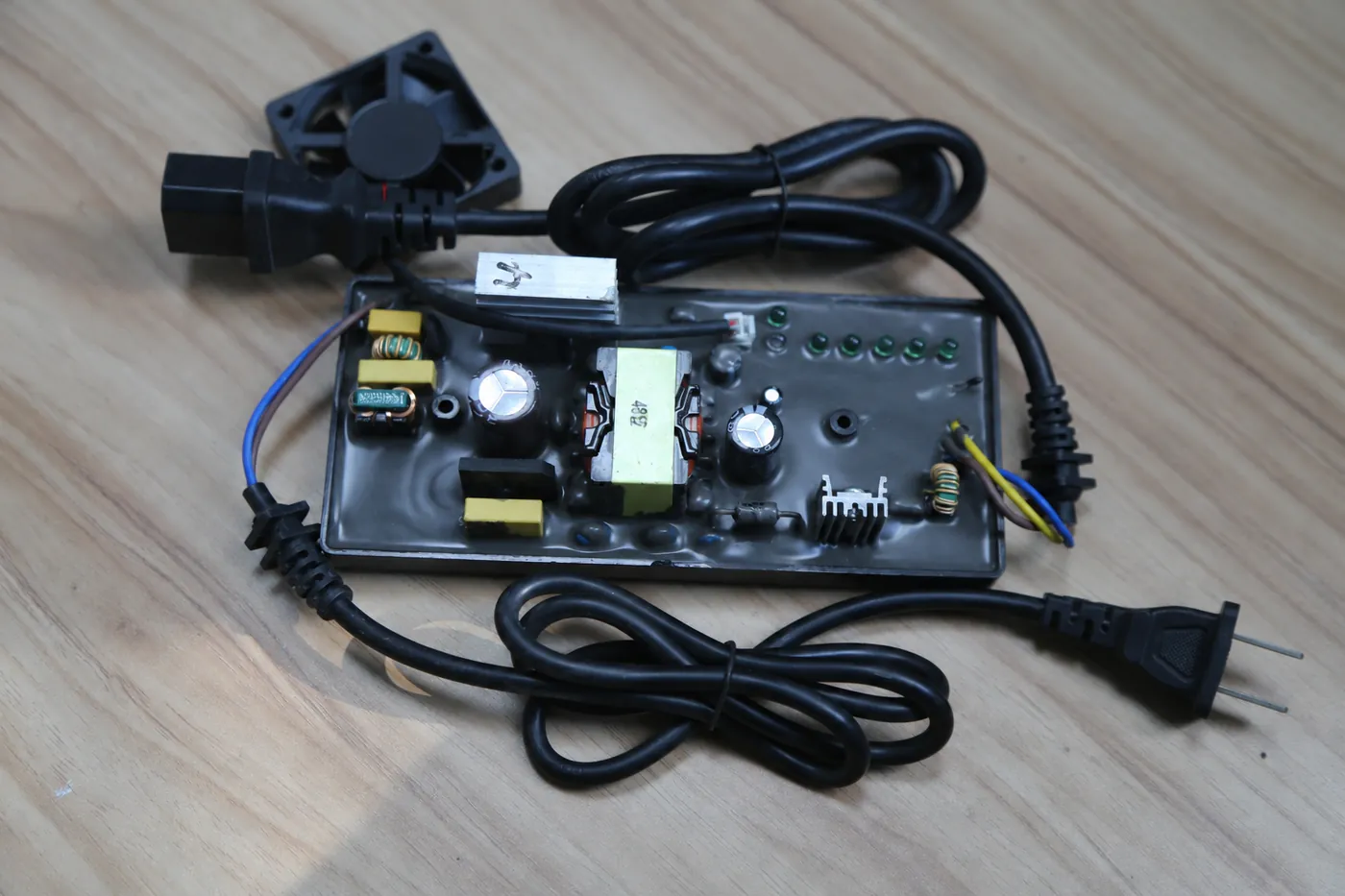
A quotation should distinguish full encapsulation, partial fill, selective protection and a non-potted assembly. Ask for a construction drawing or an authorized internal photograph showing the intended coverage. A small adhesive deposit securing one component should not be treated as evidence that the electronic assembly is encapsulated.
Henkel’s potting overview describes compounds that cure around electronic assemblies inside a housing. For purchasing, translate that general description into an agreed fill boundary: which parts are covered, which remain exposed, and which areas must remain clear. Keep that record with the approved charger revision.
Conformal coating is another construction detail to specify separately. A non-potted charger may have a protective coating on its board, but coating and bulk encapsulation are different arrangements. Ask the supplier to identify the actual process rather than accepting “protected PCB” as a complete specification.
Epoxy, polyurethane and silicone are broad material families. MacDermid Alpha’s resin-selection guidance explains that operating temperature, mechanical stress, moisture and chemical exposure influence material choice. Request the exact material specification and its compatibility review. A material family or compound colour does not define the finished charger’s performance.
Separate potting from the finished charger’s IP rating
Describe the actual exposure: indoor humidity, condensation, dust, occasional splashes or a specified cleaning procedure. These are different requirements. Ask how the proposed assembly, case, cable entries and connectors address the intended conditions.
IEC 60529, Edition 2.2, classifies degrees of protection provided by enclosures. The procurement implication is that a potting statement cannot substitute for evidence supporting the IP claim made for a finished configuration. Request the relevant report, model identification, test arrangement and installation conditions. Do not transfer a rating from a resin datasheet or a different housing.
For example, a distributor may describe a charger as “for outdoor customers” while the intended charging location is a covered indoor room. Another project may require a documented water-exposure assessment. Put the actual requirement in writing before comparing prices. Where no exposure rating has been confirmed, follow the manufacturer’s stated use conditions.
Compare heat transfer, weight and the service plan
Evaluate the cured assembly’s thermal performance
A thermally conductive compound can form part of a heat-transfer path, but “more compound” is not a thermal acceptance criterion. The material properties, fill geometry and connection to heat-dissipating surfaces need to suit the design. Request output and temperature evidence for the final configuration in its intended mounting position.
As a material-specific example, the Electrolube SC4004 technical datasheet identifies thermal properties alongside mixing and cure conditions. This illustrates why the material specification and process belong together; it does not identify the compound used in Linjia chargers.
Cooling method remains a related decision. A potted assembly may still include heatsinks or a fan, as the photograph above shows. Use the separate natural cooling vs fan cooling guide to review airflow and installation requirements.
Include logistics and fault handling in the comparison
Ask both suppliers for measured unit weight, packing quantity and carton dimensions. Compare the quoted finished products: different housings and component choices can outweigh any simple assumption about the added resin. The delivered-cost comparison should include the agreed packing arrangement and the freight calculation used for your shipment.
Encapsulation can make component access and fault analysis difficult. Before ordering, agree how failed units will be identified, what evidence the buyer should supply, and whether the approved support route involves unit replacement or authorized workshop assessment. Non-potted construction also requires a defined support process; accessible components do not make user repair appropriate. Do not open an energized charger or remove compound to investigate a fault.
Approve the construction before ordering in volume
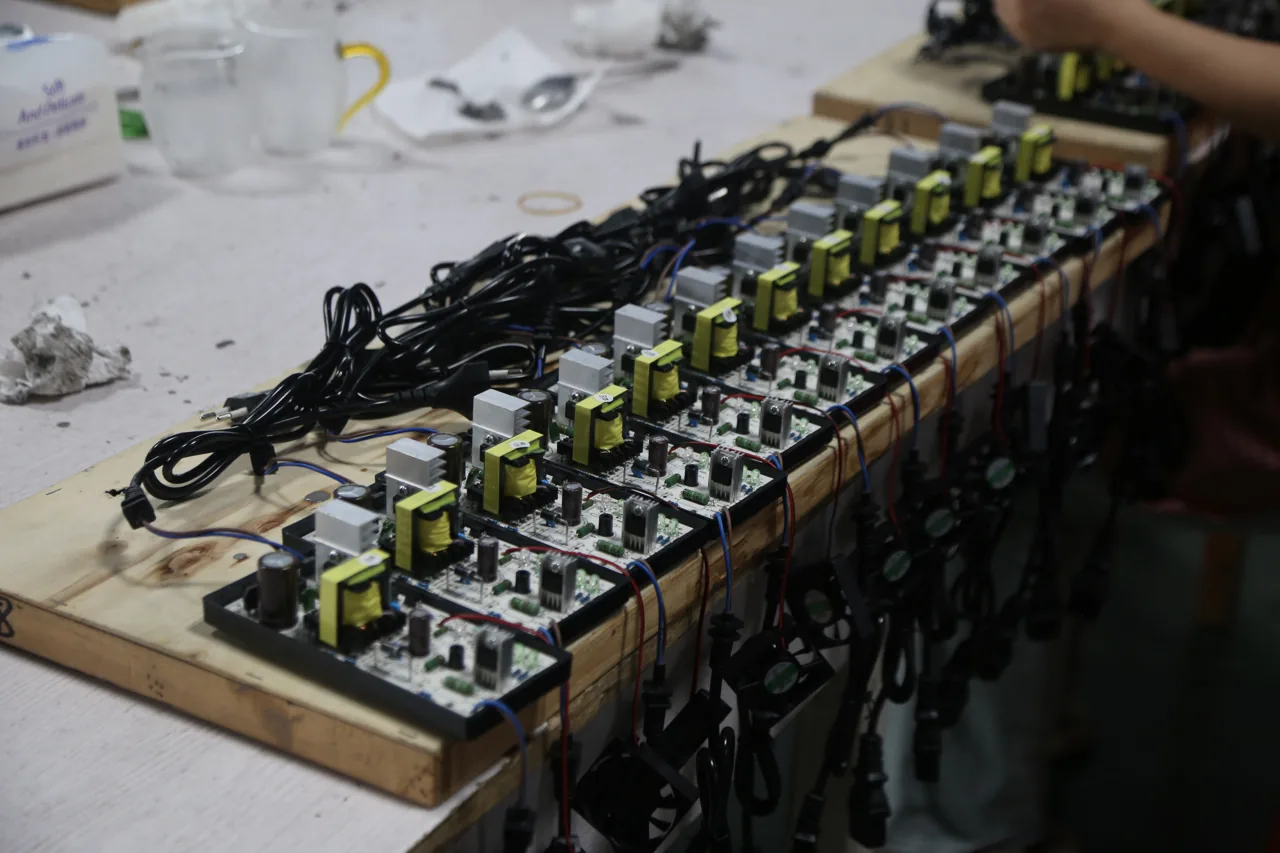
Linjia’s published manufacturing and charger FAQs identify a dedicated potting line within its in-house production system. That capability supports a project discussion; the selected material, coverage and acceptance criteria still need to be agreed for the particular charger.
The following is a proposed buyer acceptance framework. Select the applicable assessments with the manufacturer and qualified test personnel; it is not a claim that every model has completed every assessment.
| Approval item | What the record should identify | Buyer decision |
|---|---|---|
| Construction reference | Charger revision, material identity, fill boundary and assembly drawing or approved photographs. | Do the sample and quotation describe the same construction? |
| Potting process, where applicable | Applicable storage, mixing, dispensing, cure and inspection requirements, with traceable production records. | Can later batches reproduce the approved configuration? |
| Finished performance | Charging behavior and relevant thermal, electrical and environmental evidence, with conditions and limits. | Does the complete model meet the intended application? |
| Release and change control | Routine checks, weight/packing reference and review requirements for material or structural changes. | What must be checked before shipment or after a change? |
MacDermid Alpha’s process guidance highlights trapped air and uneven resin distribution as issues in encapsulation. The SC4004 datasheet also links incomplete mixing with incomplete curing. Ask how the manufacturer controls the applicable process and detects nonconforming work. A neat visible surface alone does not answer those questions.
Linjia’s charger quality-control workflow includes electrical checks, insulation-related testing and full-load burn-in. Keep these release steps distinct from the project’s environmental qualification. An operating-test record should identify its conditions; a production photograph is not an IP test report.

Use the sample approval and mass-production consistency guide to document which changes require review. For a potted design, include the compound specification and coverage alongside the electrical, cable and housing references.
Buyer checklist for a potted or non-potted charger RFQ
- Battery requirements: chemistry, nominal and required charging voltage, capacity, charging profile and permitted battery/BMS charge current.
- Electrical interfaces: target output, AC input, plug, connector, pin definition, polarity and cables.
- Exposure: charging location, temperature, humidity, dust, water and any chemical or cleaning exposure.
- Construction: full, partial or no bulk encapsulation; any coating; required fill boundaries and material documentation.
- Installation: available space, mounting, ventilation, noise and weight constraints.
- Acceptance evidence: agreed assessments, methods, conditions, limits and model-specific reports.
- Commercial comparison: quantity, finished weight, packing, freight assumptions and fault-handling arrangements.
- Production reference: approved sample revision, drawings, material records and change-approval requirements.
The broader battery charger selection guide organizes battery and interface matching before the construction decision is finalized.
Frequently asked questions
Does potting make a charger waterproof?
Do not infer waterproof performance from potting alone. Check the specific finished model’s documented exposure limits and any claimed IP rating, including the relevant enclosure and connection arrangement.
Can a non-potted charger be suitable for a bulk OEM project?
Yes, when its complete configuration meets the agreed application and acceptance requirements. Evaluate the proposed model’s evidence, production control and support arrangements rather than using potting as a single quality score.
Does a potted charger charge a battery faster?
Potting does not specify the charging profile or authorize a higher current. Confirm the battery requirements, applicable BMS limits and the charger’s approved output separately.
Can potting be added after approving a non-potted sample?
Treat it as a construction change requiring engineering review and the applicable reassessment. Approval should identify the finished configuration that will actually be supplied.
Discuss the right construction for your charger project
Send your battery specification, target charging output, connector photographs, AC input, installation details, environmental exposure, required documentation and estimated quantity. Include any weight or service constraints and identify whether potting is a requirement or an option to evaluate. Send Linjia Power your charger construction requirements so the discussion can start with a defined application and sample-approval scope.
Technical references
Sources checked November 6, 2026. Material examples explain selection and process considerations; they are not specifications, certifications or test results for a Linjia model.
- Henkel: Potting compounds — encapsulation and material-selection context.
- MacDermid Alpha: Potting Compound Solutions for PCBAs — resin selection, compatibility and process considerations.
- Electrolube SC4004 technical datasheet, September 16, 2024 — an example of material and cure documentation.
- IEC 60529:1989+A1:1999+A2:2013, Edition 2.2 — enclosure protection classification.