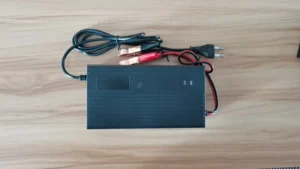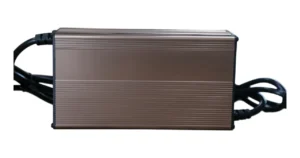
A charger overheats when heat builds up beyond the conditions its design can safely handle. Buyers should check restricted airflow, hot surroundings, cooling-fan behavior, battery and charger specifications, AC supply, and cable or connector condition. Some warmth during charging is expected. Smell, smoke, deformation, damaged wiring or repeated interruptions require stopping use and obtaining a model-specific assessment.
A report that says only “the charger is too hot” leaves important questions unanswered. Is the heat at the case, the DC connector, the wall plug or the battery? Does it appear at the start of charging or after a long operating period? This guide helps vehicle manufacturers, battery brands, importers and distributors collect useful evidence before approving a replacement or changing a charger specification.
Warm operation or an overheating warning?
AC-to-DC conversion produces heat, so a warm enclosure is not, by itself, proof of a fault. CTEK’s model-specific explanation of charger heating notes that temperature can change with the charging stage and battery condition. That observation does not establish an acceptable temperature for a different charger.
There is no single case-temperature number that approves every model. Ask for the manufacturer’s operating limits and measurement method. Ambient air, the enclosure surface and internal components are different measurement locations; a limit for one cannot automatically be applied to another. Hand touch is not an acceptance test.
Stop using the equipment if there is smoke, a burning smell, melted or discolored parts, damaged insulation, or abnormal battery swelling or leakage. Follow the manufacturer’s shutdown instructions only where it is safe to do so. Keep clear of hazardous equipment and obtain qualified assistance. Do not restart a suspect unit repeatedly, open the case, bypass protection, or continue charging to obtain a video.
Locate the symptom before deciding the cause
Record observations already available from normal operation. Make external checks only after safe shutdown and cooling. The possibilities below guide an investigation; they do not diagnose a specific unit.
| Reported symptom | Possible explanation | Buyer evidence to collect | Engineering follow-up |
|---|---|---|---|
| Case warms during sustained charging | Normal conversion losses, restricted heat removal or operation beyond the approved conditions. | Model, charging stage, elapsed time and installation photographs. | Compare measured temperatures and output with the model’s limits. |
| Heating appears in a crowded bay or compartment | Hot local air, blocked ventilation or recirculated exhaust. | Layout, neighboring heat sources, spacing and local ambient record if available. | Assess the complete installation and any required derating. |
| Fan behavior changes and charging becomes abnormal | Normal fan control, obstruction or a cooling-system problem. | Previously observed fan sound, LED state and timing. | Check the exact fan-control specification and cooling system. |
| Heat or discoloration is concentrated at a plug or connector | A connection, termination or current-rating problem. | After safe isolation: photographs of both mating sides, cable and any adapter. | Inspect the complete connection and verify its electrical and thermal suitability. |
| Charging stops or current falls after warming | A protection response, programmed behavior, BMS action or another fault. | Error indication, timing, battery information and existing operating logs. | Identify which device changed state and why. |
Six causes and conditions buyers should check
1. Blocked airflow or an unexpected cooling-fan condition
Packaging left around a charger, objects over ventilation openings, close stacking or an unsuitable mounting position can obstruct heat removal. Check the installation against the selected model’s instructions. Natural cooling also needs an unobstructed thermal path; a fanless case is not permission to cover the unit.
TDK-Lambda’s convection-cooling guidance explains the importance of airflow and orientation. Apply that principle through the charger manufacturer’s own clearance requirements. A distance quoted for another power supply is not a universal charger rule.
A stationary fan is not automatically a failed fan. Some products control it by temperature or load, as MEAN WELL’s fan-control FAQ explains. Unexpected behavior must be checked against the actual model. Do not insert objects through a grille, remove the fan, or add an unapproved cover or filter. The natural cooling vs fan cooling guide covers the separate design-selection decision.

2. Hot surroundings and a longer charging duty
Air beside a charger can be hotter than air measured elsewhere in a building. Direct sun, nearby equipment and neighboring chargers may change the local conditions. Record where the unit operates and whether the problem follows a change in location, season or charging schedule.
Some chargers reduce available output as temperature rises. The Victron Blue Smart IP22 manual documents temperature-related derating for that range. The purchasing lesson is to request the proposed charger’s own output-versus-temperature limits. Do not transfer another brand’s limits to a Linjia model or assume that every shutdown is thermal protection.
3. A battery or charging requirement that differs from the approved specification
Compare the actual battery with the approved chemistry, required charging voltage, capacity, charging profile and permitted battery/BMS current. A connector that physically fits does not confirm electrical compatibility. If these details are unclear, stop the compatibility decision and obtain the battery documentation.
Battery capacity alone does not diagnose charger overload. In a correctly operating current-regulated charger, a larger compatible battery may extend the time spent delivering the regulated current; it does not authorize a higher current. A damaged battery, an incorrect profile or a changed charging duty needs separate assessment. Use the battery charger selection guide to organize the matching information, and review battery capacity and BMS charge-current limits before requesting a different output.
For a new OEM configuration, submit the battery and installation requirements through Linjia’s custom charger development process. Changing amperage or housing without that review can leave the original problem unresolved.
4. A cable, plug or connector that heats locally
Separate enclosure heating from heat at the DC connection or AC plug. Electrical resistance generates heat where current flows. Würth Elektronik’s connector-derating application note explains why current and ambient temperature belong in a connection’s thermal assessment.
Loose, worn, contaminated or damaged mating parts and unsuitable terminations are reasons for qualified inspection. Include extension leads and adapters in the evidence. TE Connectivity’s M Series connector guidance also shows why wire size, loaded contacts and ambient conditions affect current capability. Its component ratings do not approve a different connector assembly.
After safe isolation, photograph both mating sides and the cable markings without dismantling them. Do not wiggle a live connector to reproduce a fault. Matching pin definitions and polarity remains a separate requirement; see the OEM connector pin-definition guide.
5. An AC supply outside the documented operating conditions
Check the charger’s input label and the destination supply specification. A regional plug adapter changes the connection shape; it does not establish voltage compatibility. Ask a qualified person to assess an uncertain outlet, supply, extension lead or generator arrangement. Buyers should not probe mains wiring or open equipment.
If low supply voltage and hot weather occur together, ask the supplier whether the required charging output is supported under that combined condition. “Wide input” is not enough information to answer every operating question. The charger input-voltage guide explains the documentation to request.
6. A unit fault or an unapproved configuration change
An internal fault remains possible even when installation and matching appear correct. Recent impact, liquid exposure, a change in fan noise or a difference from previously normal operation should be reported. Only qualified service personnel should assess internal components, thermal interfaces and protection behavior.
For a batch complaint, record how many units are affected, their model/revision references and whether the same battery, location or adapter is involved. Keep suspect units out of service. Do not deliberately operate them again to compare results. An approved sample, a later batch and a modified unit may have different construction; ask the factory to check the relevant records before assigning a cause.
A safe review sequence for a reported problem
- Screen for warning signs. Stop use and obtain assistance where smell, damage, smoke or abnormal battery condition is present.
- Identify the location and timing. Use existing observations to distinguish case, battery, cable, DC connector and wall-plug heating.
- After safe shutdown and cooling, document external conditions. Photograph placement, openings, labels, cables and any adapters.
- Compare records. Check the approved charger/battery pairing and whether the installation or configuration changed.
- Escalate with evidence. Let the supplier define any further inspection or controlled test. Reuse requires an appropriate assessment of the cause.
What evidence should buyers request from the factory?
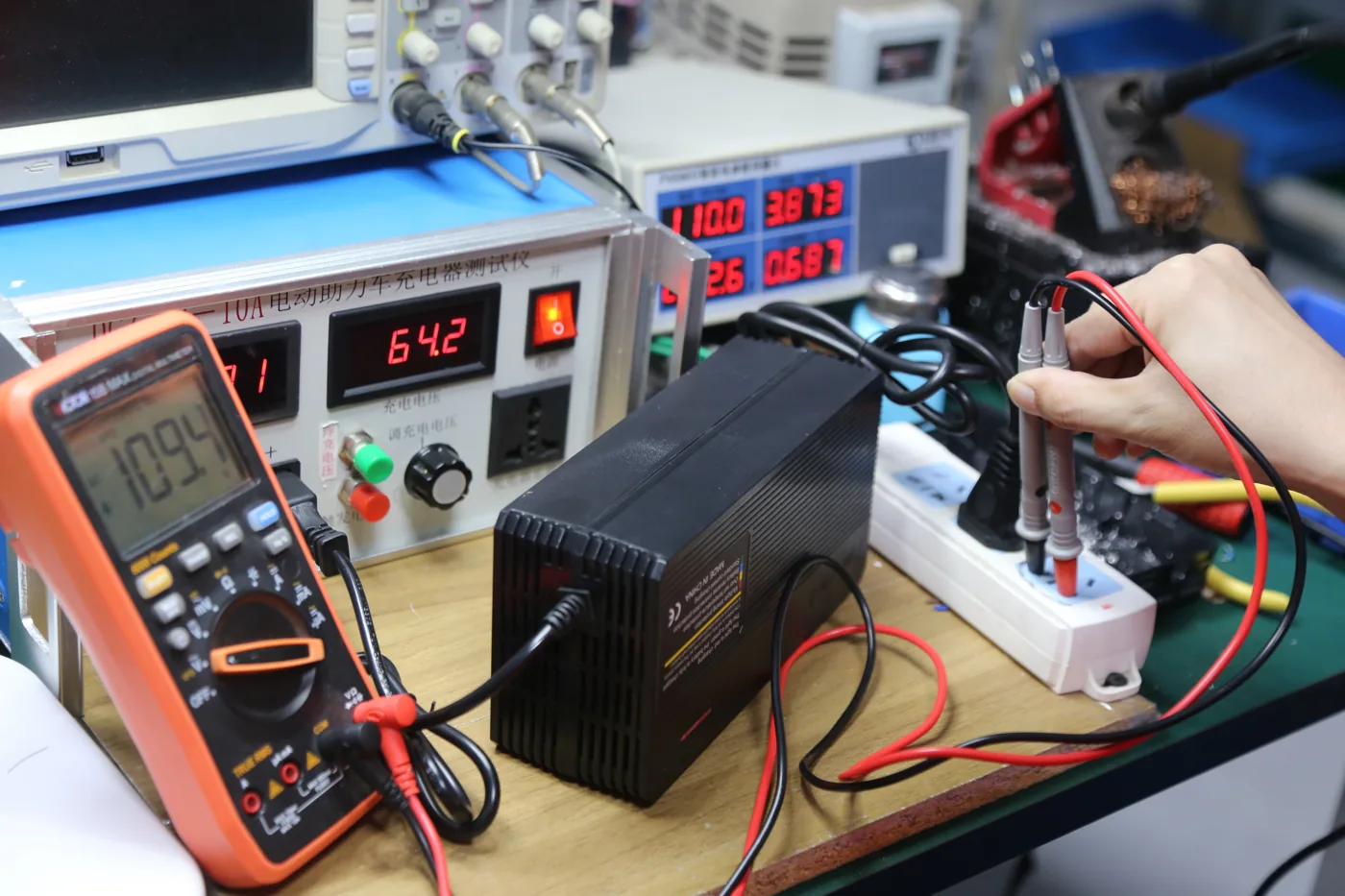
Linjia’s published charger quality-control workflow includes electrical checks, insulation-related tests and full-load burn-in. These production stages support an investigation through the applicable model and batch records. They do not replace a temperature assessment for the customer’s installation.
| Record | Details to request | Question it helps answer |
|---|---|---|
| Unit identification | Model, revision, batch/serial reference, approved fan, housing, cable and connector. | Is the reported unit the approved configuration? |
| Operating conditions | AC input, DC output, battery/load, charging stage, duration, placement and ambient conditions. | Do the evidence and intended use describe comparable conditions? |
| Temperature assessment | Defined measurement points, instruments, method, recorded values and applicable limits. | Which part exceeded which documented criterion? |
| Protection and fault assessment | Observed state, engineering conclusion, relevant protection behavior and corrective action. | What caused the interruption, and what must change before reuse? |
This is a proposed evidence checklist, not a claim that every Linjia model has completed the same thermal qualification. Ask which records exist for your exact configuration and agree any additional assessment with qualified personnel. The full-load burn-in guide explains that production step’s scope.
Buyer reporting checklist
Send these eight items with a heating complaint or a request to review an OEM specification:
- Charger label, model/revision, batch or serial reference, and affected quantity.
- Battery label/specification, chemistry, capacity, required charging voltage and permitted battery/BMS current.
- Exact symptom and location of heat, including any warning signs already observed.
- Elapsed time, charging stage, LED/error state and existing logs.
- Installation photographs, local environment and nearby heat sources.
- AC supply description, plug, extension leads and adapters.
- DC connector photographs from both mating sides, cable markings and any modifications.
- Previous normal behavior, recent changes and the approved sample reference, if available.
Frequently asked questions
Can a hot case prove that the charger is defective?
No. Temperature must be assessed against the exact model’s limits under defined conditions. Warning signs require stopping use regardless of whether a temperature reading is available.
Does cooling down after a shutdown prove that reuse is safe?
No. A unit may cool after a protection event or a fault. Cooling alone does not identify or remove the cause. Obtain the supplier’s assessment before putting a suspect charger back into service.
Should an importer choose a lower-current charger to solve heating complaints?
Only after reviewing the cause, battery requirements and charging-time needs. A lower output does not repair a damaged connector, resolve an incorrect profile or approve an unsuitable installation.
Send Linjia Power the conditions behind the heating report
Useful troubleshooting starts with the affected part, the operating conditions and the exact charger/battery pairing. For an existing unit, submit the reporting checklist. For a new project, include your target charging output, expected installation, environment and order quantity. Send your charger specifications and heating observations to Linjia Power so the next step can be defined from evidence.