A vehicle brand may source chargers for a pedal-equipped e-bike and a seated electric scooter from the same factory. That does not make the two charging systems interchangeable. The useful comparison of e-bike vs seated e-scooter charger requirements starts with where the battery is charged, how the user reaches its connector and what the complete system must approve.
Direct answer: Both applications need a charger approved for the actual battery and charging interface. The practical differences often concern removable-battery handling, access to a vehicle charging port, cable reach, storage and ventilation. Neither the seat, the vehicle’s size nor its motor rating determines the charging current. One charger can serve both only after both configurations have been validated.
Here, “e-bike” means a pedal-equipped electric bicycle; “seated e-scooter” means a scooter-style electric two-wheeler or moped. These are application descriptions, not legal classifications. Standing kick scooters and mobility scooters need their own platform review.
Compare the charging arrangement before the charger catalogue
Write down what the operator actually connects and where the charger runs. An e-bike can charge through its frame or directly at a removed battery. A seated scooter can also have a removable pack. Treat those arrangements as separate entries, even when they belong to the same vehicle model.
| Requirement | E-bike project | Seated e-scooter project |
|---|---|---|
| Charging access | Check the battery socket, frame port or charging dock actually supplied. | Check the body-mounted port, battery socket or dock actually supplied. |
| Mechanical clearance | Check nearby frame tubes, rack parts and the battery’s resting position. | Check body panels, port covers, footwell space and the intended parking position. |
| Portable use | If carried with the bicycle, review weight, cable stowage and transport protection. | If carried in a compartment, distinguish protected storage from permitted operation. |
| Current and charging time | Use the pack’s charging limits and the required replenishment schedule. | Use the same method; a larger vehicle does not establish a higher allowed current. |
| Battery controls | Confirm any temperature, enable, identification or communication requirement. | Confirm the actual battery and vehicle controls, including any dock or harness. |
| Service spares | Identify the battery revision and approved charging route. | Identify the vehicle, battery revision and approved port or dock combination. |
Use our e-bike battery charger application page and electric scooter charger application page to start a product discussion. Their application names do not replace approval against your battery specification.
E-bike: approve charging on and off the bicycle
A removable bicycle battery creates two possible sample arrangements: charging the installed pack through the bicycle, and charging the removed pack at its own socket. If both are intended, supply both interfaces. A successful test on a loose battery does not verify the frame port, extension harness or charging dock.
Include the physical connection in the review. Can the plug be inserted fully beside a rack or frame tube? Does the battery sit securely without resting on its connector? Can the cable reach the intended surface without pulling on the battery socket? These questions affect connector angle, cable length and strain relief before they affect a quotation.
Some e-bike systems require a system-specific charger. Bosch’s battery guidance, for example, directs owners to compatible Bosch chargers. An OEM development proposal therefore needs the system owner’s interface requirements and approval. A matching plug shape is insufficient to claim replacement compatibility.
Seated scooter: review the port and the parking position
For a scooter charged through its body, give the supplier photographs of the port with its cover open and the vehicle in its normal charging position. Include the proposed charger location and the cable route. Check whether a panel obstructs a straight connector, whether the cover presses on the cable and whether normal movement can pull the plug sideways.
A charger that fits under the seat for transport may still need to operate outside that compartment. Do not infer permission to charge in an enclosed storage space from physical fit. NIU’s battery service guidance, for example, calls for ventilation and warns against placing its charger in a trunk or tail box while charging. Follow the actual vehicle and charger instructions for your platform.
Where a scooter offers both removable-pack charging and a vehicle inlet, identify each approved route separately. A battery socket and a body port can involve different mating parts or intermediate wiring. Record which accessory or dock belongs to each route, rather than treating an adapter as a packaging option.
For both vehicle types, use the approved contact map and mating sample. Our connector pin-definition guide explains the documentation needed when power and auxiliary contacts share one connector.
Choose current and housing from the actual use
Compare the two battery specifications before comparing charger size. Chemistry, the approved charging-voltage target, permitted current and control behaviour establish the electrical requirement. Battery capacity and the available charging window then help the technical team evaluate a suitable current. Motor wattage and vehicle styling cannot supply those missing limits.
A delivery e-bike may need frequent replenishment, while a seated commuter scooter may have a longer parking interval; another pair of projects may have the opposite pattern. Describe the intended use instead of assigning “low current” to every bicycle and “high current” to every scooter. Keep detailed voltage and current selection in the battery charger selection guide. For the pack-level limits, see how battery capacity and BMS limits affect charging current.
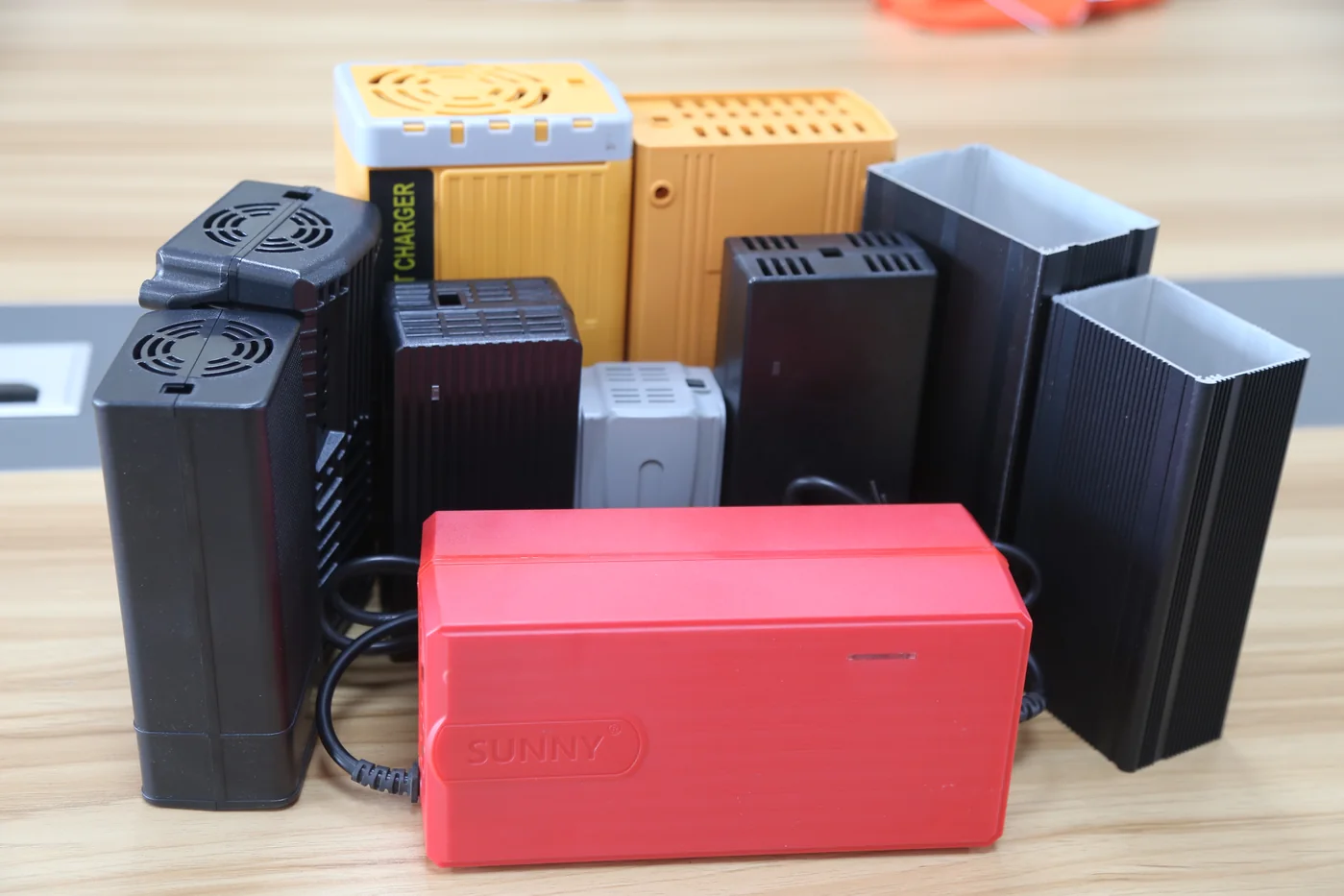
Assess the housing where it will run. For a portable unit, review handling, cable storage and the permitted support surface. For a mounted unit, review the approved orientation, surrounding space and airflow. If fans or ventilation openings are present, allow the clearances specified for that model. Weather protection is a separate requirement; a sealed-looking case is insufficient evidence.
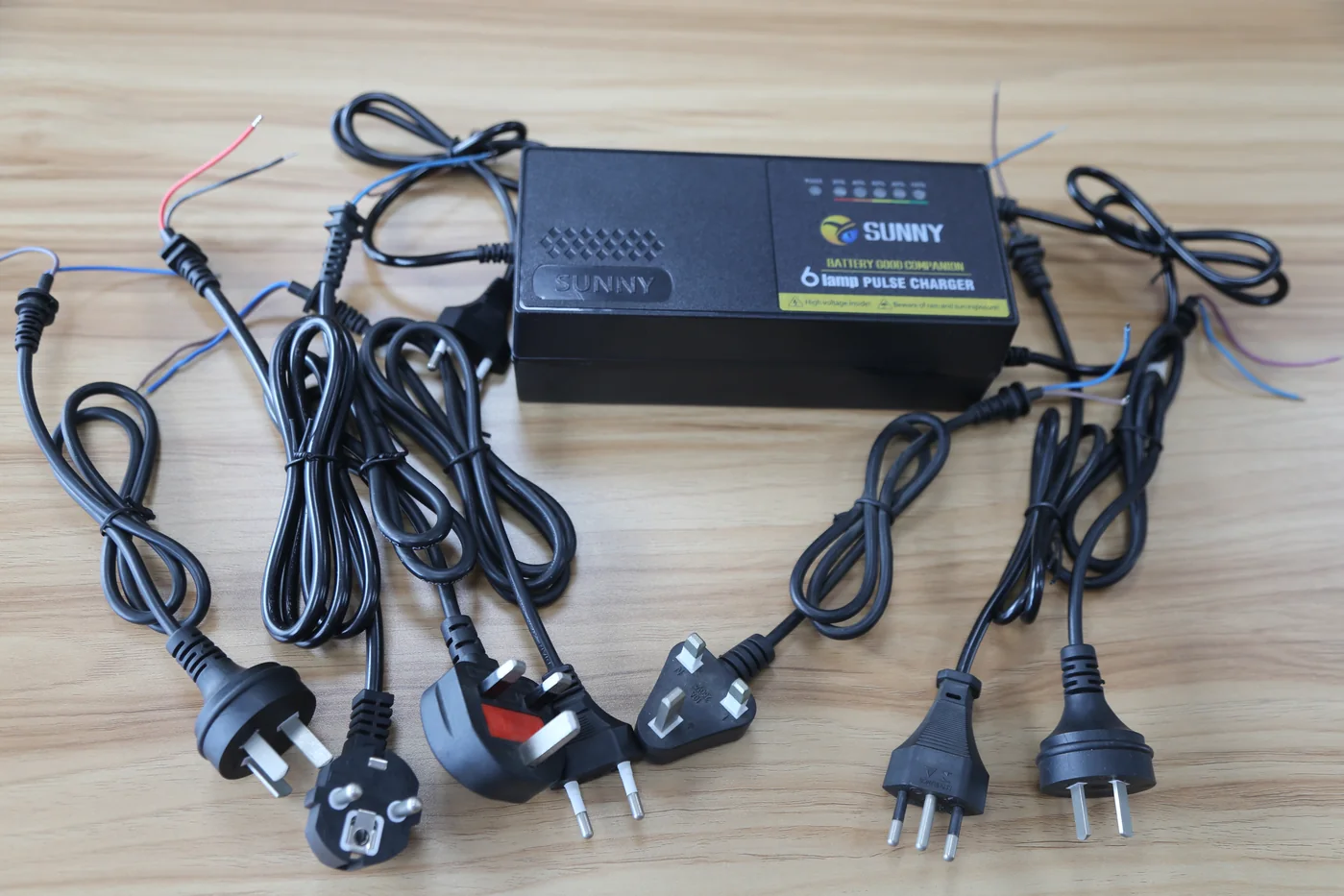
AC input also needs its own entry. Define the destination supply, frequency, input range and regional cord. A local plug shape does not establish electrical input compatibility, and a change of cord does not convert the charger’s input design.
Can one approved charger cover an e-bike and a seated scooter?
Possibly, but assess two complete configurations. Sharing a nominal voltage, connector housing or supplier is only a starting point. Compare the approved profile, voltage and tolerance, current, control interface, pin assignment, cable assembly and operating conditions. Resolve every difference before making a common-part decision.
It can also be practical to share a hardware platform while keeping separate factory-configured variants. In that case, use distinct charger part numbers and clear compatibility records. A common enclosure should not lead a dealer to assume that either unit can be issued for either vehicle.
Keep the service instruction specific enough to survive a battery change. “For Model A with battery revision B, through vehicle port C” is more useful than “for e-bikes.” Review the charger approval when the pack, BMS, dock or inlet changes. A battery that fits mechanically is not automatically the same charging configuration.
Validate the complete charging path before a bulk order
Linjia’s manufacturing work includes electrical checks, dielectric withstand and insulation testing, and full-load burn-in. These checks support a defined charger specification. They cannot, by themselves, approve an unidentified bicycle battery or a scooter harness that was absent from the evaluation.
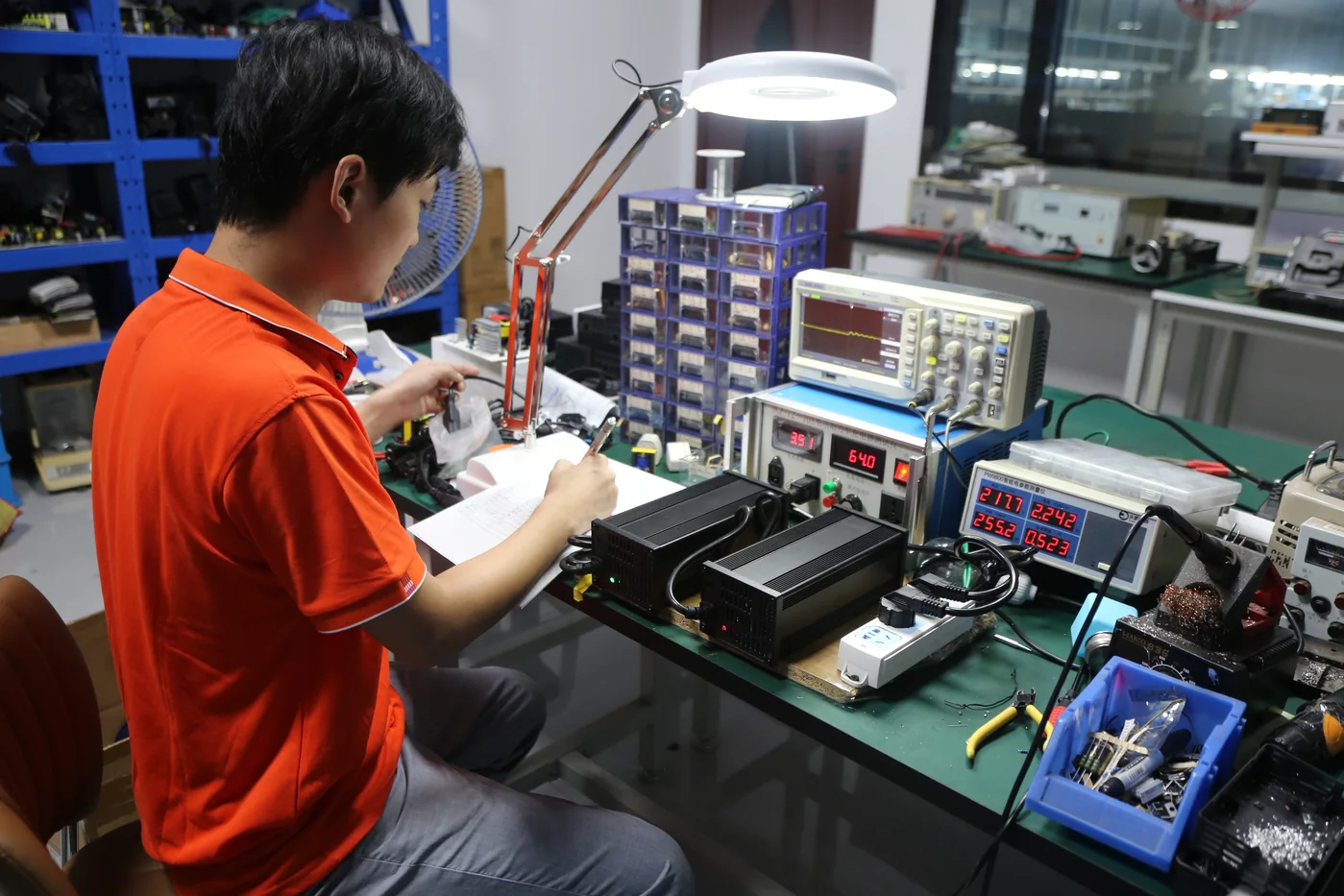
Ask the responsible technical teams to evaluate every intended charging route using the identified battery, BMS, inlet, harness and accessories. The agreed sample plan should address normal start and completion, relevant temperature and control behaviour, connector access and retention, cable handling and the required charging interval. Use qualified personnel and the manufacturers’ procedures for electrical testing.
Record which arrangement was actually evaluated. If only direct battery charging was assessed, keep vehicle-port approval open. Tie the accepted samples and drawings to the order configuration; our quality-control process explains where production checks fit after that reference is established.
Prepare one buyer brief for each charging arrangement
For comparable proposals, send the following information for the bicycle and scooter separately. Mark missing fields as unresolved rather than filling them from a similar vehicle.
- Vehicle and battery identity: model, battery supplier, revision and whether the pack is removable.
- Battery charging specification: chemistry, nominal and charging-voltage information, capacity, allowed current and temperature conditions.
- Charging route: battery socket, frame/body port or dock; identify every intermediate cable or accessory.
- Control interface: BMS requirements, contact functions and any enable, identification or communication specification.
- Physical arrangement: port photos, mating sample or drawing, cable reach, connector clearance and operating location.
- Use and supply: charging schedule, transport/storage expectations, local AC input, frequency and regional plug.
- Order and service controls: quantity, approved part numbers, labels, packaging and compatibility information for dealers.
Frequently asked questions
Does a seated scooter always need a bigger charger than an e-bike?
No. The approved battery requirement and operating conditions decide the electrical and thermal design. Vehicle appearance does not establish those requirements. Compare the actual projects before choosing enclosure size or current.
Can we add a battery-charging dock after approving the charger?
Treat the dock as a change to the charging path. Its contacts, wiring, controls and mechanical support need review with the intended pack and charger. Approval of a direct connection does not automatically cover the added dock.
Is carrying the charger with the vehicle the same as installing it on board?
No. A portable charger stored for transport has different operating assumptions from a unit mounted and used on the vehicle. Agree the permitted arrangement, ventilation and mechanical protection for the selected model.
Discuss both vehicle platforms with one clear charger brief
Send Linjia Power the e-bike and seated-scooter battery specifications, photographs of every charging interface, the intended charging locations and your expected quantities. Include existing approved charger information where available. We can review which requirements may be shared and which need separate OEM or ODM configurations before sample development.