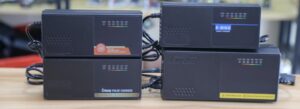
A 72V 5A charger fits a project when its approved battery can recover the required charge within the available parking time. A 72V 10A charger is worth evaluating when a shorter charging window matters and the battery, charging port, wiring and power supply support it. The 72V 5A vs 72V 10A charger decision therefore starts with the actual battery and operating schedule. Doubling the current can reduce part of the charging cycle; it does not establish compatibility or guarantee half the complete charging time.
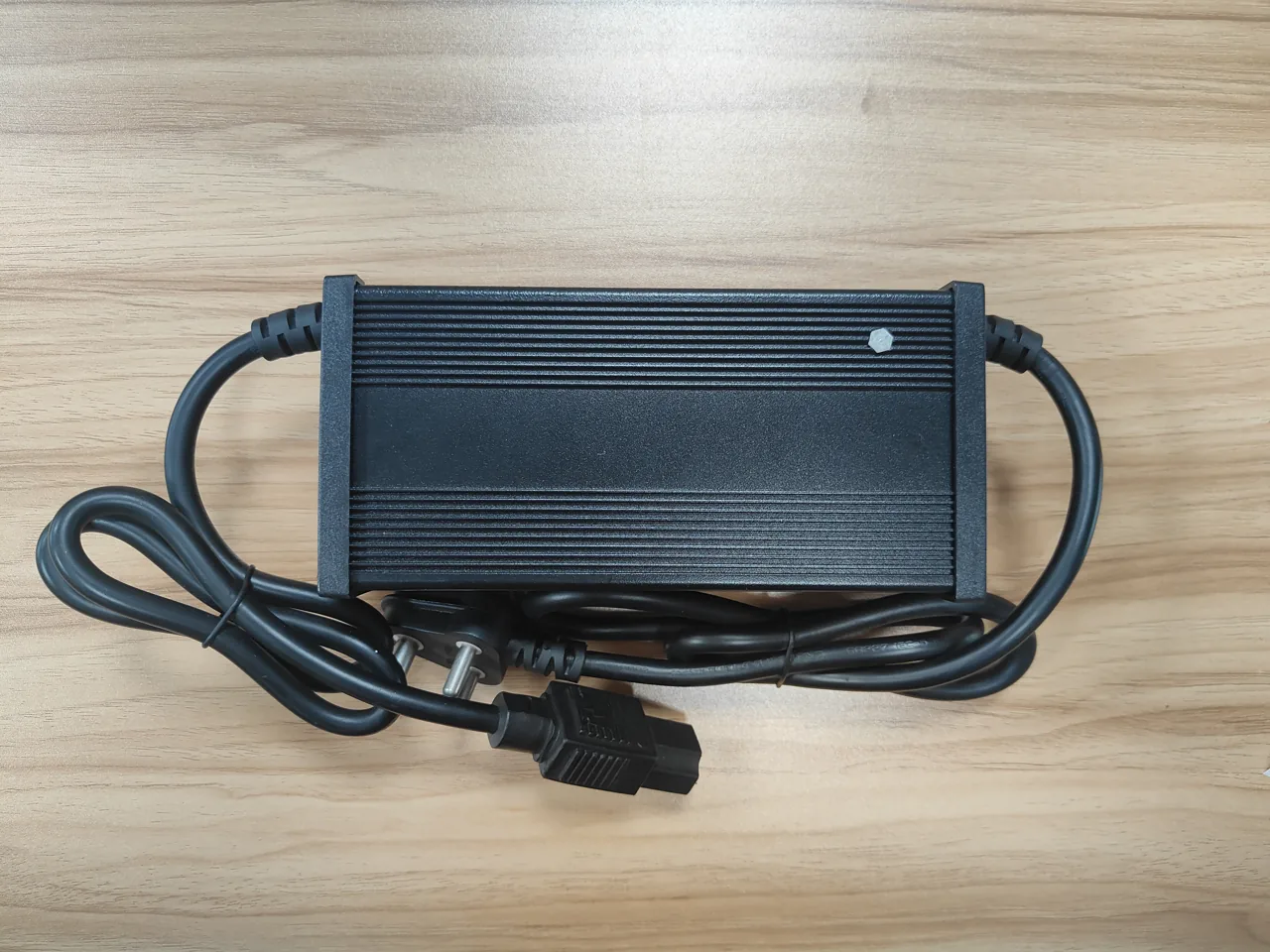
Are You Selecting a New Platform or Upgrading an Existing One?
These are different purchasing tasks. For a new electric two-wheeler, passenger three-wheeler or cargo vehicle, the battery and charger can be evaluated together. For a replacement order, the existing battery approval, vehicle inlet and wiring place limits on what may be changed. A 10A charger that is appropriate for a new platform may be unsuitable as a service replacement for a vehicle supplied with 5A.
Ask the project team to classify the requirement before comparing quotations:
- New vehicle or equipment: choose the battery, charging current and charging arrangement as one system.
- Additional source for an approved vehicle: match the existing electrical and interface specification, then validate the proposed source.
- Faster replacement charger: obtain approval for the increased current and recheck the complete vehicle-side charging path.
For vehicle brands and importers, keeping these tasks separate also helps dealers identify the correct spare. “72V charger” is too broad to serve as a compatibility description on its own.
What Linjia’s 72V 5A and 10A Listings Actually Tell You
Linjia’s 72V lead-acid battery charger range lists a 72V45Ah model at 5.0A for selected 32–50Ah packs and a 72V10A model for selected 70–100Ah packs. These are catalogue reference ranges for those product configurations. They are not a rule that every battery within a stated Ah range accepts that current, or that either charger can replace the other.
| Reference | 72V 5A option | 72V 10A option |
|---|---|---|
| Listed lead-acid model | 72V45Ah | 72V10A |
| Listed charging current | 5.0A ± 0.2A | 10A ± 0.2A |
| Selected pack-capacity reference | 32–50Ah | 70–100Ah |
| Practical starting point | Review against the battery’s permitted charging conditions and available time. | Review the battery approval and the higher-current charging path together. |
| What the listing does not establish | Approval for every 72V battery, every lead-acid subtype or a particular vehicle. | Interchangeability with a 5A unit or permission to increase an existing battery’s charge rate. |
A project between these reference ranges needs its own assessment. Linjia also lists intermediate current options in the 72V lead-acid family. The choice does not have to be forced into 5A or 10A if a different approved configuration fits better.
Resolve the Battery Specification Before Comparing Amps
Confirm whether the pack is flooded lead-acid, AGM, gel, lithium-ion or LiFePO4. Then obtain its required charging stages, voltage targets, permitted charge current and operating-temperature limits. The battery’s nominal 72V class does not define one universal charger output.
For a lithium project, include the cell series configuration and the BMS charging limit. A BMS discharge rating does not authorize the same current during charging. Check any communication, enable signal or charging interlock that the battery or vehicle requires. Review 72V lithium charger configurations separately from the lead-acid listings above.
Battery-maker guidance supports this separation: Trojan publishes different charging instructions for its lead-acid product types, while Victron’s Lithium Smart manual calls for a charger with suitable voltage, current and a chemistry-matched profile. Their settings apply to their specified batteries; they should not be copied into an unrelated 72V pack specification. See the manufacturer references below.
Build a Charging-Window Budget From Daily Use
Start with how much charge must be replaced between working periods. Record the normal return time, next departure time, opportunity for daytime charging and whether a complete charge is required before release. A vehicle parked for the night presents a different requirement from one returning briefly between shifts.
For illustration, suppose a project needs to return 30Ah. If a charger could maintain its stated current throughout that interval, the arithmetic would be:
| Planning item | 5A calculation | 10A calculation |
|---|---|---|
| Charge to return | 30Ah | 30Ah |
| Ideal constant-current interval | 30Ah ÷ 5A = 6 hours | 30Ah ÷ 10A = 3 hours |
| If only 4 hours are available | The ideal calculation already exceeds the window. | The ideal calculation leaves 1 hour; real-cycle testing must establish whether it is enough. |
| What remains outside the calculation | Current taper, additional charging stages, charge-return losses, balancing where applicable, temperature restrictions, interruptions and any loads drawing power during charging. | |
This is a planning example, not a measured result or a recommendation for a particular battery. Six hours versus three hours does not mean a real pack will complete charging in those times. A four-hour schedule may still be too short at 10A. If the required current exceeds what the battery permits, revise the charging schedule or battery system rather than overriding the limit.
Budget AC Supply for the Whole Charging Location
A 10A DC output rating is not a 10A mains-input rating. Output power depends on the actual charging voltage at that moment: DC output power = output voltage × output current. At the same output voltage, 10A represents twice the DC output power of 5A. Input requirements also depend on conversion efficiency and power factor.
This matters when an importer or fleet operator plans several charging positions. Obtain the selected charger’s rated input current or input VA, allowed supply range and startup characteristics. Give the installation designer the number of chargers expected to run simultaneously, together with other loads at the location. Dividing nominal battery watts by the local mains voltage is not a complete circuit-sizing method.
Also distinguish a supported input range from a plug option. A regional plug does not prove that a charger can maintain its output on the site’s lowest supply voltage. Agree the relevant input conditions and check output performance there. Any site wiring and protection design should be handled by a qualified electrical professional.
Recheck the Vehicle Port, Cable Run and Cooling Space
In a 72V vehicle project, review the full route from charger output to battery terminals. A short test lead can hide a constraint in the installed port, adapter or harness. Confirm contact ratings, pin assignment, polarity, conductor specification, cable length, strain relief and any connection used by service staff.
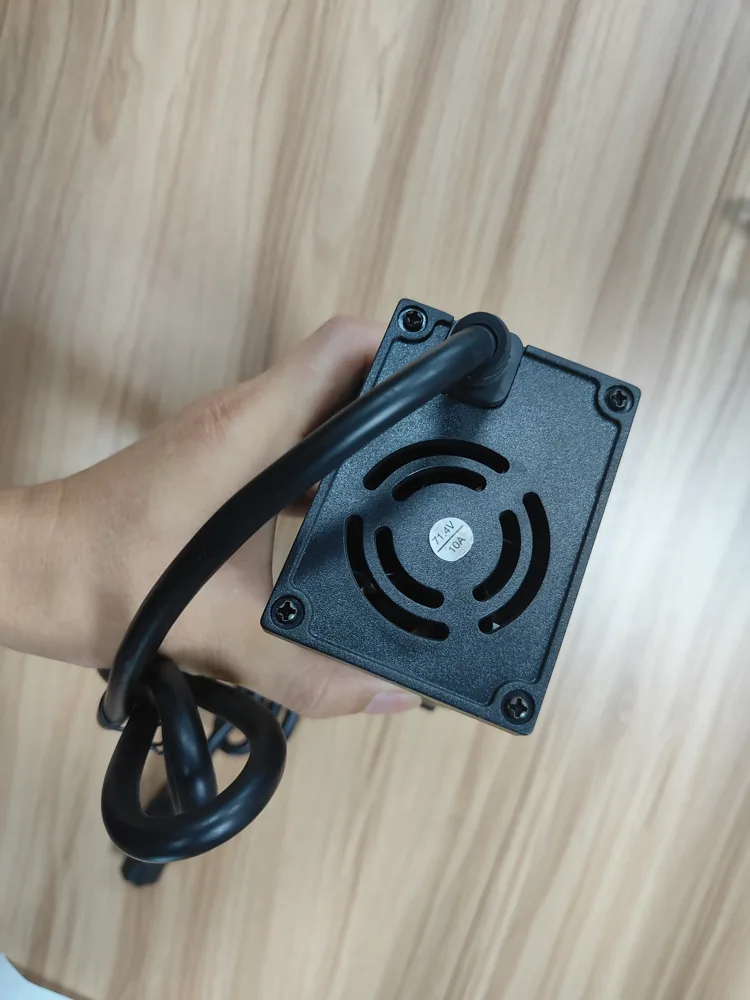
The current increase has a specific consequence. For the same resistance, resistive heating follows I²R: moving from 5A to 10A produces four times the heating in that unchanged resistive path. This does not mean the complete charger becomes four times hotter. It explains why an existing contact or cable needs renewed assessment rather than acceptance based on plug fit.
Inspect the proposed cooling arrangement in its actual position. A charger on an open bench and one placed under a vehicle seat do not have the same airflow. Evaluate the mounting space, ambient conditions, cooling openings and expected charging duration. A larger current number does not establish continuous operation in a hot or enclosed location.
Use a Project Decision Matrix Before Ordering Samples
| Project finding | Decision | Evidence to obtain |
|---|---|---|
| The battery permits 5A and a representative cycle fits the overnight window. | Keep 5A as a candidate; establish whether higher current has any operational benefit. | Battery approval and an observed charging cycle. |
| The operating window is too short at 5A, and the battery permits 10A. | Evaluate 10A through the installed charging path. | Pack approval, port and harness ratings, temperature results and site input review. |
| The battery permits less than 10A. | Exclude a fixed 10A configuration unless a separately engineered current setting is approved. | Permitted continuous charge current and the proposed charger’s controlled specification. |
| The battery type, full-charge target or pin definition is unknown. | Hold compatibility approval for both options. | Battery data and a verified mating-interface drawing. |
| The same spare is intended for several vehicle models. | Approve each battery and vehicle combination individually. | A compatibility list tied to charger part number and configuration revision. |
Include the vehicle’s operating pattern in the sample request. A cargo three-wheeler needing another shift and a privately used electric two-wheeler can justify different charging arrangements, even if both carry a 72V label. Application names help explain the schedule; the actual battery data decides the permitted current.
What Linjia Needs to Preserve Between Sample and Bulk Order
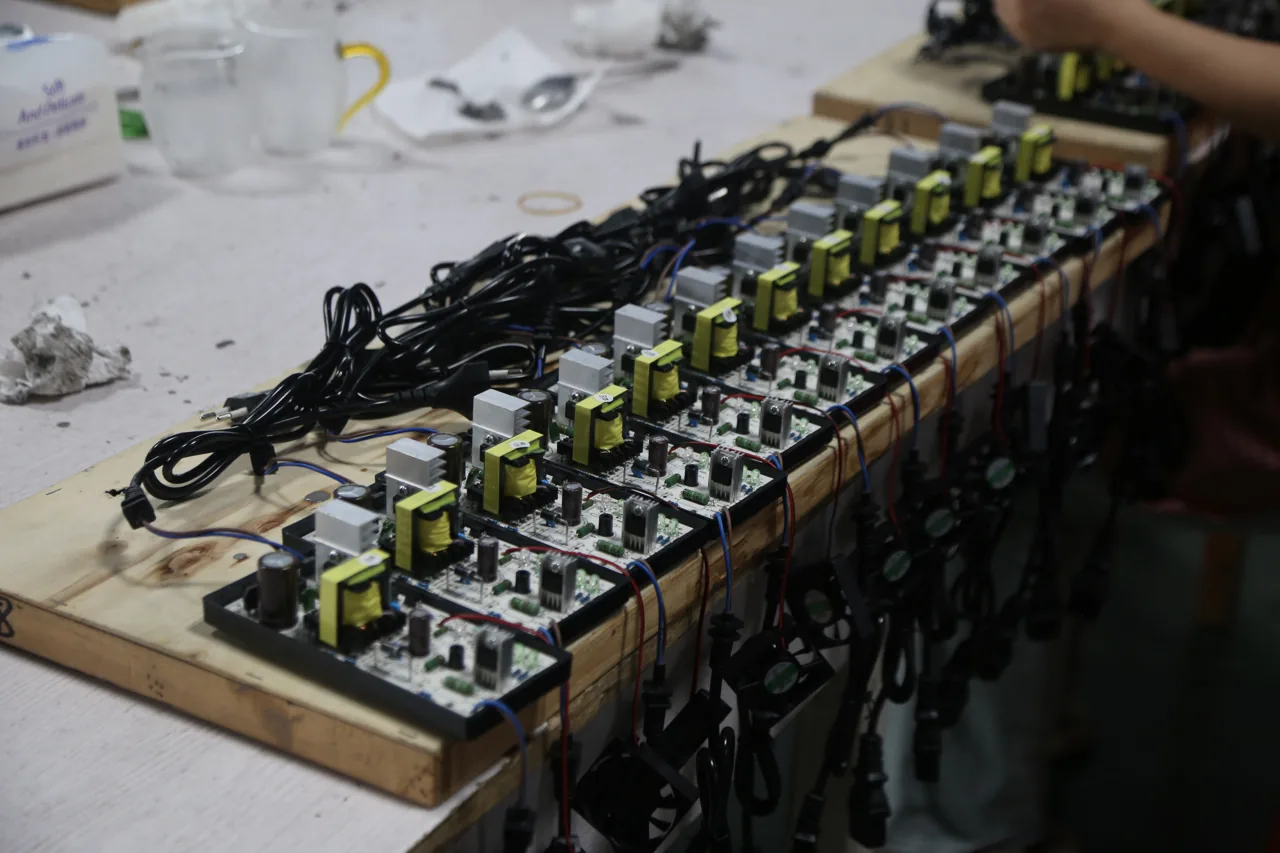
Linjia’s manufacturing perspective: a 5A-to-10A request should identify a complete configuration change. It may affect the power stage, component selection, cooling arrangement, cable assembly, test limits and label. Changing the current printed on a label does not qualify an unchanged charger design.
The factory’s engineering, assembly and production-test stages need the same approved reference. Linjia’s published process includes electrical testing, insulation-related checks and full-load burn-in. These controls help verify an agreed charger configuration; they do not replace compatibility testing with the buyer’s battery and vehicle.
During sample evaluation, record the battery identification, starting condition, charging voltage and current over time, completion criteria, battery and connection temperatures, input conditions and any BMS events. When approving 10A as a replacement, test through the actual vehicle charging route. Ask for the agreed cable, profile and label revision to appear in subsequent orders. Our guide to sample approval and mass-production consistency explains that handover.

Questions to Resolve Before Releasing a 72V Charger Order
Can one adjustable charger cover both 5A and 10A vehicles?
Only if the specific platform supports controlled settings and each vehicle combination is approved. Define who can change the setting, how the selected configuration is identified and how an incorrect setting is prevented. Do not assume a standard fixed-current charger has this capability.
Can two 5A chargers be connected to obtain 10A?
Do not assume their outputs can be paralleled. Current sharing, isolation, control interaction and the battery interface need a design that explicitly supports parallel operation. Two ordinary chargers are not an approved substitute for one matched 10A unit.
Should a distributor stock 10A as a universal upgrade?
No. Keep the approved battery and vehicle compatibility list with each spare part. Similar plugs and the same nominal voltage do not establish charging-profile or current compatibility. A dealer needs the correct part identification, not simply the higher current option.
What if neither 5A nor 10A fits the project?
Document the limiting requirement. An intermediate approved current, different charging window or revised battery configuration may be more appropriate. The useful outcome is a configuration the complete project can support, rather than choosing one of two catalogue labels.
Send the Information Needed for a 72V Charger Review
For a 72V 5A vs 72V 10A charger evaluation, send:
- Battery chemistry, model, capacity and required charging-voltage specification.
- Permitted charge current and BMS charge limit or control requirements, where fitted.
- Existing charger label and whether the project is new supply, an additional source or an upgrade.
- Connector photos or drawing, pin definition, polarity and the vehicle-side charging route.
- Daily charge to replace, available charging hours and operating environment.
- Destination AC supply, plug, quantity and OEM label or packaging requirements.
Linjia can review the proposed configuration and the information still needed before sample selection. For an initial checklist, see the specifications to confirm before ordering a custom charger.
Manufacturer References
External guidance checked on October 22, 2026: Trojan Battery: Battery Maintenance (charging and charger selection); Victron Energy: Lithium Smart Battery Manual, section 5.2 (chemistry-matched charger requirements). These references support the selection principles above, not approval of a Linjia charger for either manufacturer’s batteries. The time and power relationships in this article are arithmetic illustrations, not Linjia performance-test results.