Dielectric withstand testing, also called a hipot test, checks whether specified insulation barriers in a charger can withstand a defined high voltage for a defined time without breakdown or exceeding the permitted test-current limit. It addresses insulation integrity rather than charging performance. A meaningful result identifies the exact charger configuration, test points, AC or DC method, voltage, timing and acceptance criteria. Those conditions must come from the applicable safety requirements and approved test plan, not the battery’s nominal voltage.
What Does a Hipot Test Check in a Charger?
An AC-powered charger contains mains-connected circuitry and other electrical sections that must be separated by suitable insulation. For an isolated charger, the test plan may evaluate barriers between the mains side and the DC output, and between mains-connected parts and accessible conductive parts where applicable. The required connections depend on the construction and relevant requirements; there is no single wiring arrangement for every charger.
The tester applies electrical stress across the selected barrier and monitors the resulting current. This can reveal weaknesses in insulation or assembly that a normal output-voltage check would not address. Chroma’s guide to dielectric testing explains the distinction between insulation-resistance measurement and high-voltage withstand testing.
A pass is specific to the tested barrier and conditions. It does not establish battery compatibility, charging accuracy, service life or compliance with every requirement in a destination market.

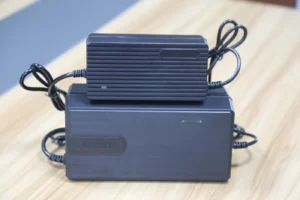
A dielectric withstand tester at Linjia’s production bench; model-specific settings and results are verified against the approved procedure.
Dielectric Withstand, Insulation Resistance and Burn-in: Different Questions
| Check | Main question | Evidence to review |
|---|---|---|
| Electrical performance | Does the charger deliver the approved output and operating behaviour? | Model-specific output and functional results. |
| Dielectric withstand / hipot | Does the specified insulation barrier withstand the prescribed electrical stress? | Test points, method, voltage, timing, current limits and result. |
| Insulation resistance | What resistance does the insulation present under the specified DC measurement conditions? | Applied voltage, measurement conditions and resistance value, typically reported in MΩ or GΩ. |
| Full-load burn-in | How does the charger behave while operating under a defined load over time? | Load, input, duration, operating conditions and observations. |
Insulation resistance and dielectric withstand are related but separate measurements. Chroma’s electrical safety testing FAQs distinguish resistance values from the current monitored during a withstand test. Neither measurement replaces the other automatically.
Likewise, running a charger on a burn-in rack does not demonstrate that a specified insulation barrier received a hipot test. Our guide to full-load burn-in in charger quality control explains the operating checks that complement insulation-related verification.
Which Test Conditions Should OEM Buyers Confirm?
A statement such as “high-voltage test passed” leaves important questions unanswered. Before accepting it as evidence for your order, connect the result to the approved product and procedure.
- Product identity: charger model, electrical specification, construction and revision.
- Requirement: applicable standard or approved project requirement, including the relevant test clause where available.
- Test points: the insulation barrier being evaluated and the connection arrangement.
- Method and settings: AC or DC, voltage, ramp and dwell timing, and permitted current limits or other applicable failure criteria.
- Equipment and fixture: tester identification, calibration or verification status, lead condition and confirmation of valid contact.
- Coverage and disposition: which units or batches the record covers, how failures are handled and what retest is required after rework.
Ask whether the document describes design qualification, routine production testing or another verification stage. A report for one approved sample does not by itself describe the checks performed on your production batch.
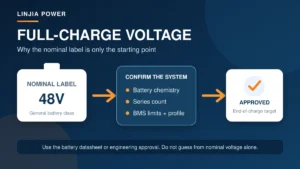
Do not choose a test voltage from a 48V, 60V or 72V battery label. That label describes the battery system; the withstand requirement also depends on the charger insulation system, mains input, construction and applicable safety requirements.
Why AC and DC Settings Cannot Be Swapped Casually
AC test current includes a capacitive component. During a DC test, charging current changes as the product charges, and stored charge requires appropriate discharge control. These differences affect interpretation and test settings. Chroma’s AC and DC hipot guidance advises using the method, voltage, timing, current limit and discharge procedure specified for the application.
A supplier should therefore explain an approved method change rather than treat AC and DC as interchangeable menu options. High-voltage testing belongs in a controlled station operated by trained personnel.
Why Assembly Quality and Fixture Contact Matter
Insulation performance depends on how the charger is built as well as the selected components. Associated Research identifies damaged or pinched insulation and wiring defects among the problems that hipot testing can uncover in its explanation of hipot testing and assembly defects. A withstand test complements workmanship control; it does not make poor assembly acceptable.
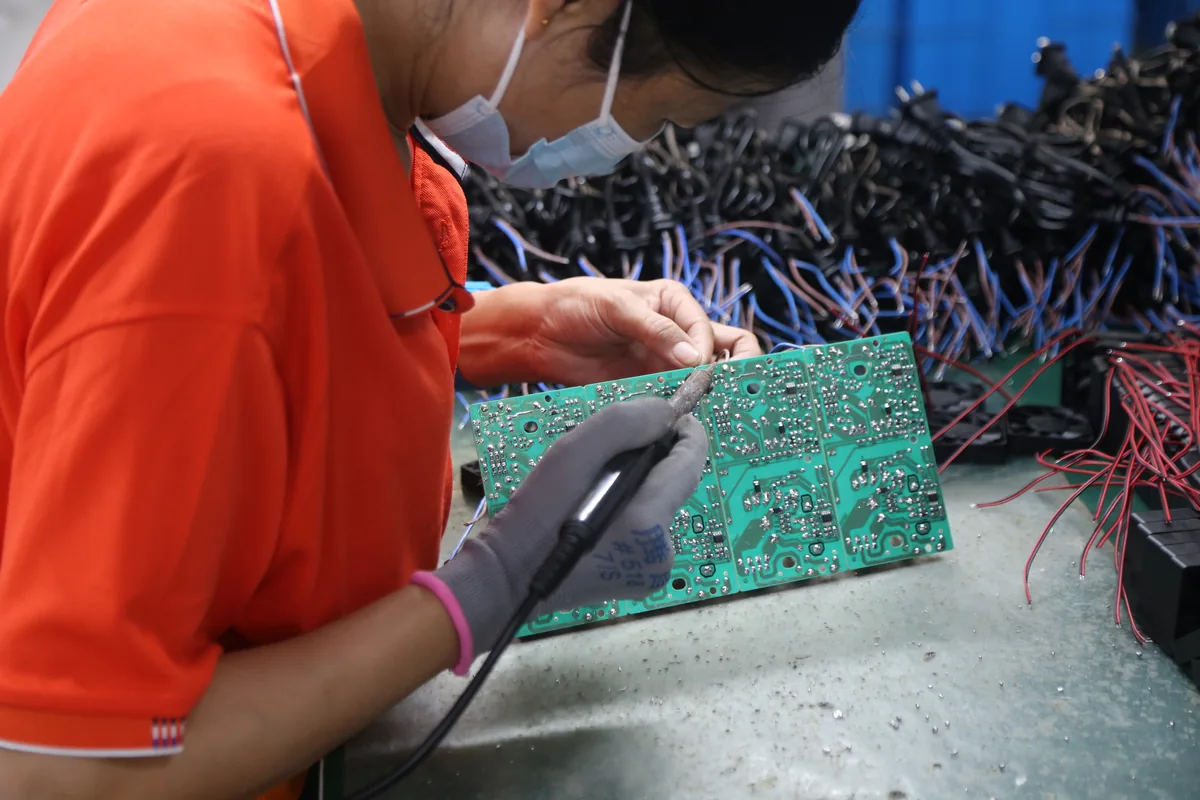
PCB soldering during charger production. Workmanship control complements the subsequent electrical and insulation checks.
There is also a measurement question: did the intended barrier actually receive the test? An incomplete fixture connection can make a displayed pass misleading. Buyers should ask how the factory verifies the test path, checks the tester’s ability to detect failure and controls equipment status. Associated Research’s tester-verification whitepaper explains why verification of pass and fail detection matters.
If a unit fails, the useful next step is investigation under the approved process. Raising the current limit or repeating the test until a pass appears changes the meaning of the result. Request the cause, disposition and applicable retest record.
Where Dielectric Withstand Testing Fits at Linjia
Linjia’s documented battery charger quality-control process includes incoming material verification, PCB and in-process control, finished electrical testing, withstand-voltage and insulation testing, full-load burn-in, and final inspection before packing. Applicable items follow the charger model, approved specification, structure and project requirements.
The manufacturing implication is that a test result must remain connected to the configuration approved for production. When cables, plugs, insulation components, PCB arrangements or housings change, buyers should ask engineering to review whether the existing approval and test plan still apply. Passing an earlier sample does not answer that question for a modified product.
The charger manufacturing process provides the wider production context. This article does not prescribe a universal Linjia test voltage, dwell time, current threshold or test coverage: those details require confirmation for the relevant model and order.
Questions Buyers Often Ask
Does a low hipot current reading mean zero leakage in normal use?
No. Hipot current is measured under the specified high-voltage test conditions. Normal operating leakage-current testing uses a different measurement setup and purpose. Compare results only with the requirement for that particular test.
Can a certificate replace production test records?
A certificate or type-test report and production records answer different questions. Check that the document covers the exact model and configuration, then ask what routine controls apply to the supplied order. A general company certificate does not define the required hipot settings.
What should we send before requesting a test-plan review?
Provide the charger model or sample reference, destination market, mains input and plug, battery chemistry, nominal and full-charge voltage, target current, enclosure and connector requirements, and expected quantity. Include any specified safety standard, test clause or customer acceptance requirement.
Technical References
The equipment-manufacturer references linked above explain general testing principles. Linjia’s own quality-control and manufacturing pages support the factory-process descriptions. References checked on 20 October 2026; the applicable standard and approved product procedure govern each project.