Reversed polarity means the charger’s positive and negative power connections reach the opposite battery terminals. Depending on the charger and battery protection design, the result can range from a refusal to charge to damaging current, overheated components or failed protection devices. For an OEM project, the risk also includes delayed approvals, quarantined stock and incompatible service replacements.
A charger may have the specified voltage and current yet still be unsuitable for an electric two-wheeler or electric three-wheeler if its power connections are reversed. This guide helps vehicle manufacturers, battery brands and importers separate an interface fault from a protection requirement, respond to a suspected incident and define the evidence needed before releasing affected chargers.
What a Suspected Polarity Failure Can Look Like
Do not diagnose reversed polarity from an LED color or a non-starting charger alone. Several faults can produce the same symptom. The useful first step is to preserve the configuration and let qualified technical personnel establish what happened.
| Reported symptom | Possible interpretation | Project response |
|---|---|---|
| Charger does not start | Protection may be inhibiting operation; an open connection, battery condition or missing enable signal can also prevent charging. | Record the exact charger, battery and indications. Request interface and fault review before another connection. |
| Battery protection trips | A protection event has occurred, but its trigger and the condition of the system remain unconfirmed. | Preserve any available fault record and refer both battery and charger to their responsible technical teams. |
| Fuse opens, connector marks appear or an unusual spark is reported | There may have been excessive current or connection damage. The symptom alone does not establish polarity as the cause. | Quarantine the affected equipment and stop replacement attempts. |
| Smoke, abnormal heat, odor or visible damage | The assembly may be unsafe and may have suffered permanent damage. | Stop use, keep people clear and follow the site’s electrical and battery incident procedure. |
For a new build, bring the fault behavior into the custom charger development review before accepting a proposal. “The plug fits” and “the charger starts” answer different questions from “the system tolerates a specified connection fault.”
The same requirement applies when reviewing a 72V lead-acid charger configuration: its voltage class does not define its response to a reversed battery connection.
Why a Reversed Connection Can Cause Electrical Damage
The battery is an energy source, even when the charger’s AC supply is disconnected. A reversed battery connection can expose circuitry to an unintended voltage and current path. Which components are stressed depends on the actual power circuit, switching state and protection arrangement.
Analog Devices’ Reverse Battery Charger Protection describes how incorrect battery insertion can drive damaging current through charging circuitry. Its example adds a detection circuit and switching device to interrupt that path. The example concerns a single-cell charger; its component choices and measured response are not specifications for an electric-vehicle charger.
Battery-side electronics also need attention. Texas Instruments’ reverse charge protection application note explains how a reversed charger can create fault current and stress protection MOSFETs in the illustrated battery circuit. The engineering lesson is to verify the battery’s actual reverse-connection behavior rather than treating the word “BMS” as evidence of protection. That note’s one-series-cell implementation must not be copied into a higher-voltage vehicle project without an appropriate design review.
A fuse opening or a charger refusing to start may limit an incident, but neither observation establishes that every connected part is undamaged. Returning the assembly to service needs an agreed technical assessment.
Keep Four Protection Questions Separate
A supplier’s protection list is only a starting point. Ask which electrical condition each function covers and on which side of the charger it operates.
| Function | Question it addresses | What still needs evidence |
|---|---|---|
| Reverse-polarity protection | What happens when the battery power connections are reversed? | The covered voltage range, operating states, fault response and condition after the event. |
| Reverse-current blocking | Can energy flow back through a path when it should be blocked? | Whether that arrangement also handles a reversed battery connection. |
| Short-circuit protection | What happens when output conductors are unintentionally connected together? | Whether a separate reverse-connected energy source is covered. |
| Battery/BMS protection | Which faults can the specific pack detect and interrupt? | Its behavior with the proposed charger and a reversed charging connection. |
TI explicitly distinguishes reverse-polarity protection from reverse-current blocking in Basics of Ideal Diodes, Section 5. One function does not necessarily provide the other. Its input-protection examples explain that distinction; they do not certify a charger’s battery-output protection.
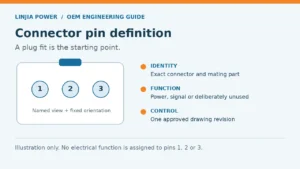
A keyed plug reduces the chance of mating it in the wrong orientation. It cannot correct a cable that was assembled with the wrong electrical assignment. Our connector pin-definition guide covers how to document the interface. Here, the separate decision is what the complete system must do when a connection fault occurs.
Contain the Incident Before Replacing More Chargers
For an importer or service network, repeated replacement attempts can spread an unresolved fault. If several chargers fail on the same vehicle, stop treating each unit as an isolated return. Review the shared vehicle, harness, adapter and battery configuration.
- Hold the affected combination. Separate suspect chargers, vehicles, adapters and associated stock from approved units.
- Preserve evidence. Record model and batch identifiers, label photographs, the installed connection path, observed indications and the reported sequence of events. Do not dismantle equipment to obtain a photograph.
- Define the extent. Identify which orders, vehicle variants or service kits share the potentially affected parts.
- Assign the investigation. Charger and battery or vehicle engineers should agree the fault mechanism, inspection scope and disposition.
- Control the release. Document the approved correction, verification evidence and stock or service instructions before resuming shipment or use.
This is a suggested project-response sequence, not a report of a Linjia customer incident. Do not deliberately reverse a live connection, bridge a protection device, fit a larger fuse or swap wires as a trial fix. Disconnection and electrical inspection must follow the equipment manufacturer’s safe procedure.
Turn “Protected” Into a Reviewable Acceptance Requirement
Before placing a bulk order, ask the responsible engineers to define a fault-verification plan for the exact charger and battery configuration. Buyers need a clear record of the conditions and outcome, rather than an undocumented demonstration.
- Identity: charger hardware and cable revision, battery or simulator specification and relevant vehicle interface.
- Conditions: applicable battery voltage, charger AC state, initial conditions and connection sequence within the approved laboratory method.
- Response: the behavior to observe, the quantities to record and the agreed acceptance limits.
- After the event: permitted reset or service action, required inspections and checks before normal charging can resume.
- Coverage: which variants the evidence supports and which changes require another review.
Do not import a current threshold or duration from an unrelated product or standard. The applicable requirements depend on the charger, battery, application and destination market. Fault testing belongs in a controlled environment with qualified personnel and suitable protective equipment.
How Linjia’s production checks fit the decision
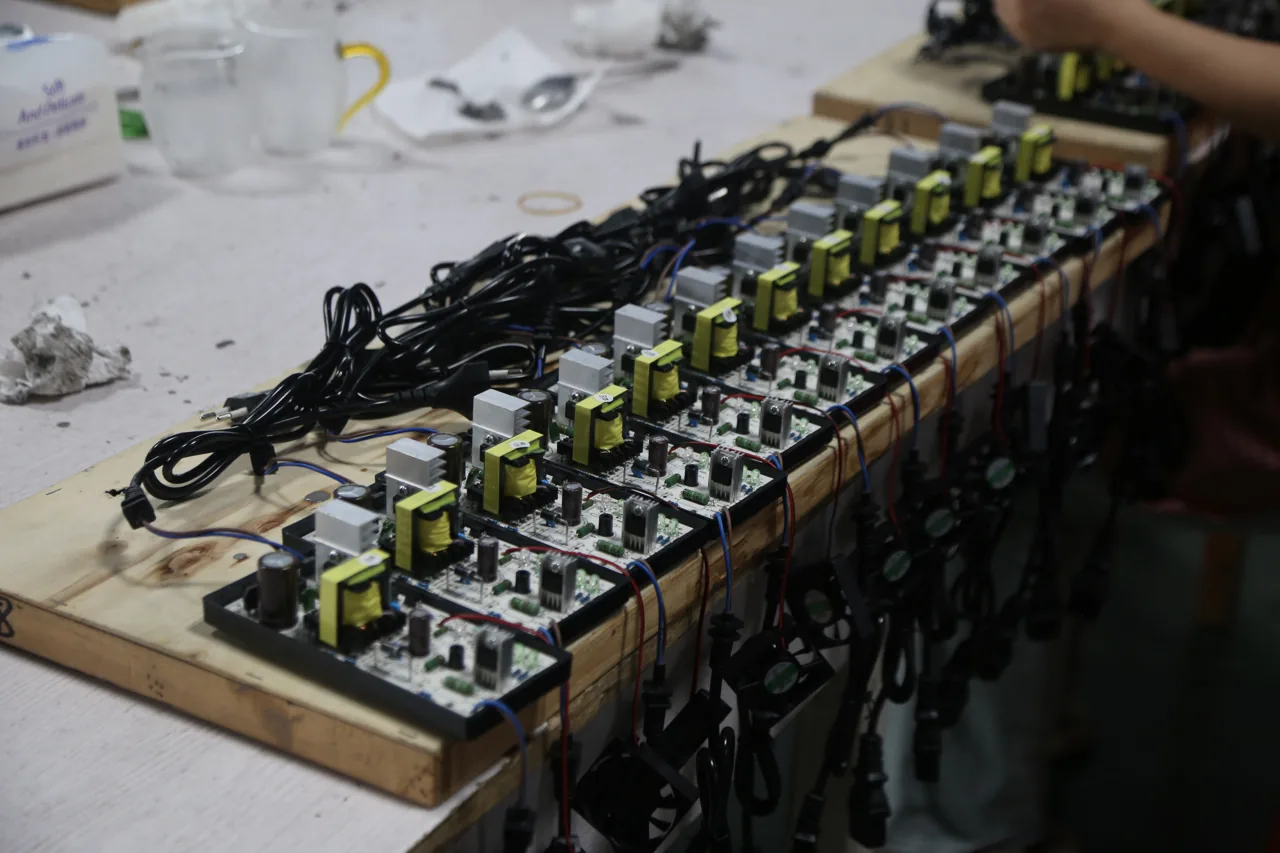
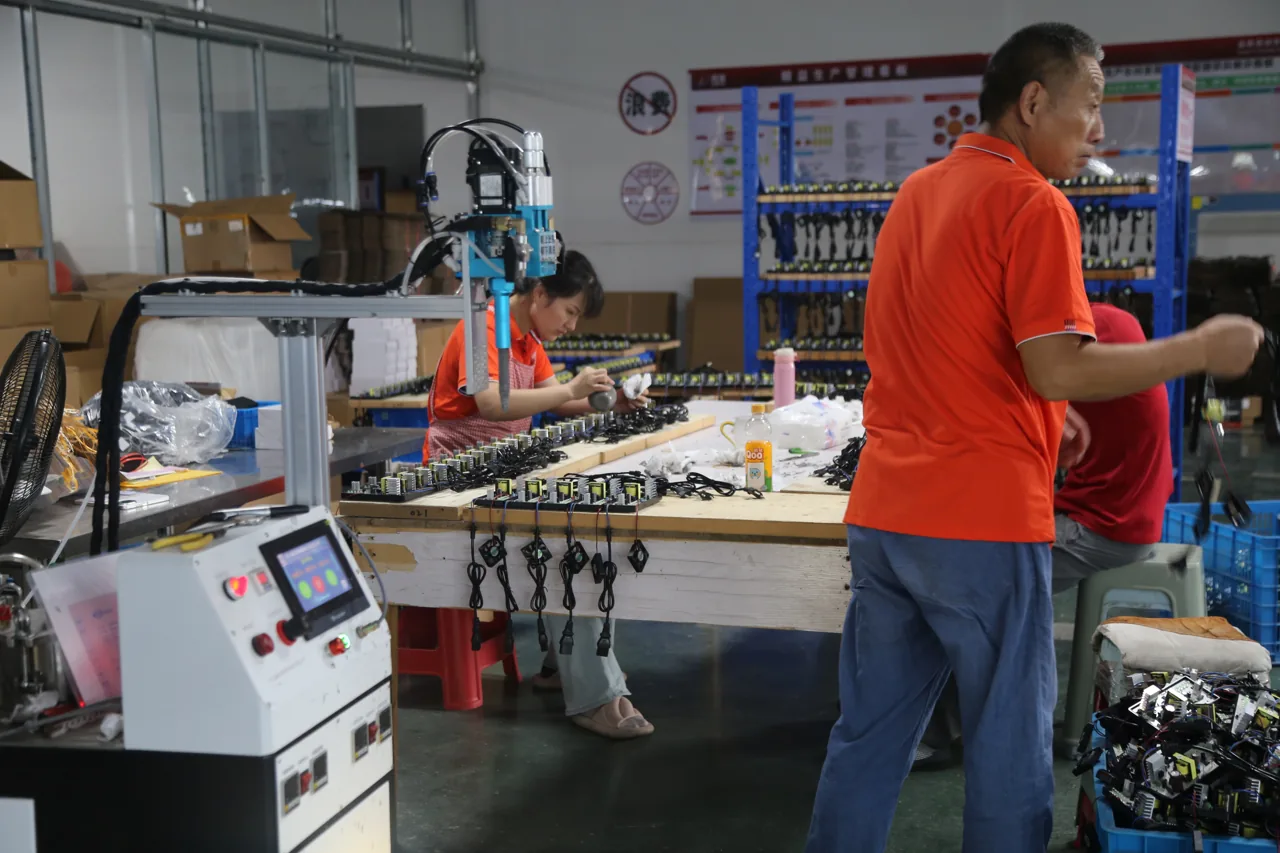
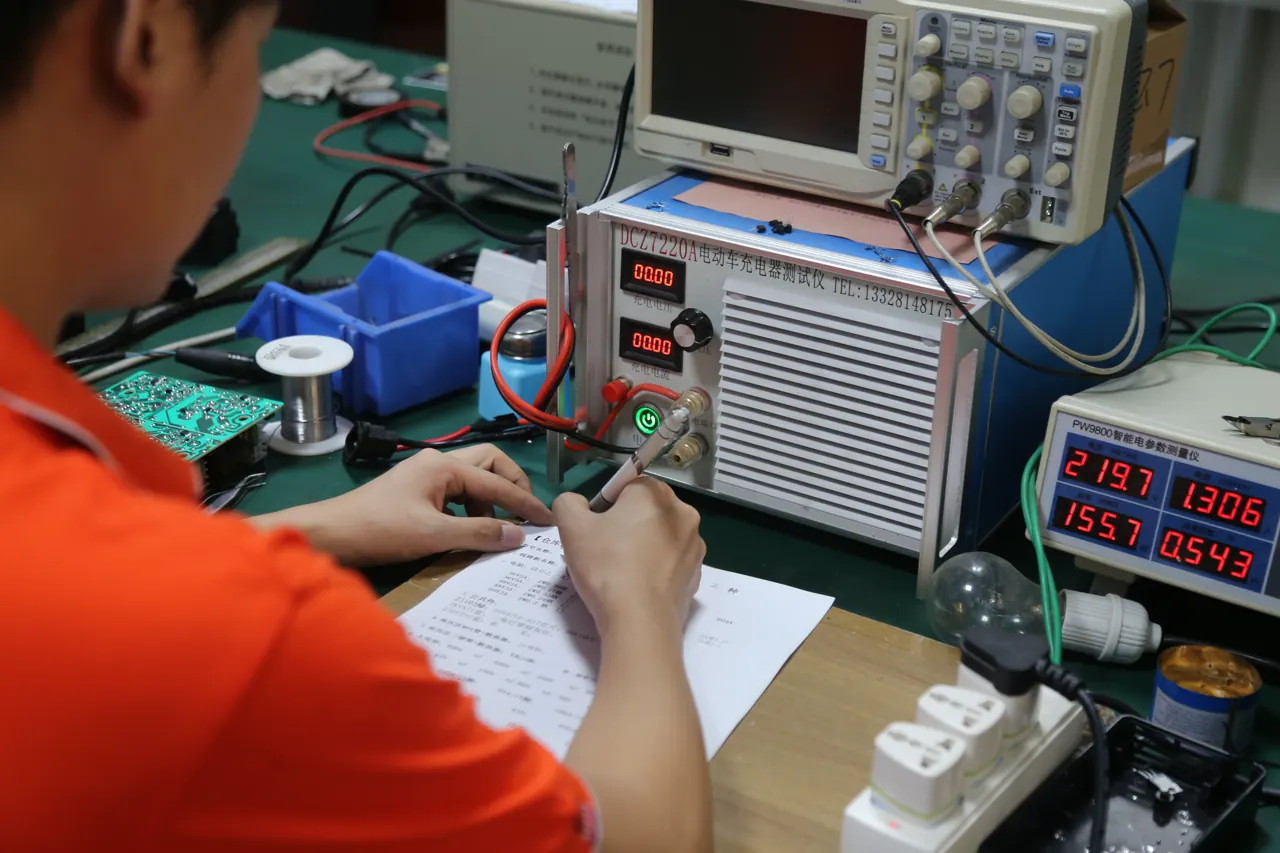
Linjia’s charger quality-control workflow includes electrical performance checks, dielectric withstand and insulation checks, and full-load burn-in. Order-specific connectors, cables and polarity can be checked against the confirmed requirements. A particular reverse-polarity protection claim still needs confirmation for the proposed model and configuration.
As explained in our full-load burn-in guide, operation under load answers a different question from abnormal-connection behavior. Purchasing should request the evidence for each requirement separately.
Buyer Checklist Before Releasing a Charger Project
- Identify every intended vehicle and battery combination, including service replacements.
- Resolve the power connection assignment at the actual mating interface.
- List required protection functions separately, with the responsible supplier for each.
- Obtain model-specific verification conditions and acceptance criteria.
- Agree the response to a reported fault and the release authority for affected stock.
- Keep the approved configuration with the order and spare-parts identification.
Polarity is one part of compatibility. Use the battery charger selection guide to review chemistry, charging voltage, permitted current and the wider application requirements.
Frequently Asked Questions
Will a reversed connection always destroy a charger?
No. A suitable protection design may inhibit charging or interrupt the fault. Other designs can be damaged. The outcome must be established for the actual configuration and conditions.
Can a green indicator prove the polarity is correct?
No. Indicator meanings vary by model, and a light alone does not verify the power connection or successful charging. Use the manufacturer’s instructions and qualified technical verification.
Is a damaged charger safe after its fuse is replaced?
Replacing a fuse does not establish the cause or prove the remaining components are sound. Keep the unit out of service until the authorized assessment and repair procedure is complete.
Does potting provide reverse-polarity protection?
Potting is not evidence that a circuit can detect or interrupt a reversed connection. Any electrical protection claim needs its own design and verification evidence.
Review the Connection Risk Before Your Next Charger Order
Send Linjia Power the battery and charger labels, intended electric two-wheeler or electric three-wheeler application, connector and inlet photos, available wiring documents and required protection behavior. Include the target market and estimated quantity. For an existing fault, add the model, batch and observed symptoms without reconnecting suspect equipment.
Our team can review the proposed charger configuration and clarify the technical information needed before sampling or production.
Technical References
Primary manufacturer documents checked October 26, 2026: Analog Devices, Reverse Battery Charger Protection; Texas Instruments, Design Flexibility for Reverse Charge Protection Using BQ27Z746, SLUAAR2, August 2023; Texas Instruments, Basics of Ideal Diodes, SLVAE57B, Section 5, revised October 2021. Links appear beside the relevant explanations. These documents support the stated engineering principles; they do not establish a Linjia product’s protection rating.