
Interview Date: September 26, 2026
Interview Topic: Wide Voltage Charger Technology, Charging Current Matching, and Overseas Localization Practice
This interview explores the technical boundaries of wide voltage chargers, the matching of charging current to batteries, and overseas production and localization models. Drawing on Sunny’s experience developing 48V, 60V, and 72V wide-input products, as well as practical work in Türkiye, Bangladesh, Thailand, and Indonesia, it explains why a continuous 110V-220V input range requires the front-end circuit and power devices to be redesigned, how mismatched charger parameters affect batteries and protection boards, and why companies must choose among finished-product exports, SKD, CKD, and overseas transit warehouses according to policy, cost, technical, and after-sales conditions.
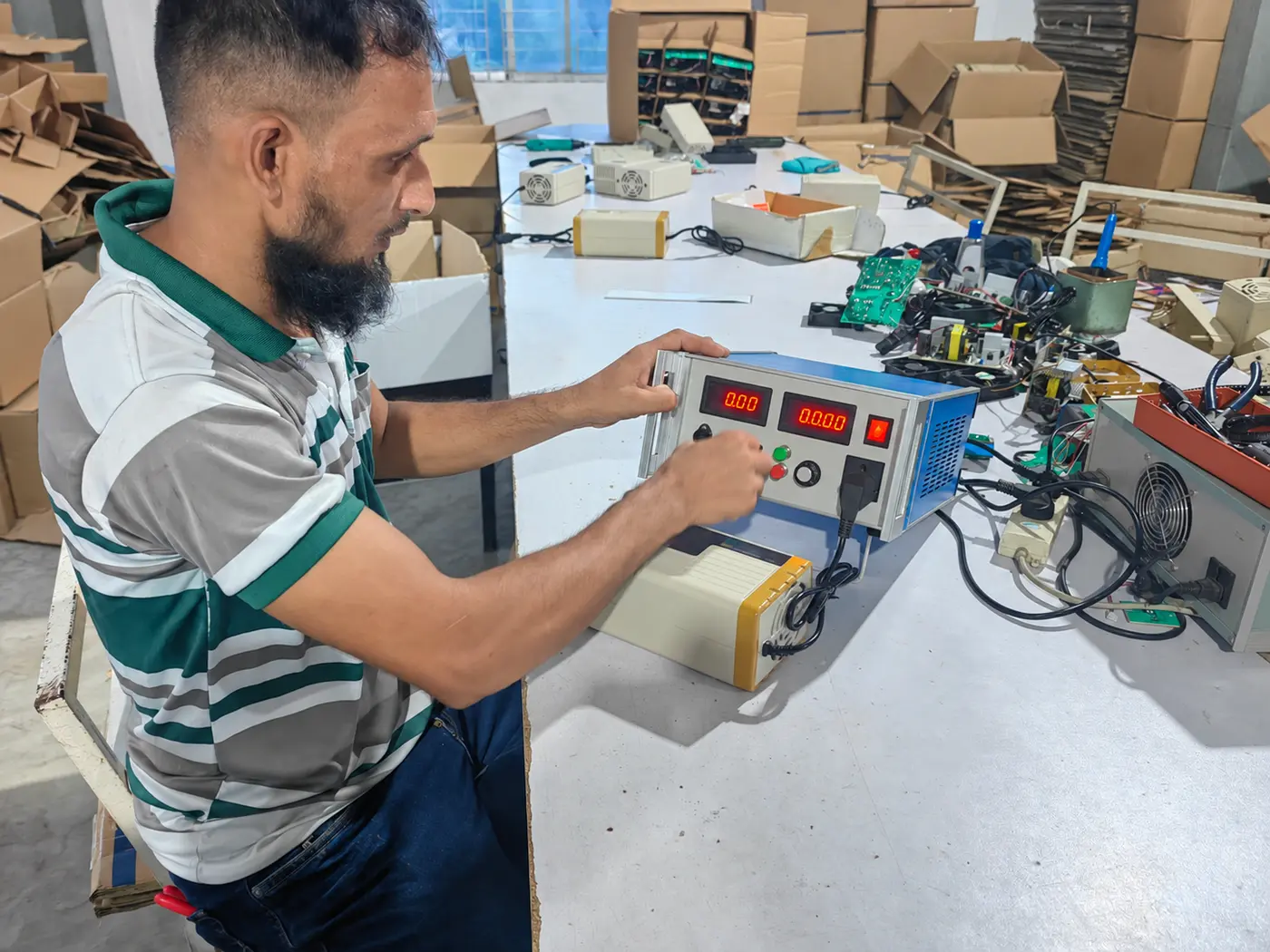
1. Wide-Input Charger Principles and Cost Boundaries
Ann: In terms of circuit design and the power that the input stage must handle, what are the fundamental differences among a 220V single-voltage charger, a product that switches between 110V and 220V, and a continuous wide-input charger? Why can’t wide-voltage input be achieved simply by changing one parameter?
Sunny: Taking the Chinese market as an example, the grid voltage is normally 220V, so the circuit of a conventional charger is also designed for 220V input. We generally call this a single-voltage charger.
Here is a simple example. A 48V 12Ah battery pack can use a 48V 2A charger, with total power of approximately 120W. If the output requirement remains unchanged but the input voltage falls from 220V to 110V, then according to P = U × I, the input current rises as the voltage falls and will be close to twice the original current.
Once the input current increases, the front-end power devices and other supporting materials must be upgraded accordingly; otherwise, the input stage cannot withstand the load. In other words, a wide voltage battery charger designed for both 110V and 220V cannot be created from a product designed only for 220V by simply changing one parameter. A 220V-only input does not require this additional cost. Once 110V compatibility is required, the cost of the input-stage power devices rises significantly, and the actual increase is often more than simply doubling the cost.
There is also an important technical distinction. One design switches between a 110V operating mode and a 220V operating mode. The other is a true wide-input design that adapts continuously across the range from 110V to 220V. Achieving this continuous wide-input range requires the front-end circuit, charging solution, and power devices to be reselected and their parameters matched. This is one of the main difficulties in custom charger development for wide-voltage products.
Ann: When the power of a wide-input charger increases from a low level to 48V 5A, 60V 6A, or even 72V 6A, where do the main bottlenecks appear in the power devices and circuit design? How does the choice between a single-ended flyback topology and an LLC resonant topology affect the achievable power and product cost?
Sunny: With a low-power product, the input current may increase, but the total power is still not very high, so it is relatively easy to manage. Once product power continues to rise, however, the problem becomes much more obvious.
For example, when a conventional 220V-input 48V 5A charger is redesigned for wide-voltage input, the front end must be designed with greater current and power margin. In theory, we can continue increasing the device ratings. At higher currents, however, it may become impossible to find a power transistor or other power device that meets the requirement. The circuit principle may be feasible in theory, yet component selection becomes the practical constraint. That is the technical bottleneck.
When this happens, the topology has to change. If the lower-cost single-ended flyback circuit can no longer achieve the requirement, we must move to an LLC resonant circuit, and the LLC solution costs significantly more.
For example, a standard 220V-input 48V 5A charger may be available for around RMB 50. If the same output requirement is changed to wide-voltage input, even RMB 100 may still be insufficient to implement it with the original basic circuit because the two products use different circuit topologies. The cost is affected not only by the increase in power, but also by whether the original charging topology can satisfy the wide-input requirement.
When we first began working on wide-input chargers, we could mainly make products for 48V 12Ah and 48V 20Ah batteries. A product for a 60V 20Ah battery was only just achievable. For a 72V 20Ah battery, because voltage and current together determine power, it was difficult at that time for the actual output current to reach a true 3A; we could only achieve approximately 2.3A to 2.5A.
After continued research and development, we gradually progressed from 48V 3A to 4A and then 5A. At present, our 72V 5A and 60V 6A wide-input products can be implemented using the basic single-ended flyback topology, which keeps the cost relatively controllable. Moving further to 72V 6A or 60V 7A requires an LLC resonant circuit. The cost then rises substantially, and the normal ex-factory price may exceed RMB 200. This capability was not achieved through a single adjustment; it required continuous research, development, and correction.
2. Matching Charging Current to the Battery
Ann: When determining the charging current for lead-acid and lithium batteries, how should battery capacity, chemistry, cell quality, current condition, and the charging-current limit of the protection board be considered together? Why can always trying to achieve a full charge in one or two hours shorten battery life?
Sunny: We cannot simply pursue fast charging. The charging current must be determined according to the range that the battery itself can withstand.
For a lead-acid battery, under the matching standard we normally use, the charging current is generally calculated at approximately 0.15 times the battery capacity. For a 20Ah battery, 20 multiplied by 0.15 equals 3A, so the usual maximum charging current is around 3A. If a 4A or even 5A charger is used, the battery may be unable to withstand the excessive current and may swell or lose water rapidly. Its service life will also be affected significantly.
Lithium batteries can generally accept a higher charging current than lead-acid batteries. Based on the range we commonly use in current projects, the current can normally be considered at approximately 0.2 to 0.5 times the capacity. A 20Ah lithium battery, for example, can be matched with a charging current of 4A to 10A. In theory, a 10A charger can fully charge it in about two hours. However, increasing the current directly to 20A in order to charge it in one hour would be inappropriate. Even with 10A, we would not recommend using it directly without first understanding the battery’s specific condition.
The greater the charging current, the more active the battery becomes during charging, and this also affects service life. It is like eating: chewing slowly places less strain on the stomach, whereas finishing every meal very quickly can become too much for the body. A battery is similar. We cannot consider only how quickly it charges.
The condition of the cells must also be considered. A lithium battery is assembled from cells, but those cells may be second-life cells, original Grade A cells, or original Grade B cells, and their actual quality is not identical. If the battery uses second-life cells or even cells with defects, charging it at high current may greatly shorten the life of a battery that might otherwise have lasted three, five, or even eight years.
Whether fast charging should be used, and how much charging current is appropriate, therefore cannot be decided only from the buyer’s preferred charging time. Proper battery charger selection must also consider the battery chemistry, capacity, cell quality, current condition, and the charging current permitted by the protection board.
3. The Charger’s Value Within the Complete Vehicle System
Ann: Why can a charger not be treated as an ordinary accessory purchased casually at the end, even though it accounts for only a small share of the complete vehicle’s cost? What product-matching and after-sales problems can overseas buyers solve by communicating directly with the original charger manufacturer?
Sunny: In the past, many vehicle factories and trading companies that were just beginning to export focused first on electric two-wheelers, three-wheelers, and even electric cars. The charger was treated only as a small accessory. Some buyers and complete-vehicle suppliers finished negotiating the vehicle business and even forgot to order the chargers because they believed the charger was an insignificant accessory.
When they discovered the omission, they often asked the vehicle factory to purchase the chargers on their behalf. However, the vehicle factory mainly handled the vehicle itself and might not truly understand chargers. It might also want to save cost, so products of many different kinds could enter the purchasing process. Some refurbished products that our factory had already eliminated were also shipped overseas through this kind of channel.
After the products arrived overseas, a distributor might discover that the vehicle itself had not failed, but the charger had. Because of this one small charger, the entire vehicle could not be used normally. For the distributor, this was both frustrating and difficult. Only after experiencing problems like these did buyers gradually realize that charger quality also had to improve.
As worldwide sales and purchases of electric vehicles have increased, charger quality has received more attention. Buyers want products that are more stable and reliable. Some larger buyers with higher purchasing volumes order vehicles from the vehicle factory while also looking for a battery charger factory themselves, rather than relying entirely on intermediaries.
Working directly with the original manufacturer offers two benefits. First, the buyer can see how the product is made. Second, the buyer can communicate its actual charger requirements directly to the manufacturer and ultimately obtain a product that is better suited to the local market and project.
When we discuss product quality with customers today, they generally understand this more easily than in the past. A three-wheeler or a high-end two-wheeler may be worth several thousand yuan or more, while one charger costs only several dozen yuan. Saving those few dozen yuan is not economical if it ultimately prevents a vehicle worth several thousand or even more than ten thousand yuan from operating normally. Demand for high-quality, highly reliable chargers is therefore increasing.
Ann: If a charger is selected only for a low price, or if the voltage appears to match but the charging current, battery capacity, and protection-board parameters are not matched correctly, what practical risks can this create for lead-acid batteries, lithium batteries, and protection boards?
Sunny: We have seen this situation before. An overseas market was actually using 48V 12Ah batteries, but to offer a cheaper product, someone repackaged refurbished chargers intended for 48V 20Ah batteries as products suitable for 48V 12Ah batteries and sold them directly overseas.
A charger intended for a 48V 20Ah battery may provide 3A or even more than 3A. Using that current to charge a smaller 48V 12Ah battery will greatly shorten the battery’s service life. On the surface, the buyer saves a little money on the charger. If the battery then lasts six months less, however, the actual cost is higher.
The same principle applies to lithium batteries. A lithium battery pack is generally more expensive than a lead-acid battery, particularly at higher capacity, where it may cost several thousand yuan. If the charger is poorly matched, it may fail to charge the battery fully or may create an overcharging risk.
Some people believe that a lithium battery’s protection board can completely prevent damage to the battery. However, the protection board is itself an electronic product and has its own load capacity. For example, if a small battery protection board permits a maximum charging current of only 5A while the charger actually outputs 8A, the inrush when power is connected may damage the current-limiting switching components on the protection board. Even if there is no immediate failure, continuously carrying current beyond the designed range may cause the protection board to fail prematurely and may then affect battery safety.
Charger selection therefore cannot be based only on price, nor can the presence of a protection board be treated as a reason to ignore charger parameters. Both value for money and stability are important, but the charger must first be matched correctly to the battery and protection board.
4. Choosing an Overseas Localization Model
Ann: How should an overseas project choose among finished products, SKD, and CKD? What do Linjia’s experiences in Türkiye and Bangladesh show about how tariffs, shipping, production efficiency, and local after-sales service affect the cooperation model?
Sunny: Import policies and tariff structures differ from one country to another. Some countries use SKD or CKD to reduce import duties on finished products, while others impose restrictions on finished-product imports.
Türkiye is one example. The local market places certain restrictions on imports of finished chargers. When we first began cooperating in Türkiye, we used the CKD model. We shipped loose parts from China and sent personnel to provide local technical support until volume production became possible. We determined the technical solution and also provided one-to-one guidance on production-management processes, quality control, after-sales service, and technical maintenance.
The local operation purchased a substantial amount of equipment and hoped to organize production in the same way as a factory in China. After production began, however, we found that local manufacturing costs were high, while workforce efficiency and technical support were difficult to bring to the level of the Chinese factory. We later changed the cooperation model from CKD to SKD. Semi-finished products were first prepared in China and then shipped to Türkiye for final assembly, product adjustment, and quality control. The overall situation improved quickly after this change.
Bangladesh was different. At first, we shipped finished products directly to Bangladesh because the country did not restrict finished-product imports. However, the import duties on finished products and semi-finished products were different, and SKD could save part of the tariff cost. Finished products also occupy more shipping space. A container can hold approximately 15,000 finished chargers, but approximately 30,000 semi-finished chargers. SKD therefore reduces both part of the tariff cost and the transportation cost.
We have a production workshop and sales team in Bangladesh. Once the products are assembled locally, after-sales work can also be carried out directly there. This helps both local sales and customer acquisition, so we ultimately chose to use the SKD model over the long term.

From the perspective of total investment, however, establishing production capacity overseas does not necessarily save money. If sales volume is insufficient and a company establishes a factory in a country without proper planning, it must rent premises, train employees, and purchase and commission equipment. The initial investment may reach RMB 1 million to RMB 2 million. If local sales have no room to continue growing, it becomes difficult to allocate that cost reasonably across the products, and the investment risk will also be high.
Ann: As industrial localization becomes a stronger trend, why can’t a company simply copy a Chinese factory and move a complete charger production line overseas? What practical constraints are created by industrial clusters, technical iteration, specialized personnel, and supporting materials?
Sunny: Calls for industrial localization are indeed increasing. Some overseas vehicle factories and trading companies have already established assembly plants and also hope that components can be produced locally. However, a charger factory cannot be established blindly, because it involves more than purchasing equipment and recruiting workers.
In China, many industries have their own industrial clusters. Our charger factory is located in Anhui rather than Sichuan or Guangdong because the related industry is concentrated here. Industrial concentration has disadvantages and advantages. The disadvantage is intense competition among peers. The advantages are that technology is updated quickly, management and technical personnel are easier to find, and the supporting material supply is more complete.
Charger products themselves continue to evolve: from two-stage charging to three-stage, four-stage, and multi-stage charging; from having no timed charge-completion indicator protection to adding timed protection; and then to overtemperature, overcurrent, overcharge, and overvoltage protection. These technical advances are not completed by one company alone. They are driven jointly by continuous communication and competition across the entire industry.
If a complete factory is established on its own overseas, the local operation may lack industry information, conditions for technical upgrading, specialized technical personnel, and supporting materials. Even if production can be maintained, there may be shortages of on-site technical and management personnel. Ordinary operators must be trained from the beginning, and even after training, production efficiency may not quickly reach the required level.
Our principle is therefore to export finished products whenever that model is workable and to use SKD when semi-finished exports are appropriate. Only when neither finished-product nor semi-finished supply can satisfy local policy and market requirements do we discuss another solution with a capable local distributor or partner that has a long-term plan. The cooperation model must comply with the policies of both countries and also serve the practical interests of both companies. This is also how we evaluate Linjia’s wider global manufacturing and supply arrangements.
5. Quality Control for Overseas Assembly and Regional Practice
Ann: If a customer must complete final assembly locally, how does Linjia Power divide the production stages between the Chinese and overseas factories, and how do modular design, technical guidance, material standards, and testing equipment maintain product quality?
Sunny: We have already experienced the transition from CKD to SKD in Türkiye, used SKD in Bangladesh over the long term, and used a finished-product plus transit-warehouse model in Thailand. We have implemented all three models in practice and have therefore accumulated experience.
First, based on many years of export experience, we design the charger with a modular structure that can be divided into the main board and other accessories. The primary components are completed in China and then shipped together with the other accessories for final assembly locally.
Second, our technical team can travel to the local site to provide guidance and one-to-one service until the project can make volume shipments. Problems involving quality management, material inspection, and worker assembly processes during routine production can also be resolved through video support.
For components such as housings that require molds, we can first complete the mold development and then send the molds to the destination country. Materials such as power cables, packaging, and color boxes can be produced by local suppliers according to our technical requirements. Downstream equipment such as aging equipment is relatively simple and can also be prepared in China and then shipped locally. This approach leaves the final assembly process in the local market while Linjia continues to control the critical components, technical solution, and quality standards.
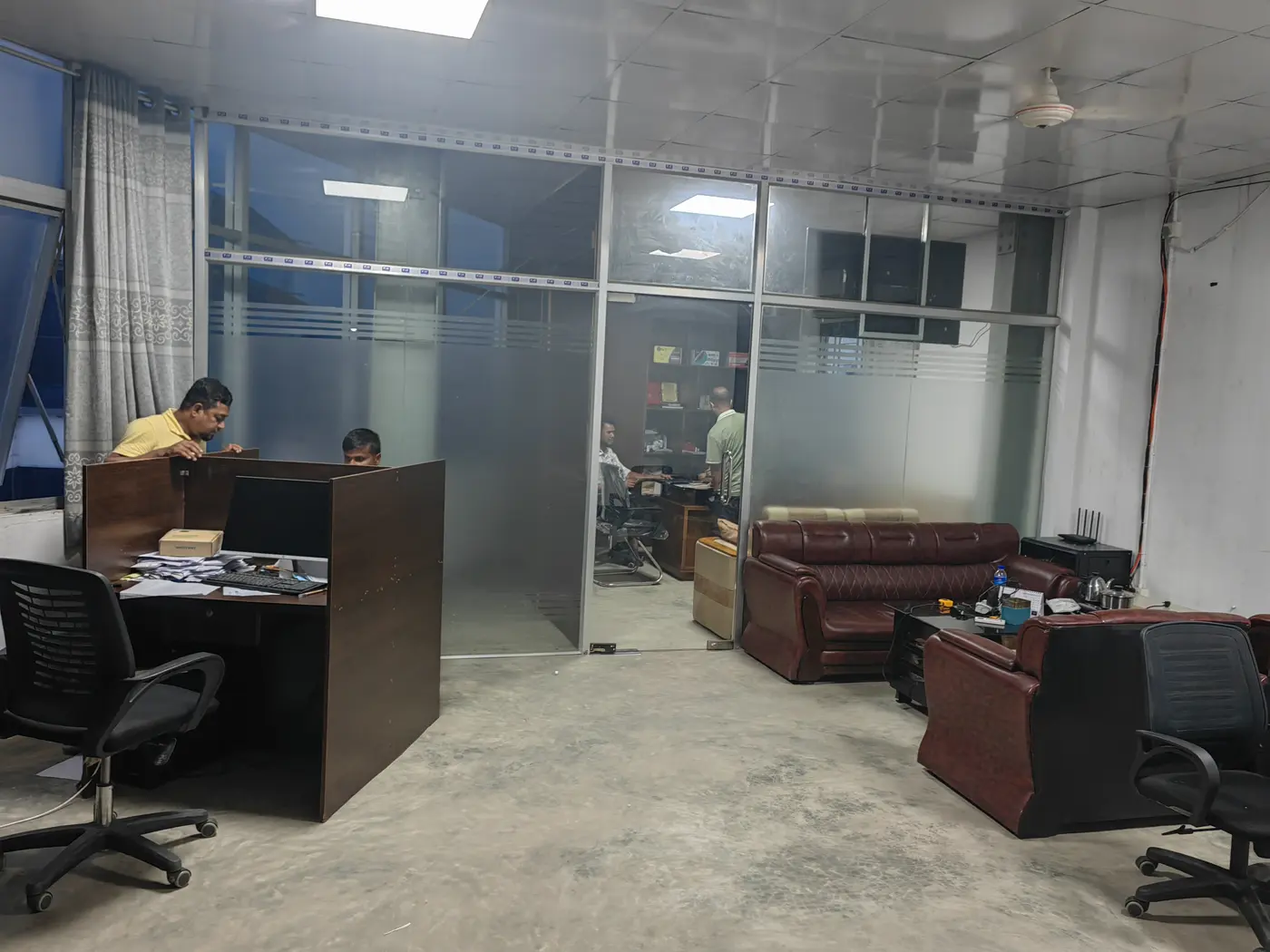
Ann: Why did Bangladesh, Türkiye, and Thailand ultimately adopt different supply and production models? How did product validation, tariff differences, local costs, and regional sales conditions determine the choice among finished products, SKD, and a transit warehouse? What plans does Linjia have for Indonesia?
Sunny: I have worked in charger technology for more than ten years and close to twenty years. When we began cooperating in Bangladesh and Türkiye, we also moved forward gradually on the basis of this long-term technical experience.
Our current partner in Bangladesh originally purchased finished products from other charger manufacturers. The failure rate was very high after those products arrived in Bangladesh, so he wanted to find a partner with reliable quality and stable technology. He was introduced to me by a friend. We first shipped finished products from China. After comparing them, he found that our products were more stable than those supplied by the previous company. We then discussed developing the Bangladesh market together and expanded the cooperation step by step to its present scale.
The situation in Türkiye was similar. The local partner had previously worked with another charger manufacturer, but the circuit design supplied by that company, including the transformer winding method, had problems that caused high return and failure rates. After we took over, we first conducted small-batch trials in our Chinese factory. The technical department tested and adjusted the design repeatedly. Only after confirming that the solution was workable did we begin volume shipments to the factory in Türkiye and organize production. The product showed a low failure rate after local market validation, and only then did the two parties gradually establish an ongoing cooperation.
Thailand did not adopt the same model as Bangladesh and Türkiye because the difference between local tariffs on finished products and semi-finished products is not large. SKD therefore offers little potential tariff saving. If plastic housings were produced locally, the price of rubber or plastic raw materials might also be higher than in China, so the overall model would not have a clear cost advantage.
Under these conditions, we chose to ship finished products directly to Thailand and established a transit warehouse and sales team together with a local partner. The Thai warehouse serves not only the Thai market, but also neighboring countries such as Vietnam, Cambodia, Laos, and Myanmar. In some cases, selling into nearby ASEAN markets through local channels may involve lower tariffs, making this a more suitable way to develop the Southeast Asian market.
We are also studying whether this model can be replicated further. We have recently been discussing the establishment of a transit warehouse in Indonesia. If the conditions become suitable in the future, finished products can first be stored in the Indonesian warehouse and then sold throughout the Indonesian market. Each arrangement is reviewed as a complete OEM/ODM charger project rather than copied automatically from another country.