
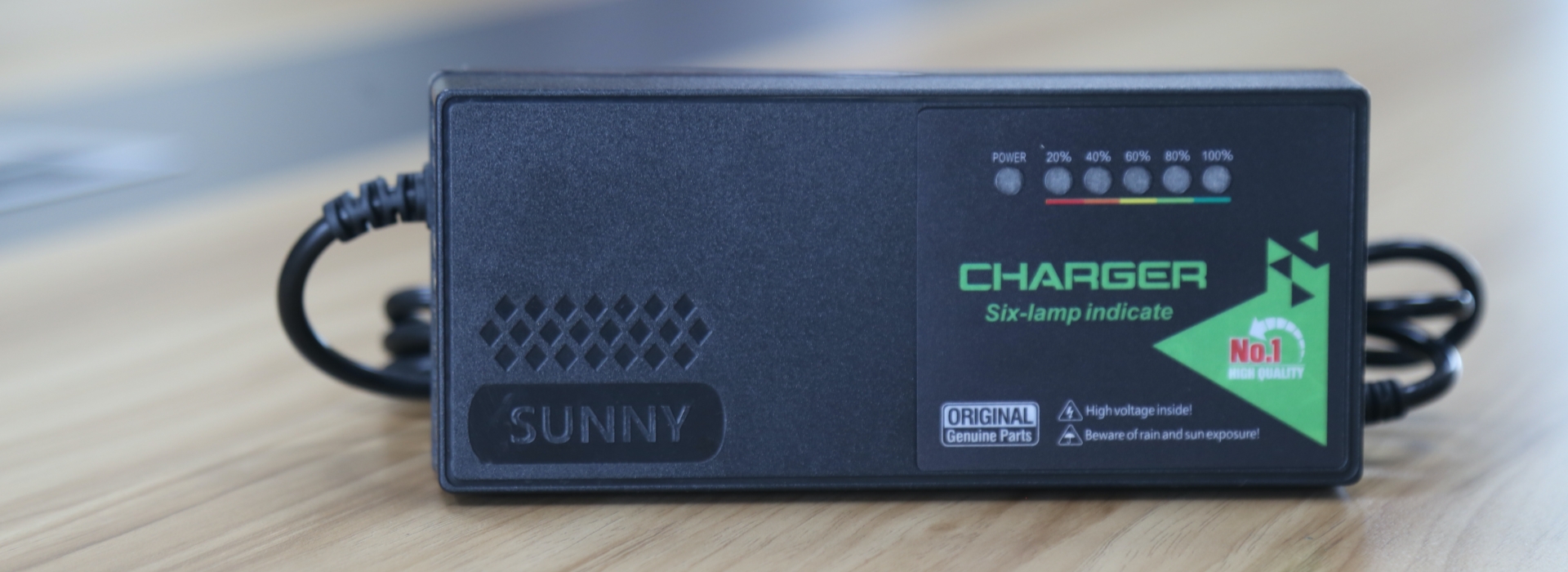
Linjia as Your Professional Battery Charger Manufacturer
Battery Charging Expertise
Our core technical team has more than 20 years of experience in charging power technology, supporting 6V‑72V lead‑acid and LiFePO4 charger projects.
Integrated Manufacturing
Linjia connects SMT production, assembly, potting, in‑house housing injection moulding, electrical testing, burn‑in, labelling, and packing within one manufacturing system.
Quality Control
Standardised quality checkpoints include incoming inspection, semi‑finished testing, finished‑product electrical testing, high‑voltage insulation testing, and full‑load burn‑in.
OEM / ODM Customisation
Projects can cover charging current and profile, plugs, connectors, cables, housings, labels, packaging, and, where required, new circuit, PCB, structural, appearance, and private‑mould development.
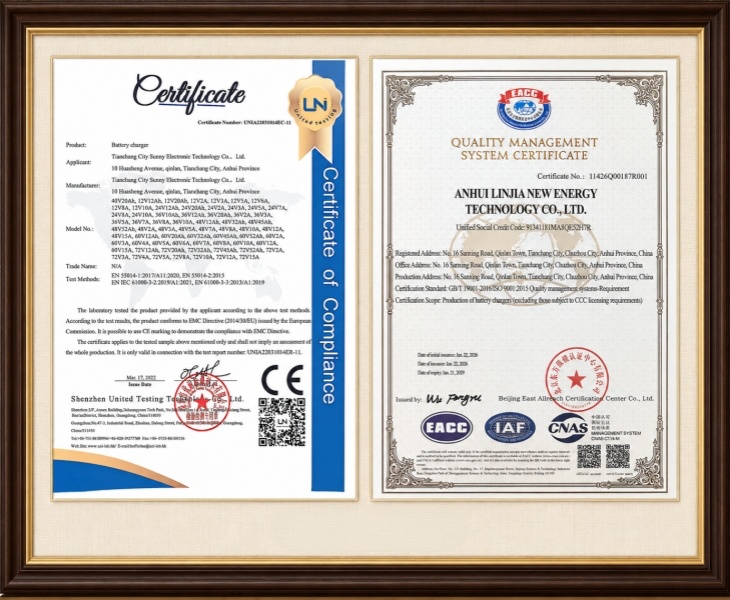
Quality and Compliance Built Around the Actual Project
Linjia operates under an ISO 9001 quality management system. Relevant charger models can also be supported by CE certification and applicable IEC testing documentation according to the selected model, electrical specification, and destination‑market requirements.
• ISO 9001 Quality Management System
• CE certification support for applicable models
• Applicable IEC testing documentation
• Project‑specific compliance review before production approval
Important: Certification scope should be confirmed for the exact charger model and target market. Do not present CE or IEC as universal coverage for every Linjia charger.
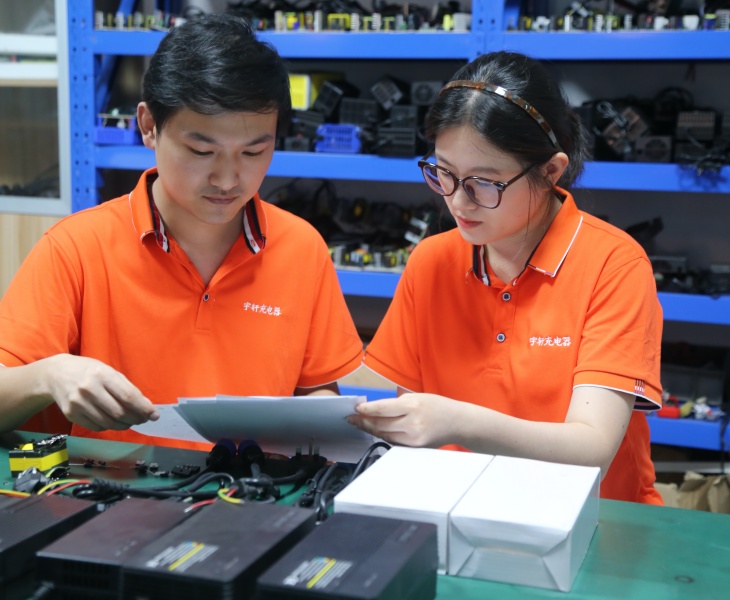
Support Does Not Stop When the Order Ships
For OEM and ODM projects, Linjia keeps the approved charger specification, sample requirements, connector and polarity definitions, label information, packaging configuration, and production records as project references. These records help maintain consistency for repeat orders and support technical review if a field issue is reported.
Before Shipment : Confirm key electrical parameters, interfaces, labels, packaging, and order requirements against the approved project reference.
Repeat Orders : Retain approved specifications and project references so later orders can follow the confirmed configuration.
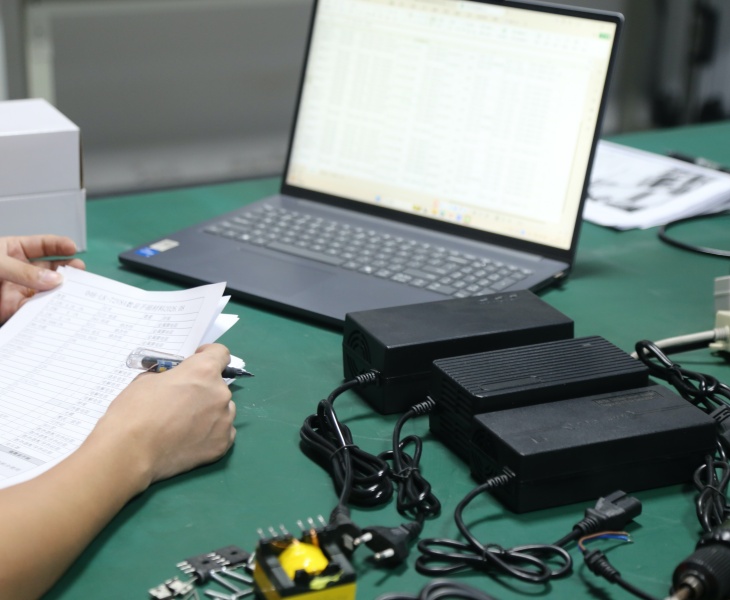
Technical Issues Are Reviewed with Data, Not Guesswork
If a charger issue occurs in the market, the buyer can provide the model, production batch, symptoms, battery information, operating conditions, photos or video, and available test data. Linjia’s engineering team can review the information, analyse possible causes, and define appropriate containment or corrective follow‑up actions.
ISSUE‑HANDLING FLOW
• 1. Issue Information
• 2. Engineering Review
• 3. Cause Analysis
• 4. Containment Action
• 5. Corrective Action & Follow‑Up
Clear Records Help Keep the Approved Charger Consistent
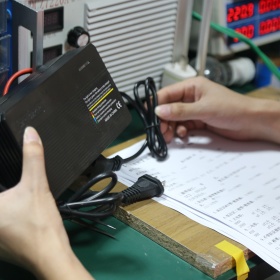
Approved Specification Records
Record the approved electrical parameters, connector, polarity, cables, labels, and packaging requirements as the production reference.
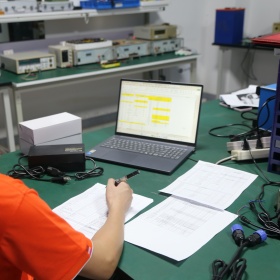
Sample & Change Control
Mass production follows the approved sample and confirmed specification. Important project changes should be reviewed and reconfirmed before introduction.
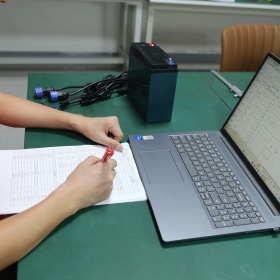
Batch Identification
Model, label, order, and production‑batch information can support traceability when technical review is required.
Experienced People Behind Every Charger Project
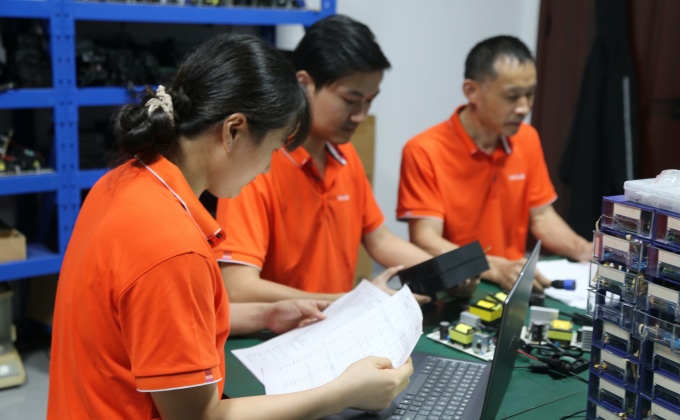
Charger R&D & Engineering Team
Responsible for charging‑solution evaluation, circuit and PCB design, charging profiles, structural and thermal coordination, interface definition, and prototype verification.
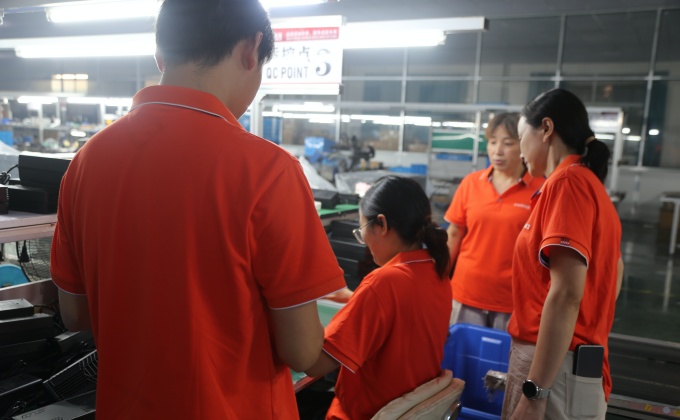
Manufacturing & Quality Team
Responsible for SMT, soldering, injection moulding, assembly, potting where applicable, electrical testing, high‑voltage insulation checks, burn‑in, and batch quality control.