Menu

International Brands We Collaborate With


EVOLITE logo
Ever great logo
MotoLux logo
AL MOUAZZEN GROUP UNIQA CHARGER logo
Gepard logo
XCHU logo
BONMAD logo
Sabai logo
Wei Sheng logo
LION EV logo

Professional Floor Scrubber Battery Charger Supplier in China

Commercial floor scrubbers need charging systems that fit the battery pack, machine installation, and cleaning schedule. Walk-behind units, larger ride-on machines, and equipment used across several working shifts can have very different energy and charging requirements. Linjia works with cleaning-equipment manufacturers, battery brands, importers, distributors, and equipment service channels on OEM/ODM charger evaluation for bulk supply and repeat orders. Battery chemistry, required recharge time, installation space, and the actual operating environment establish the starting specification rather than the machine's appearance alone.

The four development categories remain 24V lead-acid, 24V LiFePO4, 36V lead-acid, and 36V LiFePO4, preserving two configurations at each priority voltage. A suitable higher-current scrubber model has not been verified from the available catalogue. Its 24V12Ah, 24V20Ah, 36V12Ah, and 36V20Ah lead-acid models list 1.9A or 2.8A for selected 10-28Ah packs; those small-pack ratings must not be assigned to larger industrial scrubber batteries. Matching model codes, output current, charging profile, and sustained power require engineering confirmation before supply.

For LiFePO4 reference, an 8S pack is nominally 25.6V and may specify 29.2V charging, while a 12S pack is nominally 38.4V and may specify 43.8V. The battery documentation determines the actual setting, current limit, and BMS requirements. AC 110V, AC 220V, or AC 110-220V input at 50-60Hz can be evaluated with regional plugs, cables, connectors, and pin definitions. An on-board installation also needs review of ventilation, mounting, vibration, moisture exposure, and any machine drive-inhibit or charging-control signal.

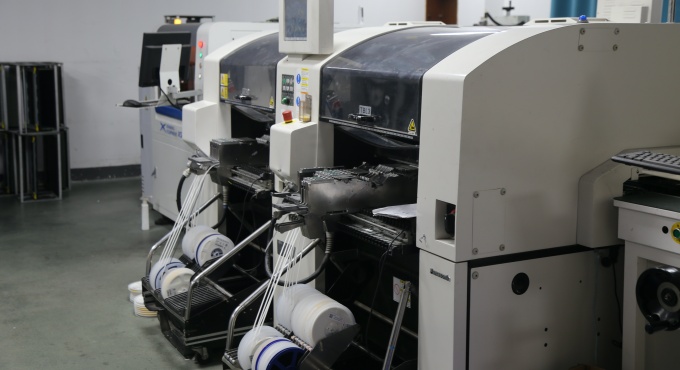
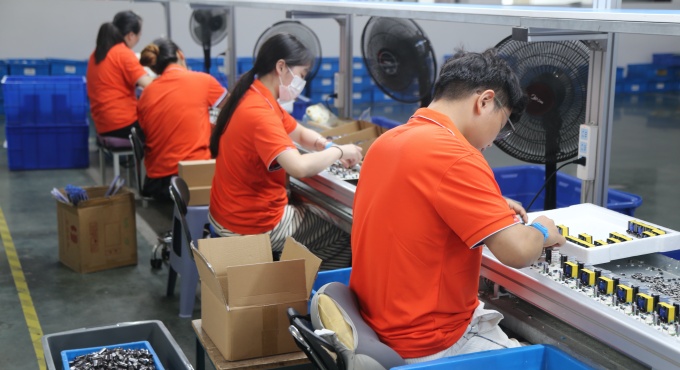
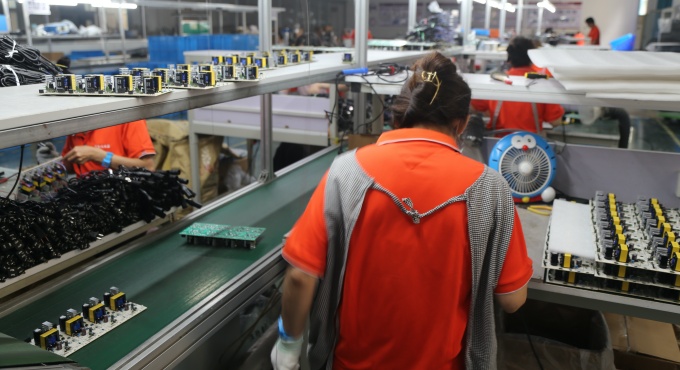
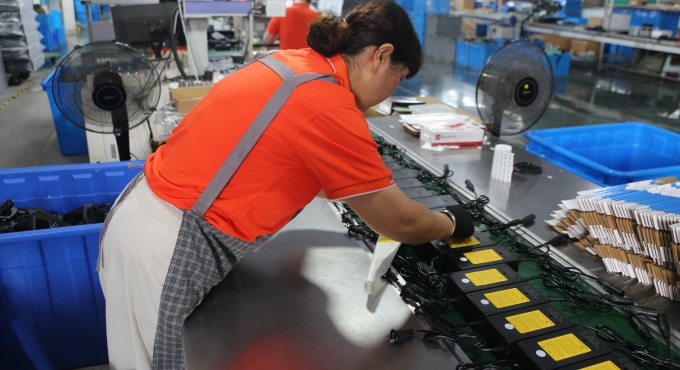
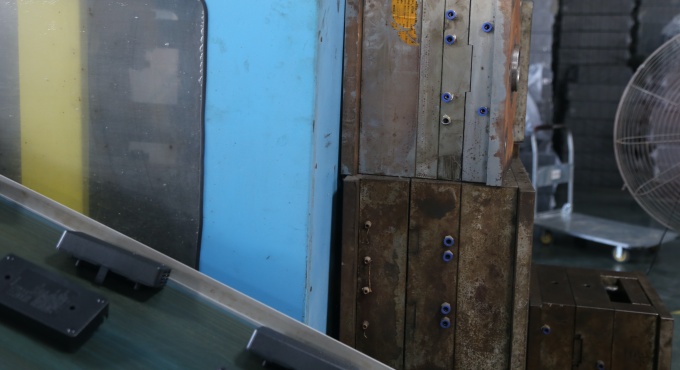
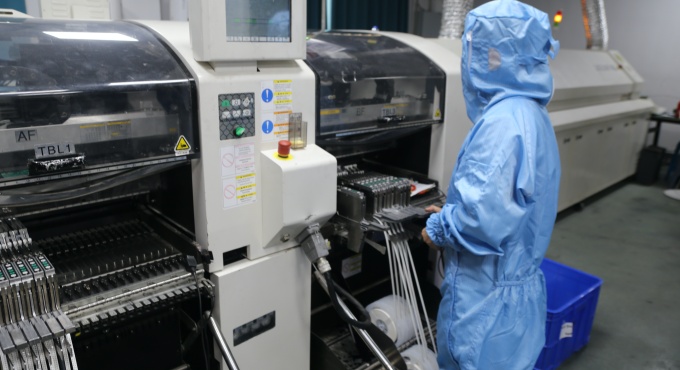
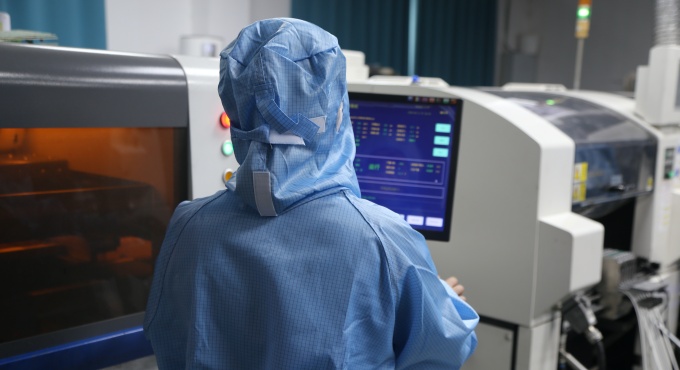
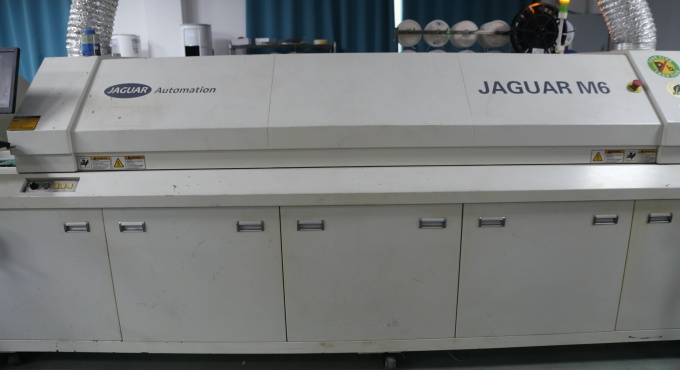
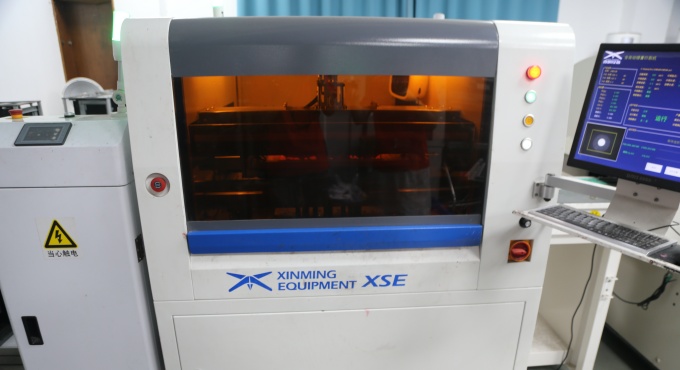
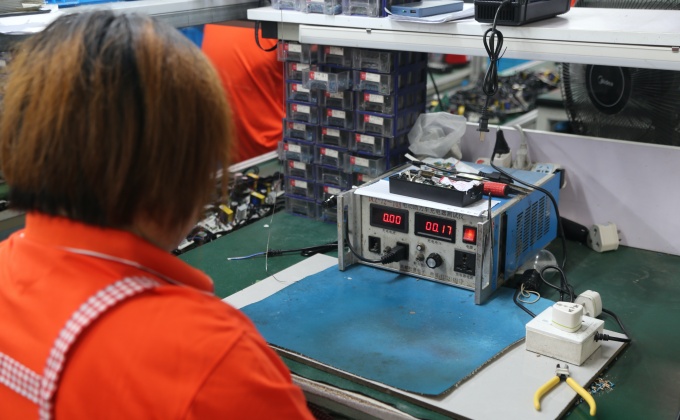
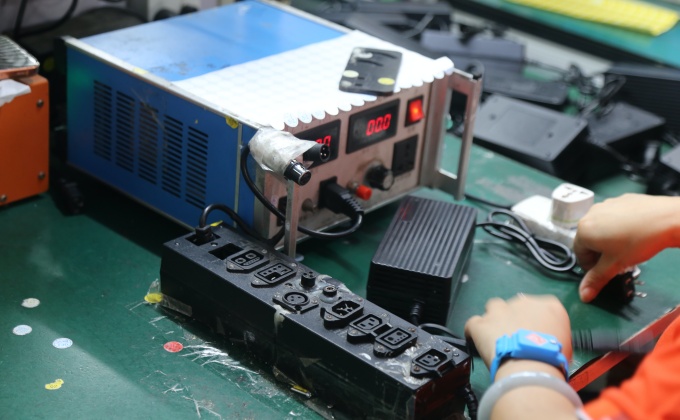
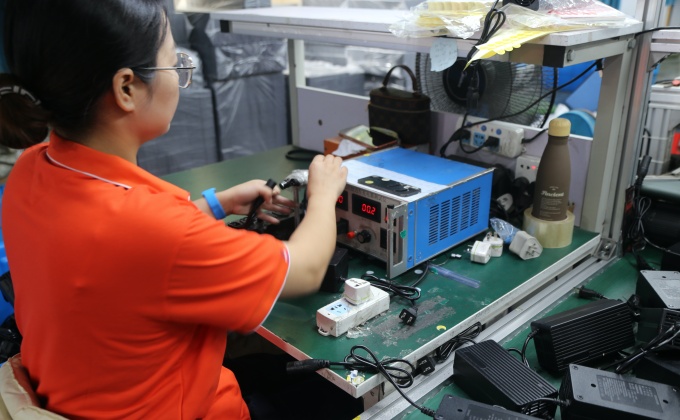
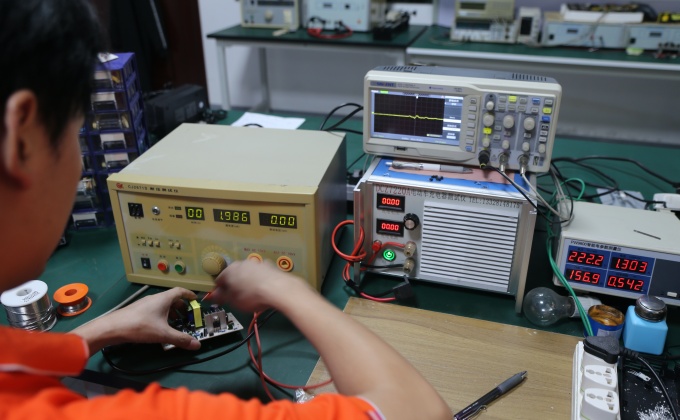
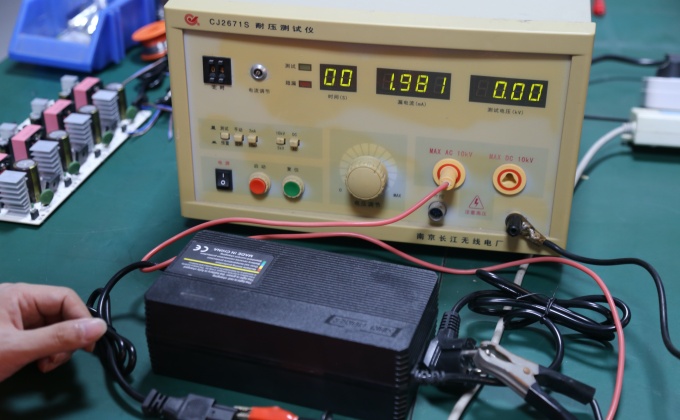
Linjia supports OEM and ODM development through specification review, samples, SMT production, housing manufacturing, assembly, electrical testing, high-voltage insulation testing, full-load burn-in, bulk delivery, and repeat-order coordination. Product labels, logos, codes, and packaging can follow the approved configuration. Selected 48V equipment can be reviewed as an extension after the 24V and 36V requirements are established. High-current operation, BMS communication, environmental protection, installation suitability, and market-specific certification must be qualified for the exact design rather than assumed from a general battery-charger capability.

Custom 24V lead-acid floor scrubber charger project with battery-specific current and charging stages.

Custom 24V Lead-Acid Floor Scrubber Battery Charger

A custom project configuration for compatible 24V walk-behind floor scrubber batteries. Flooded, AGM, and GEL packs require their own charging profiles. Battery capacity, permitted current, charging window, connector, and on-board or external installation are reviewed before Linjia confirms an available design and proposed output specification.
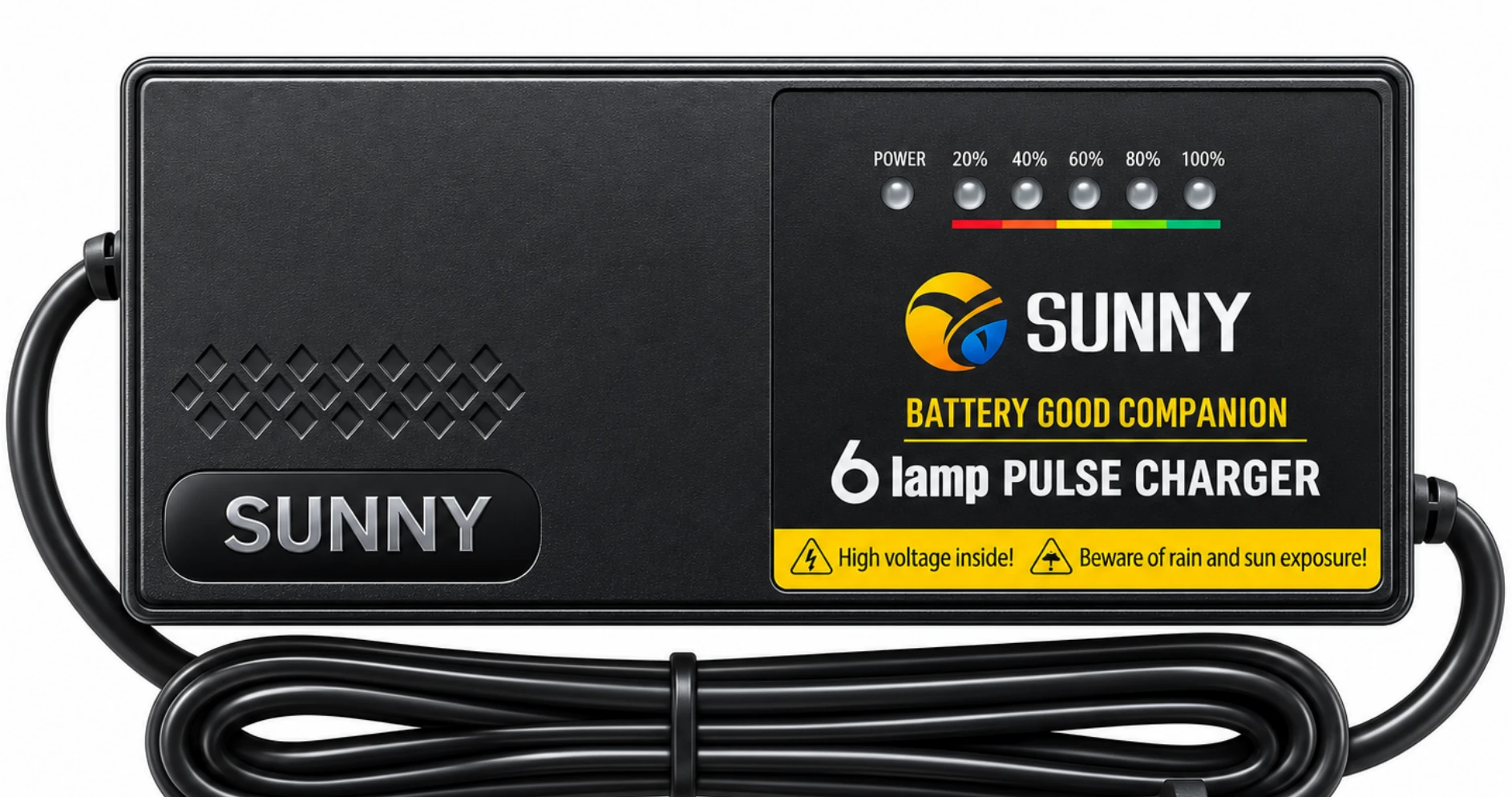
Custom 24V-class floor scrubber charger project for a verified 8S LiFePO4 battery and matched BMS.

Custom 24V LiFePO4 Floor Scrubber Battery Charger

A conditional development configuration for verified 24V-class LiFePO4 cleaning-equipment batteries. An 8S pack is nominally 25.6V, with 29.2V as a common full-charge reference. BMS limits, required current, charging logic, machine compatibility, and any communication signal must be confirmed before sample and supply approval.

Custom 36V lead-acid floor scrubber charger project with charging current matched to equipment duty.

Custom 36V Lead-Acid Floor Scrubber Battery Charger

A project configuration for compatible 36V deep-cycle lead-acid scrubber systems, including selected larger machine platforms. Charging stages, current, maintenance behavior, installation space, and extended full-load operation are assessed against the actual battery and cleaning schedule. Connector, polarity, and machine charging controls are included in the specification review.
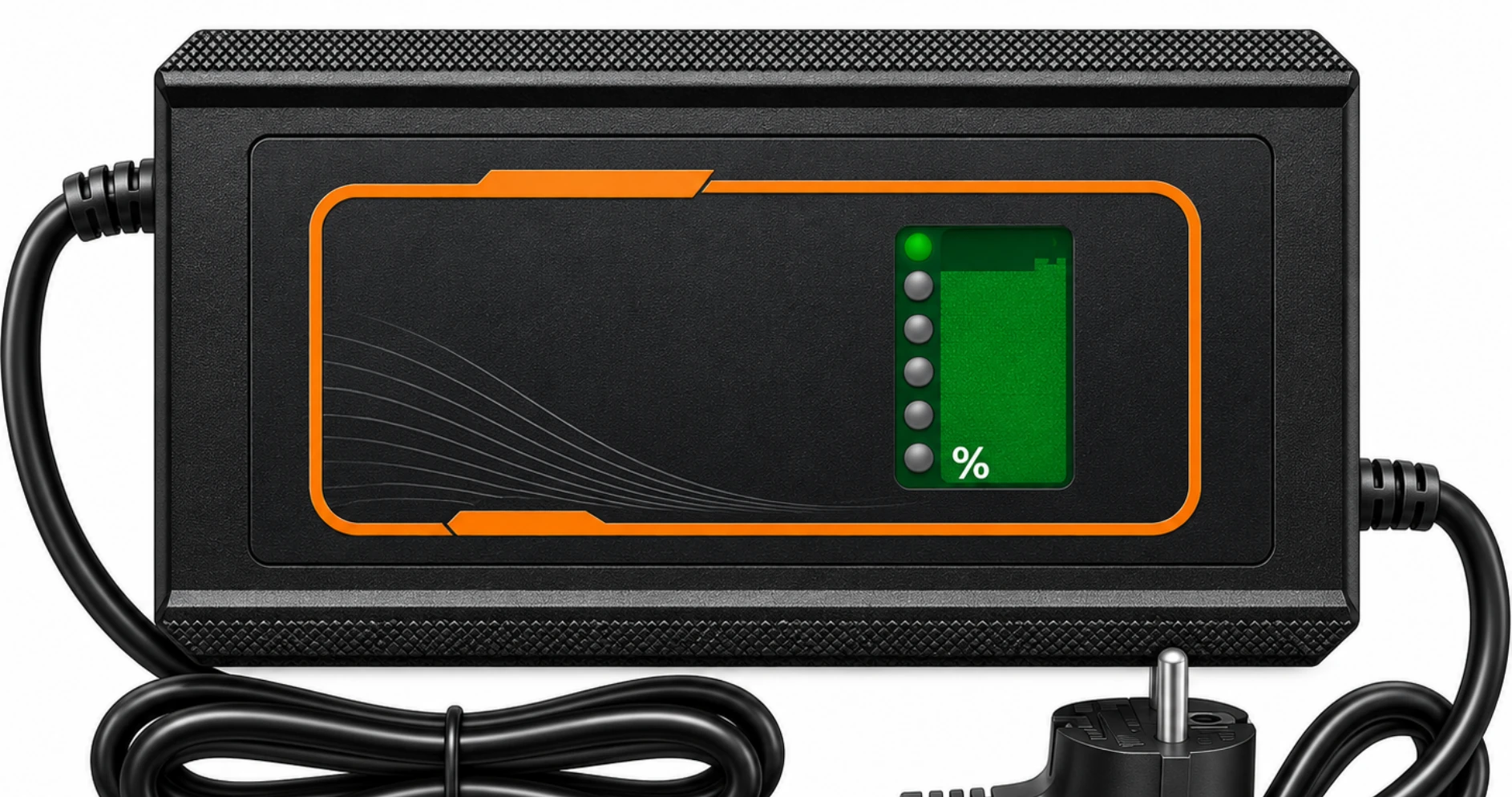
Custom 36V-class floor scrubber charger project for a verified 12S LiFePO4 battery and matched BMS.

Custom 36V LiFePO4 Floor Scrubber Battery Charger

A conditional custom configuration for documented 36V-class LiFePO4 machine projects. A 12S pack is nominally 38.4V and may require a 43.8V charging setting. Linjia reviews the battery specification, BMS, charger power, cooling, installation, and equipment controls before confirming design feasibility and a sample development plan.

Floor scrubber charger profile review for flooded, AGM, GEL and verified LiFePO4 battery systems.

Deep-Cycle Battery and Charging-Profile Matching

Flooded, AGM, GEL, and verified LiFePO4 systems are assessed separately so voltage, current, charging stages, and maintenance behavior follow the battery supplier's requirements.

Floor scrubber battery capacity and charging-window review to define current and thermal requirements.

Charging-Window and Duty-Cycle Review

Battery capacity, daily energy use, available recharge time, thermal load, and permitted current guide the evaluation of a suitable charger configuration for cleaning equipment.

Floor scrubber charger project review for AC input, mounting space, cable routing and cooling.

Market-Specific Input and Installation Configuration

AC input, plug, cable routing, mounting, ventilation, and environmental exposure are reviewed together for external charging stations or qualified on-board installations.

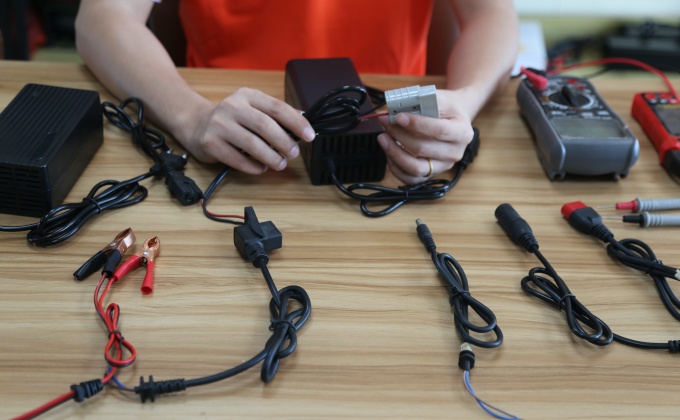
Floor scrubber charger connector, polarity and machine-interface checks with production testing.

Controlled Machine Interface and Batch Quality

Connector, polarity, pin definitions, and any charging interlock are checked against the approved specification, supported by electrical, insulation, and full-load burn-in testing in production.

How Correct Charger Matching Supports Floor Scrubber Availability

A scrubber's charging system must restore the required energy within the cleaning operation's available downtime. Matching the battery profile, permitted current, connector, and charging schedule helps reduce incomplete charging and repeated interruptions. For larger packs, adequate sustained output and thermal margin matter as much as the nominal voltage. System qualification should therefore include the actual battery and the expected recharge cycle.
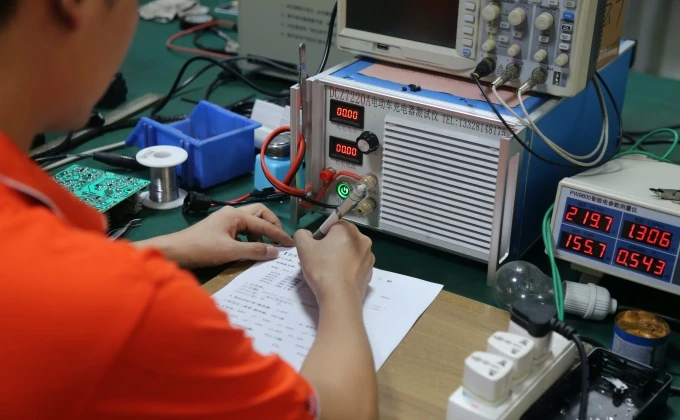
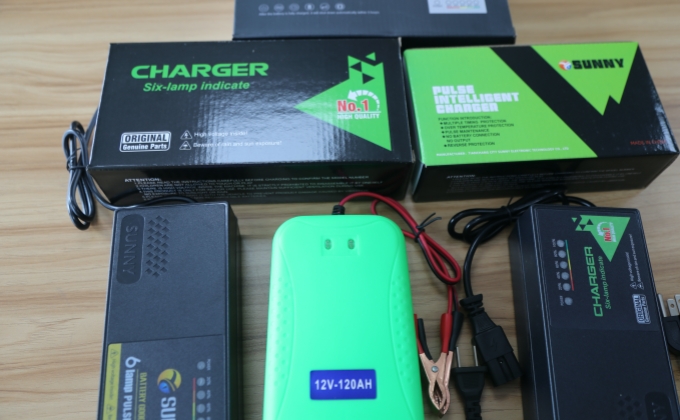
Floor scrubber charger matching for battery profile, permitted current and available recharge time.
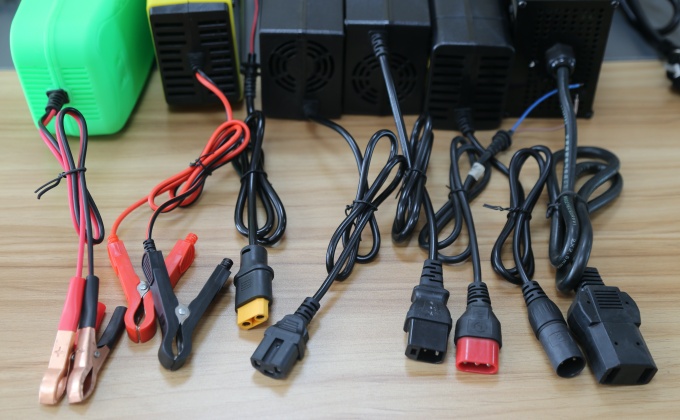
Floor scrubber charger project options for plugs, connectors, cables, cooling, labels and packaging.

Configuration Options for Different Cleaning Equipment Projects

Walk-behind scrubbers, ride-on machines, and battery conversion projects have different installation and operating requirements. Linjia can evaluate charging parameters, AC input, connectors, cables, cooling, housings, labels, and packaging against the approved equipment design.

On-board mounting, external charging, drive inhibition, and requested battery communication are reviewed individually so the project scope matches the machine's practical requirements.

Long-Term Stability Through Factory Control

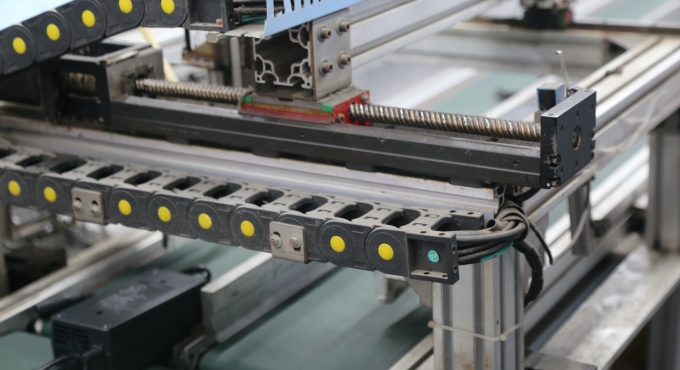
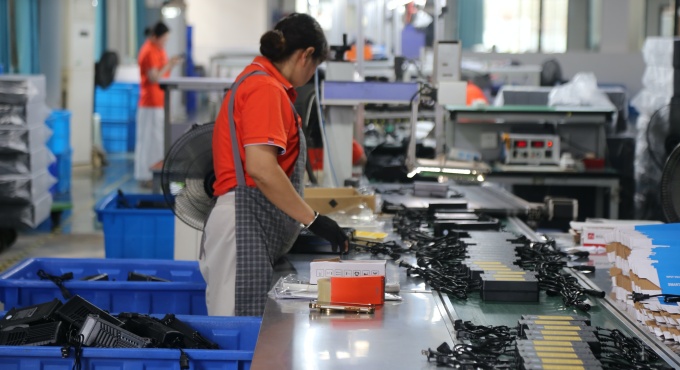
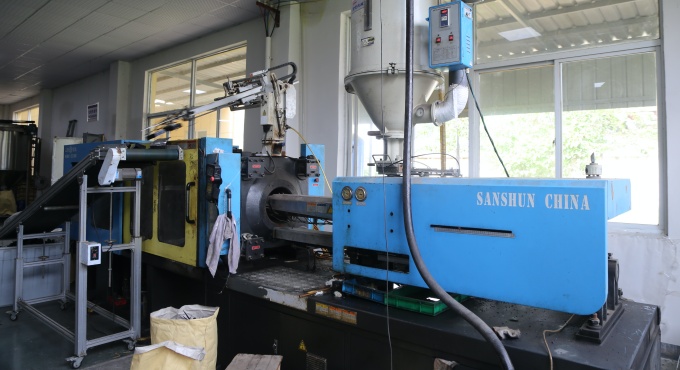
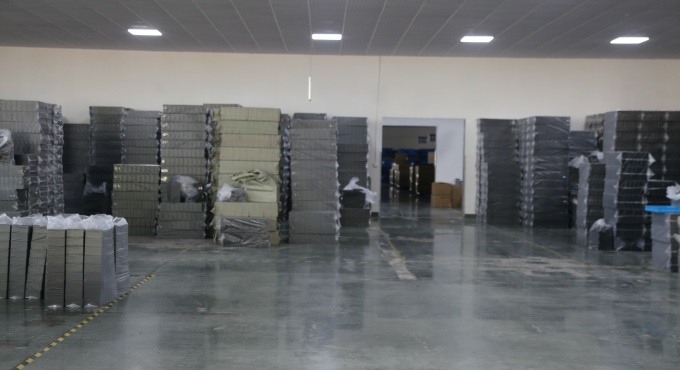
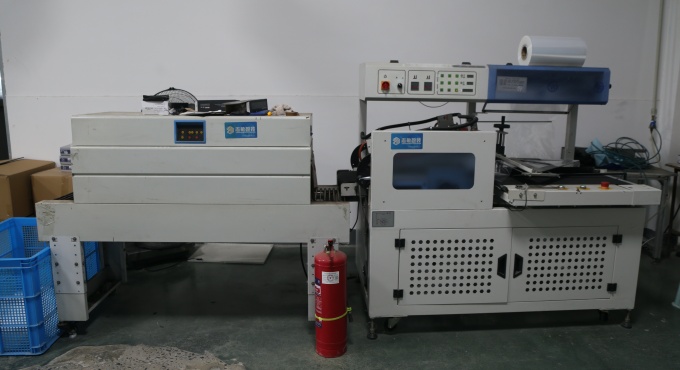
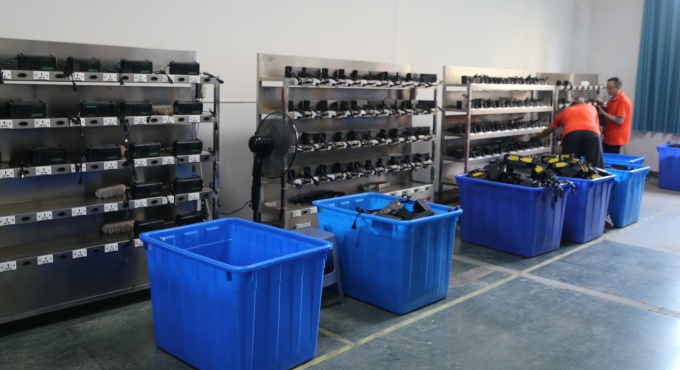
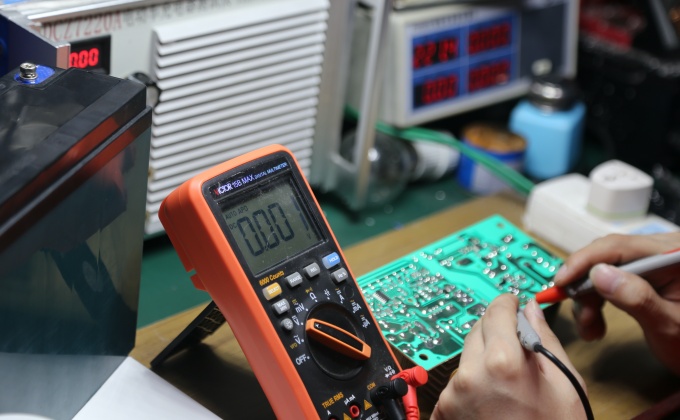
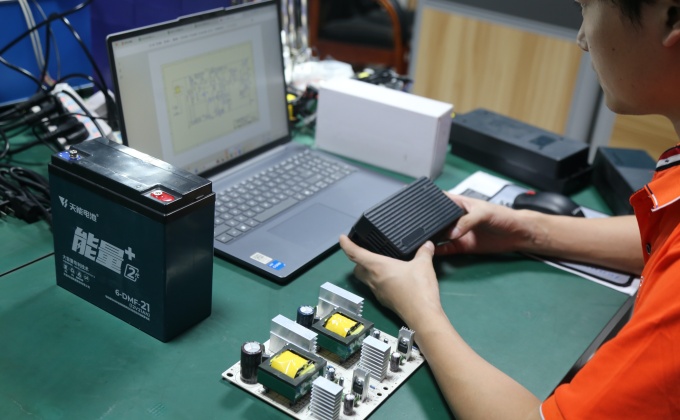
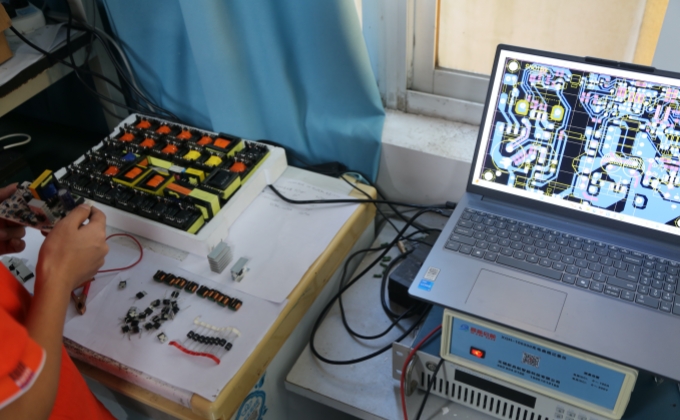
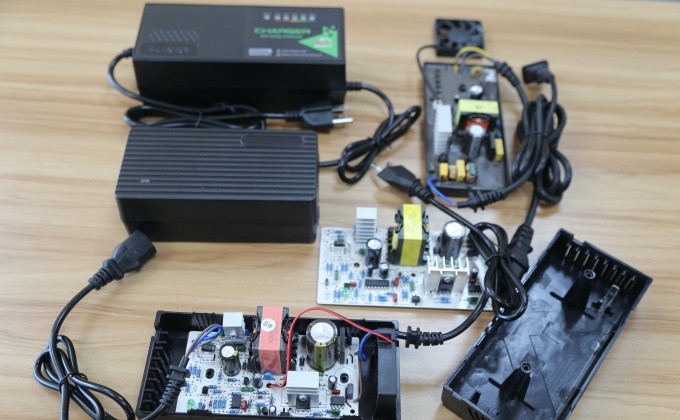
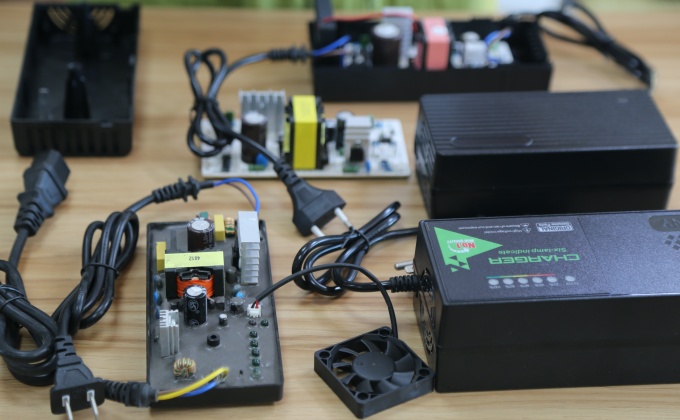
Linjia controls PCB production, housing manufacturing, assembly, and production testing. Approved electrical settings, connectors, polarity, cables, labels, and packing details provide a consistent reference for production, shipment checks, and repeat orders. Semi-finished checks, finished-product electrical testing, high-voltage insulation testing, and full-load burn-in help identify manufacturing faults before shipment. Machine-level sample validation then confirms the installation, charging behavior, and interface under the intended operating conditions.
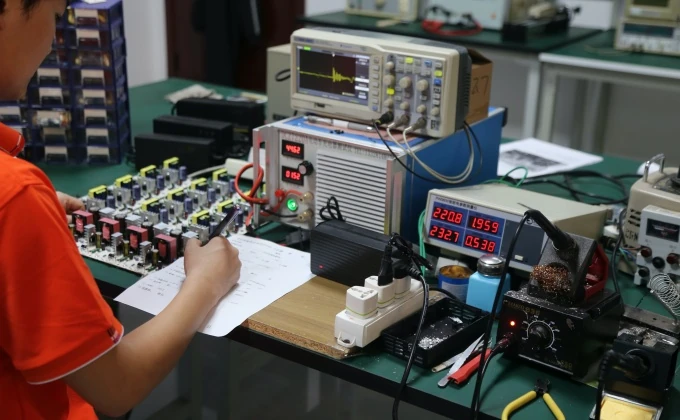
Linjia charger factory checks for electrical performance, insulation and full-load burn-in.

Floor Scrubber Battery Charger Selection, Customization, and Use Guide

What Are the Main Differences Between a Lead-Acid Floor Scrubber Charger and a Lithium Floor Scrubber Charger?

Deep-cycle lead-acid charging must match the specific flooded, AGM, or GEL battery, including stage voltages and any permitted maintenance or equalization behavior. Lithium charging depends on the exact cell chemistry, series count, BMS limits, and termination requirements.

A machine described as lithium-ion does not by itself identify LiFePO4 or another chemistry. When replacing a battery system, the charger and machine controls must be reviewed together. Matching only the nominal voltage can leave the charging profile, output current, or interface unsuitable for the new pack.

In Which Applications Are Floor Scrubber Battery Chargers Usually Used?

They are used with compatible commercial walk-behind scrubbers, automatic scrubber-dryers, and ride-on floor-cleaning machines. Relevant operating sites include warehouses, factories, retail premises, schools, and commercial buildings. B2B buyers can include equipment manufacturers, battery brands, importers, distributors, rental businesses, and maintenance channels.

The required charger depends on battery chemistry, capacity, charging window, installation, and machine controls. A unit suitable for a compact scrubber is not automatically suitable for a larger machine that needs substantially more energy between shifts.

Does the Floor Scrubber Battery Charger Support Customization for Equipment or Brand Requirements?

Yes. Linjia can evaluate charging voltage, current, charging logic, AC input, plugs, connectors, cables, housings, labels, logos, product codes, and packaging. Structural design and private-mould development can also be reviewed for ODM projects.

On-board installation, charging interlocks, temperature sensors, and BMS communication need defined requirements and a feasibility assessment. The proposed sample should be tested with the actual battery and machine, including the intended installation and charging cycle, before its configuration is approved for production.

What Are the Main Charger Configurations Covered on This Page?

The four project categories are 24V lead-acid, 24V LiFePO4, 36V lead-acid, and 36V LiFePO4, with two positions per voltage. Suitable industrial-current model codes have not yet been verified from the available catalogue.

The listed 24V and 36V 12Ah/20Ah lead-acid models deliver 1.9A or 2.8A for selected 10-28Ah packs and should not be treated as established matches for larger scrubber batteries. The required battery capacity, current, recharge window, BMS, and installation must therefore be reviewed before a supply model can be approved.

What Charger Structures Are Suitable for Floor Scrubber Projects?

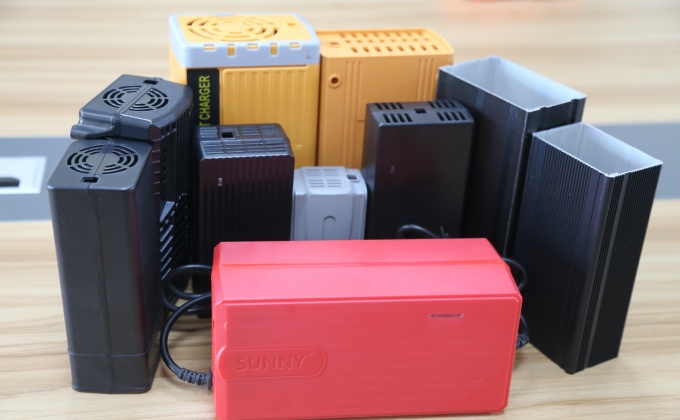
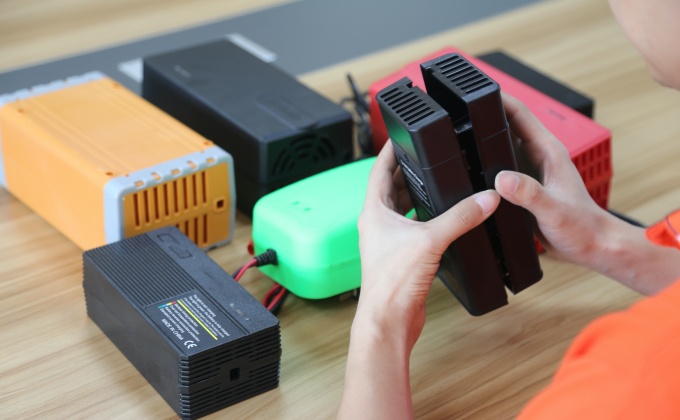
An external charger can be positioned in a designated charging area, while an on-board charger must fit the machine's mounting space and withstand its defined installation conditions. Linjia can review enclosed, naturally cooled, fan-cooled, and potted structures according to electrical power and environmental requirements.

On-board designs also need consideration of vibration, cable support, airflow, service access, and charging interlocks. Selecting an enclosure that physically fits the machine is only one part of the assessment; electrical and thermal performance must also be validated in position.

What Battery and Machine Information Is Required Before Selecting a Floor Scrubber Charger?

Provide the equipment model, original charger label, battery chemistry and subtype, pack voltage, capacity, recommended charging profile, and allowable current. Lithium projects need the cell configuration and BMS documentation, including communication where required.

Also supply connector photos or drawings, polarity, pin definitions, charging-interlock details, installation dimensions, ventilation conditions, and the target environmental rating. Daily operating pattern, recharge time, local AC supply, regional plug, and order quantity allow the charger evaluation to reflect the actual cleaning operation.

What Housing and Cooling Systems Are Suitable for Floor Scrubber Chargers?

The thermal design must support the proposed power throughout the expected charging cycle, including extended high-load operation with larger packs. Natural cooling needs sufficient surface area and airflow. Fan cooling needs clear ventilation and a maintenance plan for dusty environments.

Potting or sealed structures may help address exposure but require a suitable heat path. Linjia reviews these options against mounting space, ambient temperature, vibration, and service access. Housing material alone does not establish an IP rating or prove that the charger can sustain its required output inside a machine.

Which Plugs, Connectors, and Cable Options Can Be Customized?

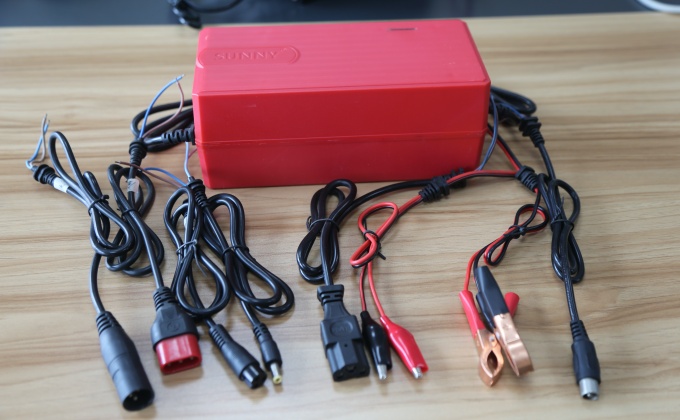
Linjia can evaluate the AC plug, DC connector, cable length, conductor specification, strain relief, polarity, and pin assignment. Larger-current projects need cable and connector ratings appropriate to the sustained charging load. Equipment interfaces may also include sensing, charge-enable, drive-inhibit, or communication contacts.

Provide a verified pinout, electrical drawing, or marked sample before development. Matching connector shape or colour is insufficient, and an adapter cable does not establish compatibility with the machine's charging controls or battery communication.

Which Charging-Profile Parameters Can Be Customized?

Engineering review can cover current, stage voltages, transitions, termination, timing, indicator behavior, temperature inputs, and protection logic. Lead-acid profiles must follow the battery subtype, including any approved float or equalization function.

Lithium settings must match the chemistry, cell count, BMS limits, and temperature conditions; lead-acid recovery or equalization must not be transferred to lithium. Opportunity charging between working periods also requires battery-supplier approval and a suitable thermal design. Feasible functions are established for the selected circuit and verified through sample testing.

How Should Charging Current Be Matched to Floor Scrubber Battery Capacity and Working Schedule?

Use the battery manufacturer's permitted charging rate together with daily energy use and the available charging window. A large pack can require prolonged high-load charging, while a shorter recharge window may call for a higher-power design that the battery, BMS, wiring, and connector can safely accept.

Ah capacity divided by charging current is only an initial time estimate; charging stages, losses, and state of charge also matter. Linjia confirms attainable current and thermal capability during engineering review rather than assigning one rating to every machine size.

What Safety Protections Should a Floor Scrubber Battery Charger Include?

The specification should define overvoltage, overcurrent, short-circuit, overtemperature, reverse-connection, and timing requirements for the selected design. Depending on the machine, temperature sensing, charge-enable, or a drive-inhibit function may also be needed. Each function requires confirmation rather than assumption from a general product description.

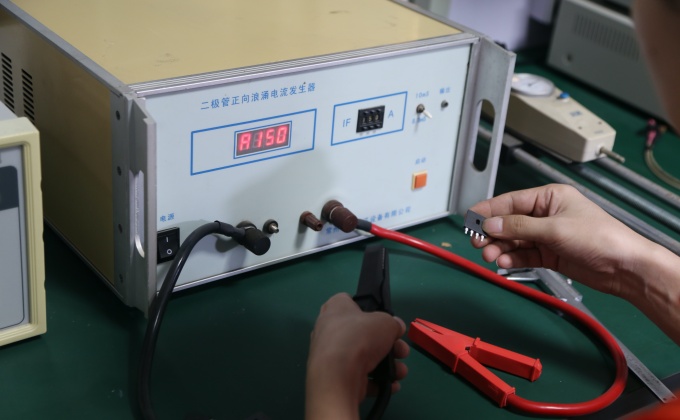
Electrical, high-voltage insulation, and full-load burn-in checks support manufacturing control, while project qualification must address the actual battery, installation, and machine interface. Protection functions do not replace correct charging parameters or equipment-level validation.

How Do the Charger, Battery BMS, and Machine Controls Work Together?

The charger follows the approved profile, a lithium BMS monitors pack conditions, and machine controls may prevent operation or manage charging when a charger is connected. Communication may be required by some systems, while others use defined electrical signals or a non-communicating interface.

Provide the required protocol, messages, pinout, enable logic, and fault behavior for feasibility review. A charger must not be assumed CAN-compatible merely because it supports lithium batteries. The complete arrangement should be tested for normal charging, interruption, restart, and fault response.

What Input Voltage Is Suitable for Different Floor Scrubber Markets?

Linjia can evaluate AC 110V, AC 220V, or AC 110-220V input at 50-60Hz for applicable designs. Provide the actual site voltage, fluctuation, frequency, regional plug, and any surge requirements. Higher-power charging and multiple machines operating at one site also require consideration of available circuit capacity by qualified personnel.

A charger with the correct plug is not automatically suitable for every electrical installation. The approved input range and use conditions should be stated in the model specification, label, and instructions.

Can the Charger Be Used in Dusty, Damp, Hot, or Wash-Down Environments?

Suitability depends on the validated enclosure, cable entries, cooling system, mounting arrangement, and operating conditions. Floor-cleaning equipment can encounter water, detergent, dust, and vibration, so the intended exposure must be described before development.
The charger should not be assumed to share the machine's environmental rating. A requested IP level needs confirmation for the complete charger assembly, and an IP designation alone may not cover chemical exposure or every cleaning method. Washing, storage, and charging instructions must follow the approved design.

What Is the Expected Service Life of a Floor Scrubber Battery Charger?

Actual life depends on component configuration, thermal margin, daily charging duration, input quality, vibration, environmental exposure, and maintenance. A rental fleet or multi-shift operation may place different demands on the charger from occasional commercial use.

Linjia reviews the intended duty and operating conditions when defining the project. Buyers should agree on the test plan, installation conditions, warranty terms, and service arrangements for the qualified model. A fixed lifespan cannot responsibly be applied to every battery, machine, and operating environment.

Are Floor Scrubber Chargers Likely to Overheat or Fail During Repeated Charging Cycles?

Repeated charging can expose weaknesses when the charger is undersized for the duty, mounted in poor airflow, exposed to excessive temperature, or connected through worn wiring and contacts. An incorrect battery profile or unstable AC supply can also create faults.

Qualification should include the actual battery capacity, recharge cycle, installation, ambient temperature, and input conditions. Linjia can review components, housing, cooling, cables, and protection settings against those requirements. Repeated interruption should be investigated across the battery, charger, and machine rather than bypassing protective controls.
How Should a Floor Scrubber Battery Charger Be Used and Maintained?

Follow the approved machine, battery, and charger instructions, including connection sequence, charging location, and any drive-inhibit procedure. Keep ventilation clear and inspect cables, connectors, mounting points, and housing for damage or overheating.

Charge flooded lead-acid batteries in the conditions and ventilation specified by their manufacturer. Keep an unqualified charger away from splash or wash-down exposure. Stop use if there is abnormal heat, odor, loose contacts, or repeated fault indication, and arrange qualified inspection before charging resumes.

Get an Instant Quote Now

SEND YOUR PROJECT DETAIL

We're Here to Answer All Your Floor Scrubber Charger Questions

What Is Your Typical Production Lead Time?

Lead time depends on order quantity, output requirements, installation, material preparation, sample qualification, and packaging. Higher-power development, new housing, battery communication, or environmental validation can add engineering work. Linjia confirms the schedule once the specification, sample plan, and order scope are approved.

Can You Supply Plugs, Connectors, and Cables with the Chargers?

Yes. AC plugs, DC connectors, cable lengths, conductor specifications, polarity, and pin definitions can follow the approved project. Provide the equipment-side interface, required current, and any sensing, communication, or drive-inhibit contacts so the complete connection can be reviewed before production.

Can You Configure Chargers for Our Local Power Supply and Market Requirements?

Yes. Linjia can evaluate local AC input, regional plugs, installation conditions, and required testing. Environmental ratings, equipment-interface requirements, and certification scope are confirmed for the exact charger design and destination market before the order is finalized.

Do You Support OEM, ODM, or Private-Label Orders?

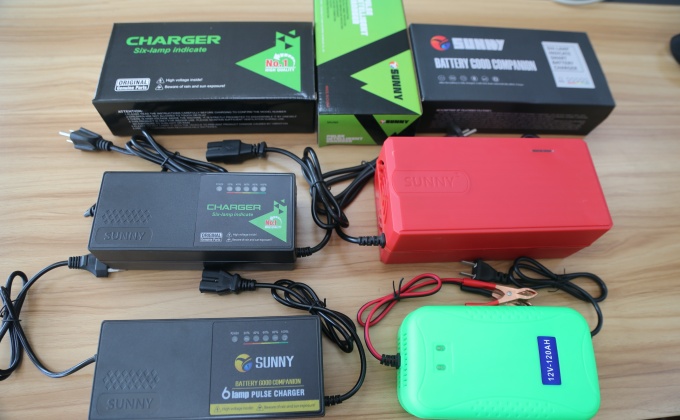
Yes. For OEM/ODM and private-label orders from equipment manufacturers, battery brands, importers, and distributors, customization can include charging parameters, plugs, connectors, cables, housings, labels, logos, product codes, and packaging. New circuit, structural, and private-mould projects can be evaluated after the battery, required power, machine installation, and validation requirements are defined.

What Information Do You Need for a Quotation?

Send the machine model, original charger label, battery chemistry, voltage, capacity, charging profile and current, BMS details, connector and pinout, recharge window, installation dimensions, environmental requirements, local AC supply, estimated order quantity, repeat-order needs, and branding needs. These details allow Linjia to confirm feasibility, the proposed specification, and quotation scope.