
International Brands We Collaborate With








Professional 60V Lithium Battery Charger Supplier in China
60V lithium battery chargers are used to charge compatible battery packs whose chemistry, series count, and BMS are designed for the selected charging profile. At Linjia, we confirm these details before recommending a model because a nominal 60V label alone does not define the required full-charge voltage. The standard catalog versions on this page provide DC 71.4±0.2V output and must be matched to battery packs that accept this endpoint.
Current selection affects charging time, heat load, BMS limits, and connector requirements. The available model classes include 3A for 14-28Ah, 4A for 20-35Ah, 5A for 24-45Ah, 8A for 40-70Ah, 10A for 50-80Ah, 15A for 70-120Ah, and 25A for 120-200Ah battery packs. These catalog ranges are selection references; the final current must follow the battery manufacturer's permitted charging rate and the actual operating conditions.
Input and interface configuration also affect market compatibility. AC110V, AC220V, or AC110-220V input can be selected at 50-60Hz. Regional wall plugs, output connectors, polarity, pin definitions, cable length, cable rating, labels, private model codes, and branded packaging can be confirmed for OEM orders. Protection functions differ by model, so the approved specification should identify the required overvoltage, overcurrent, short-circuit, reverse-connection, timing, and overtemperature functions before production.
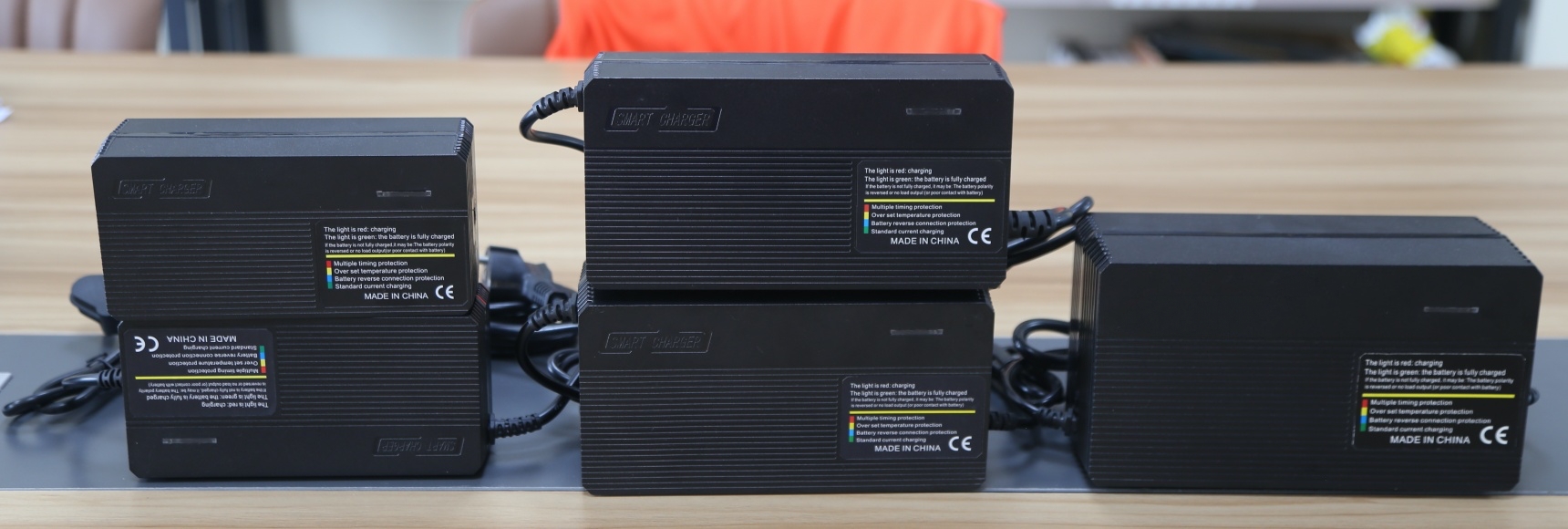
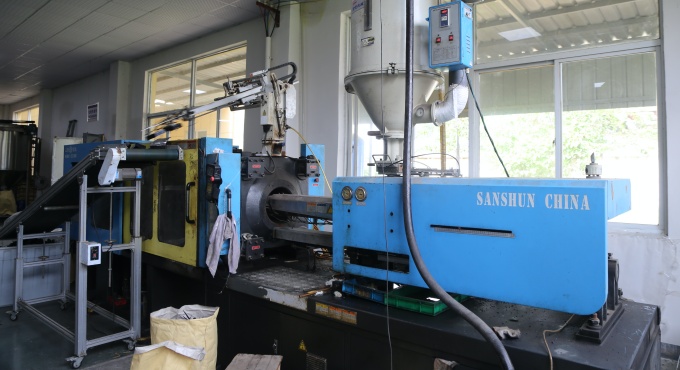
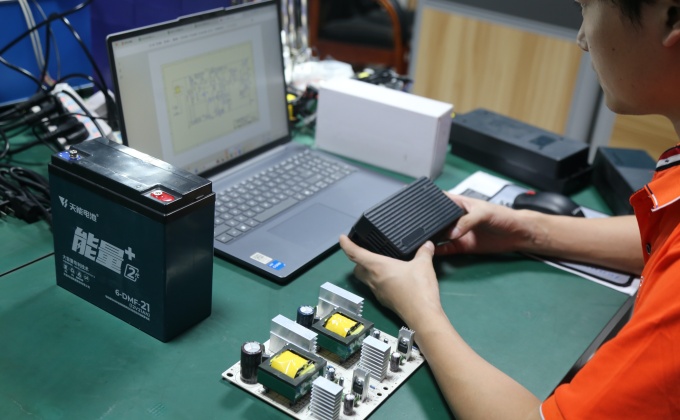
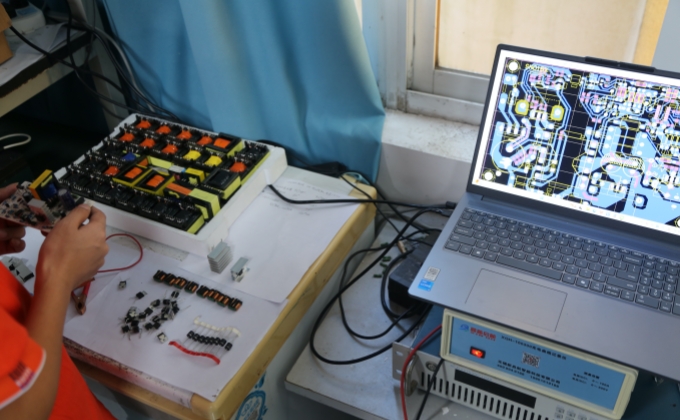
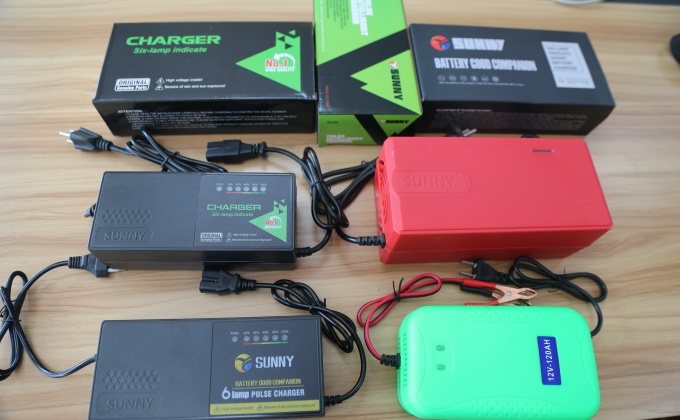
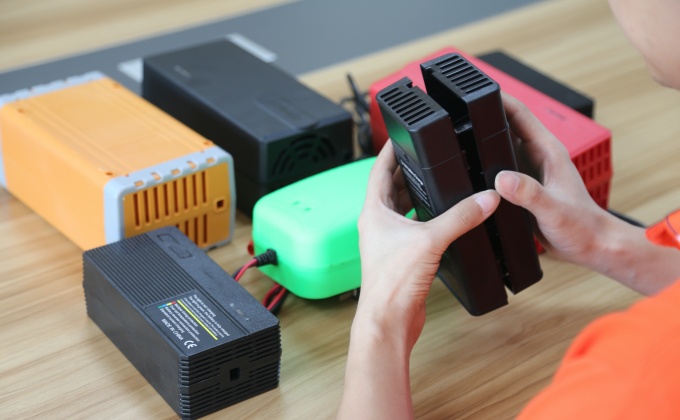
Depending on the power level, compact enclosed chargers and larger high-current structures are available for electric two-wheelers, E-rickshaws, battery-powered equipment, and other compatible 60V systems. Linjia supports OEM and ODM projects from charging-profile matching and PCB development to in-house housing injection moulding, assembly, electrical testing, high-voltage insulation testing, full-load burn-in, and mass production.
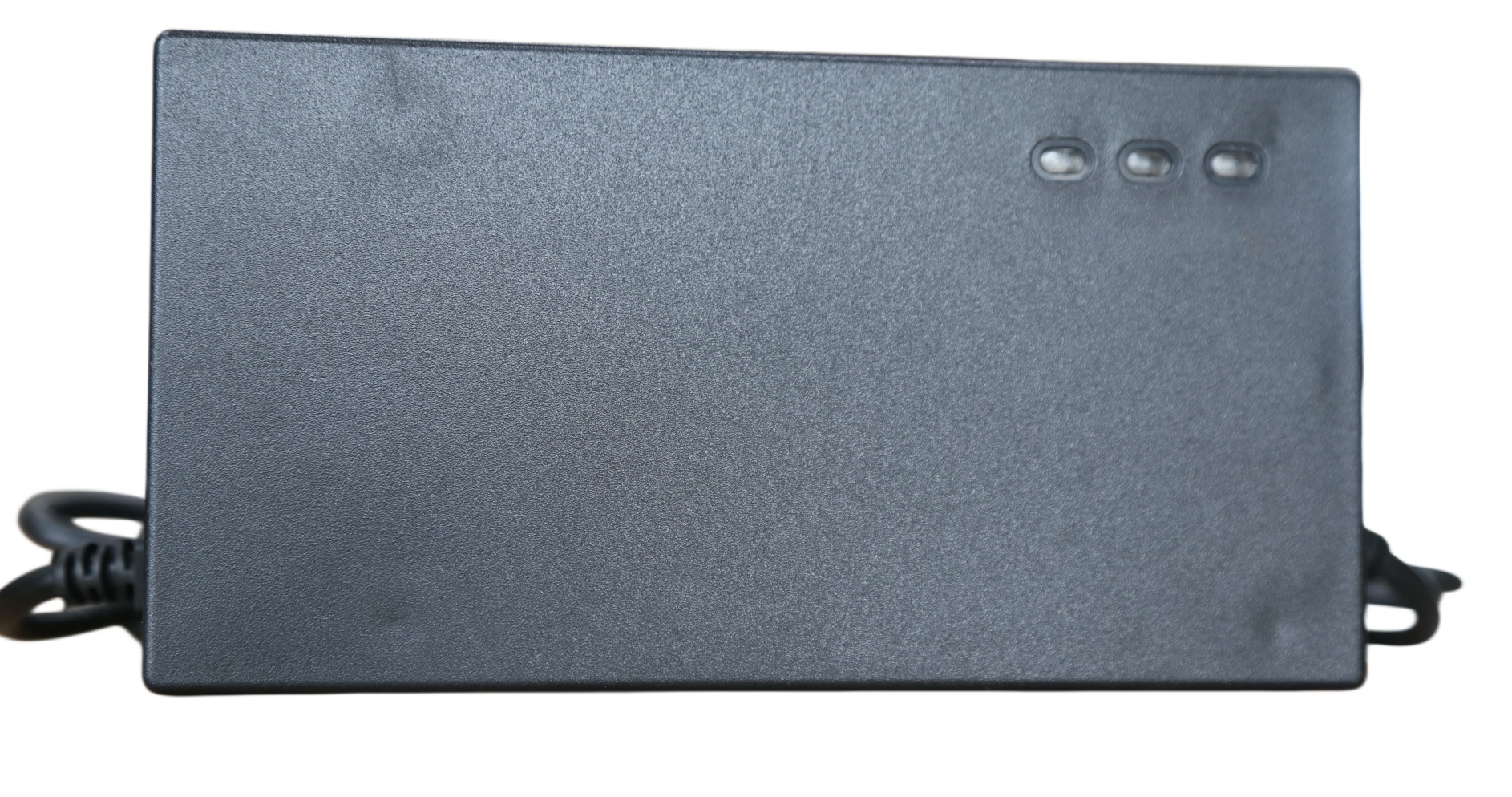
60V 3A Lithium Battery Charger
Linjia's 60V 3A lithium battery charger provides DC 71.4±0.2V output and is catalog-matched to 14-28Ah packs. Its lower current suits smaller compatible batteries, while OEM plugs, connectors, cables, labels, and packaging can be configured after BMS and polarity confirmation.
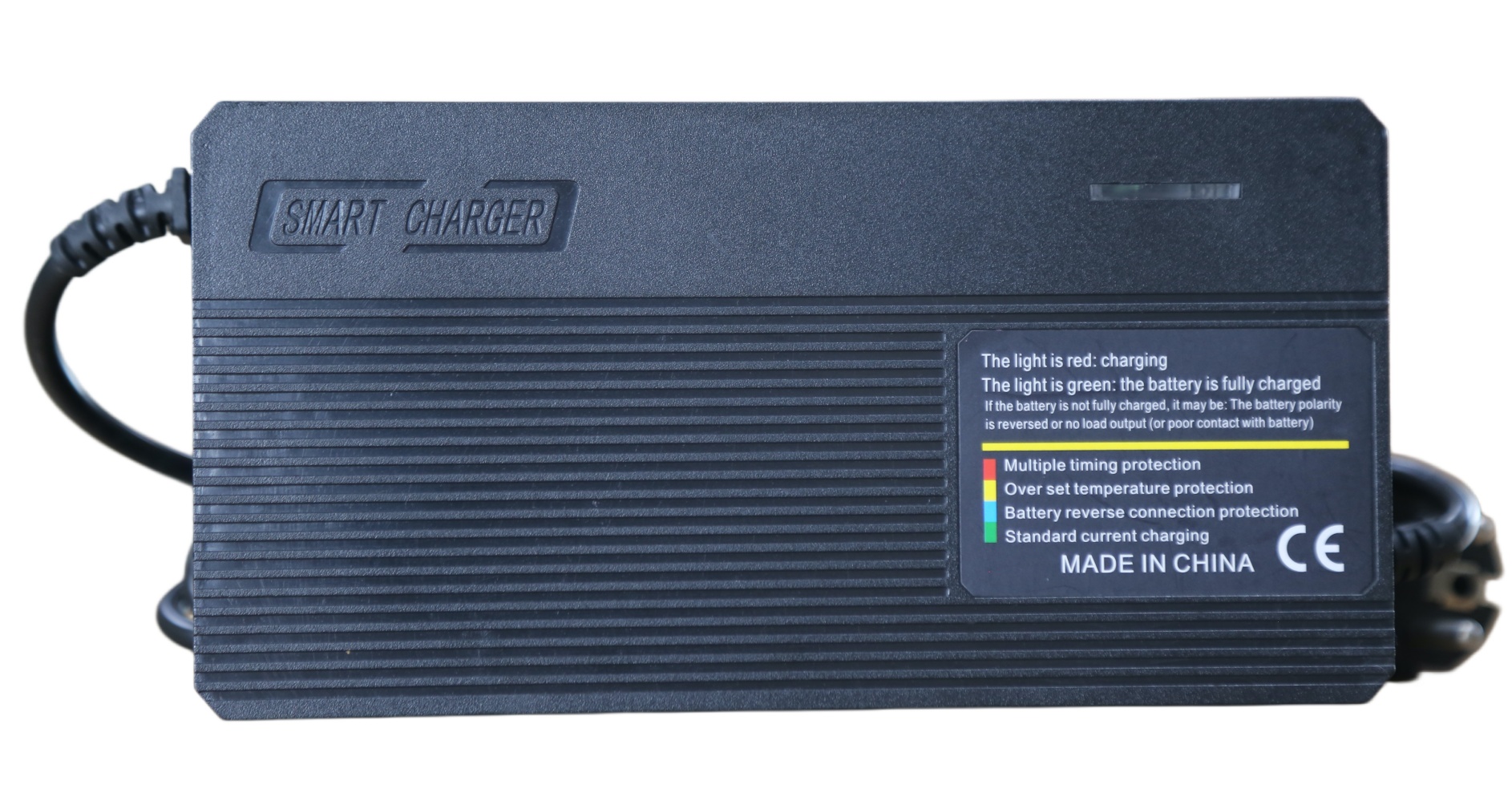
60V 4A Lithium Battery Charger
The 60V 4A lithium battery charger delivers DC 71.4±0.2V output for catalog-matched 20-35Ah packs. It offers a middle current option between 3A and 5A, helping OEM buyers match charging time, BMS limits, and cable requirements more precisely.
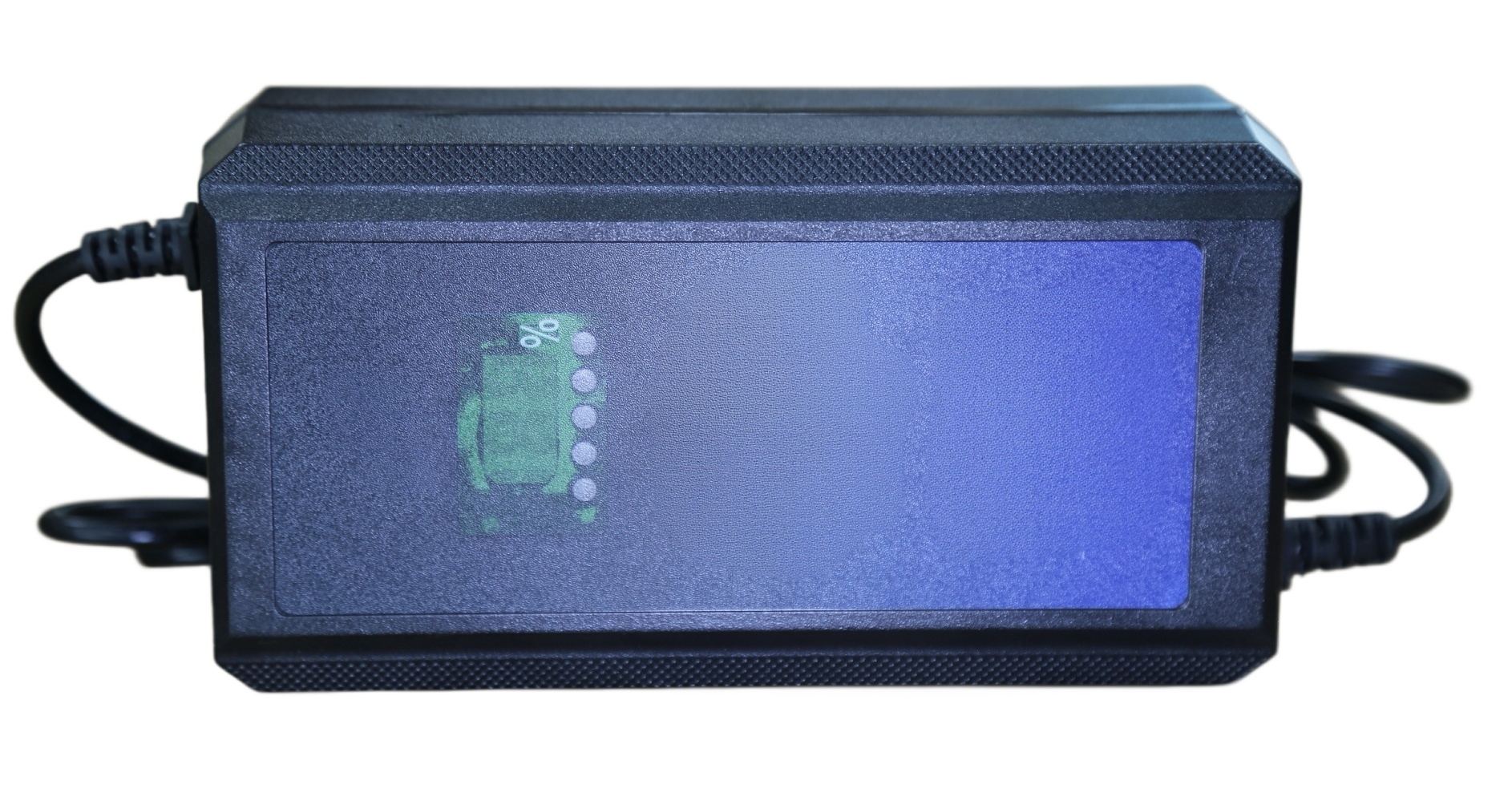
60V 5A Lithium Battery Charger
Linjia's 60V 5A lithium battery charger is configured for DC 71.4±0.2V output and 24-45Ah compatible packs. Catalog protection includes overvoltage, overcurrent, short-circuit, and timing functions, with input, connector, polarity, label, and packaging options available by order.
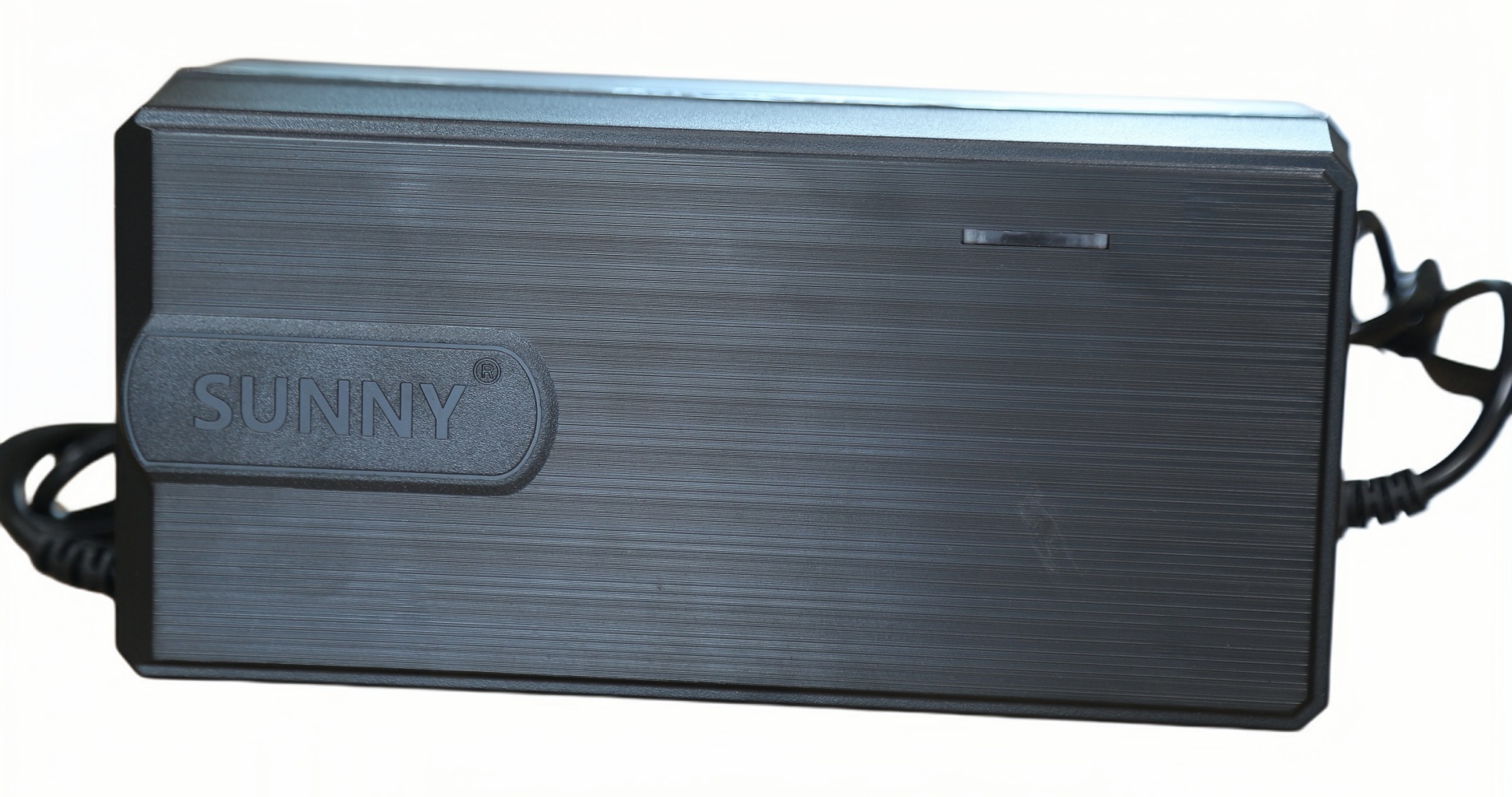
60V 8A Lithium Battery Charger
The 60V 8A lithium battery charger is catalog-matched to 40-70Ah packs, with DC 71.4±0.2V voltage and DC 7.8±0.2A current. Connector contact capacity, cable rating, BMS charging limit, and thermal conditions are confirmed before OEM production.
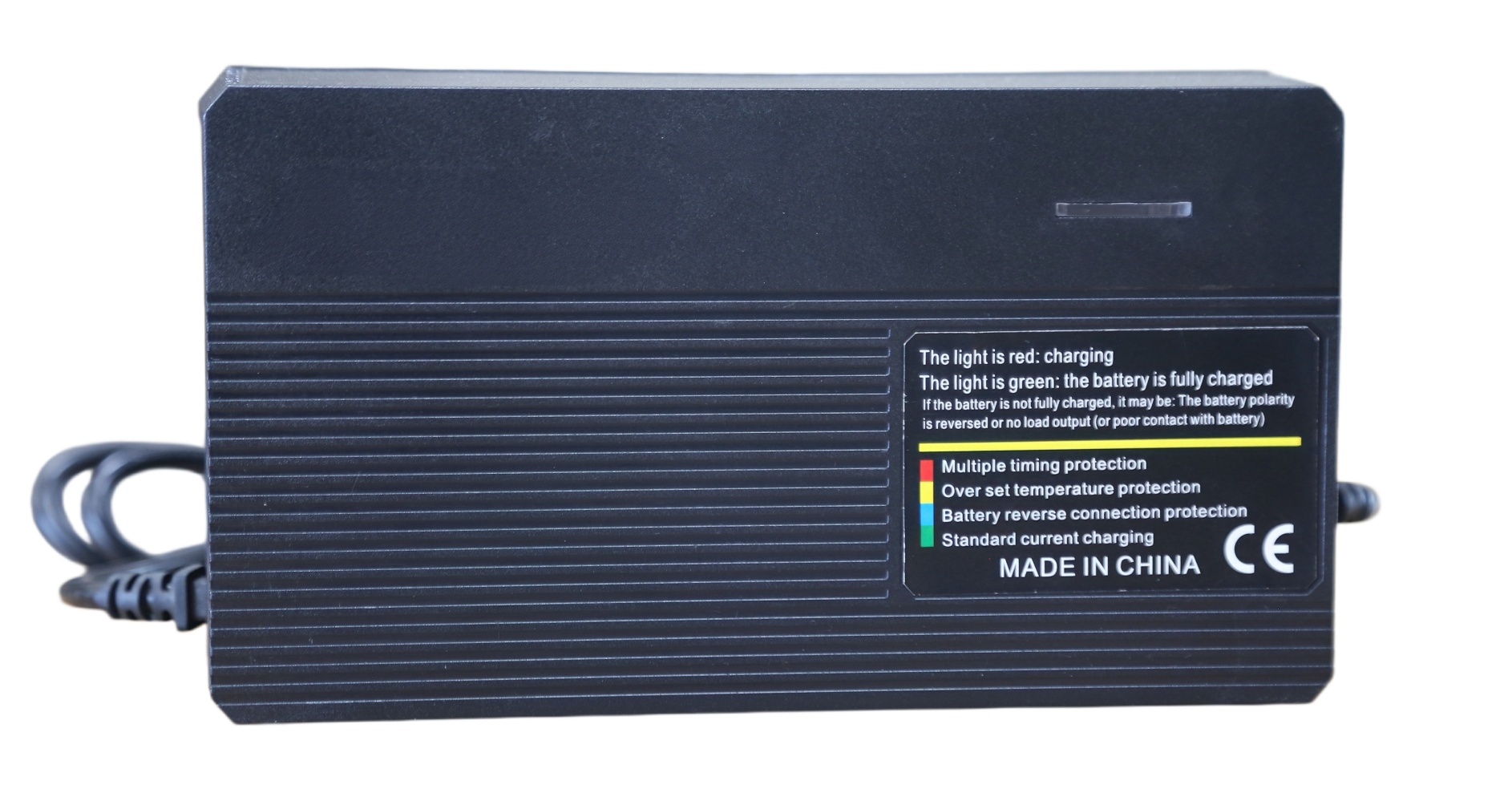
60V 10A Lithium Battery Charger
Linjia's 60V 10A lithium battery charger provides DC 71.4±0.2V and DC 10±0.2A output for catalog-matched 50-80Ah packs. Its higher-current structure supports faster charging projects when the battery, BMS, connector, cable, and operating environment permit the selected rate.
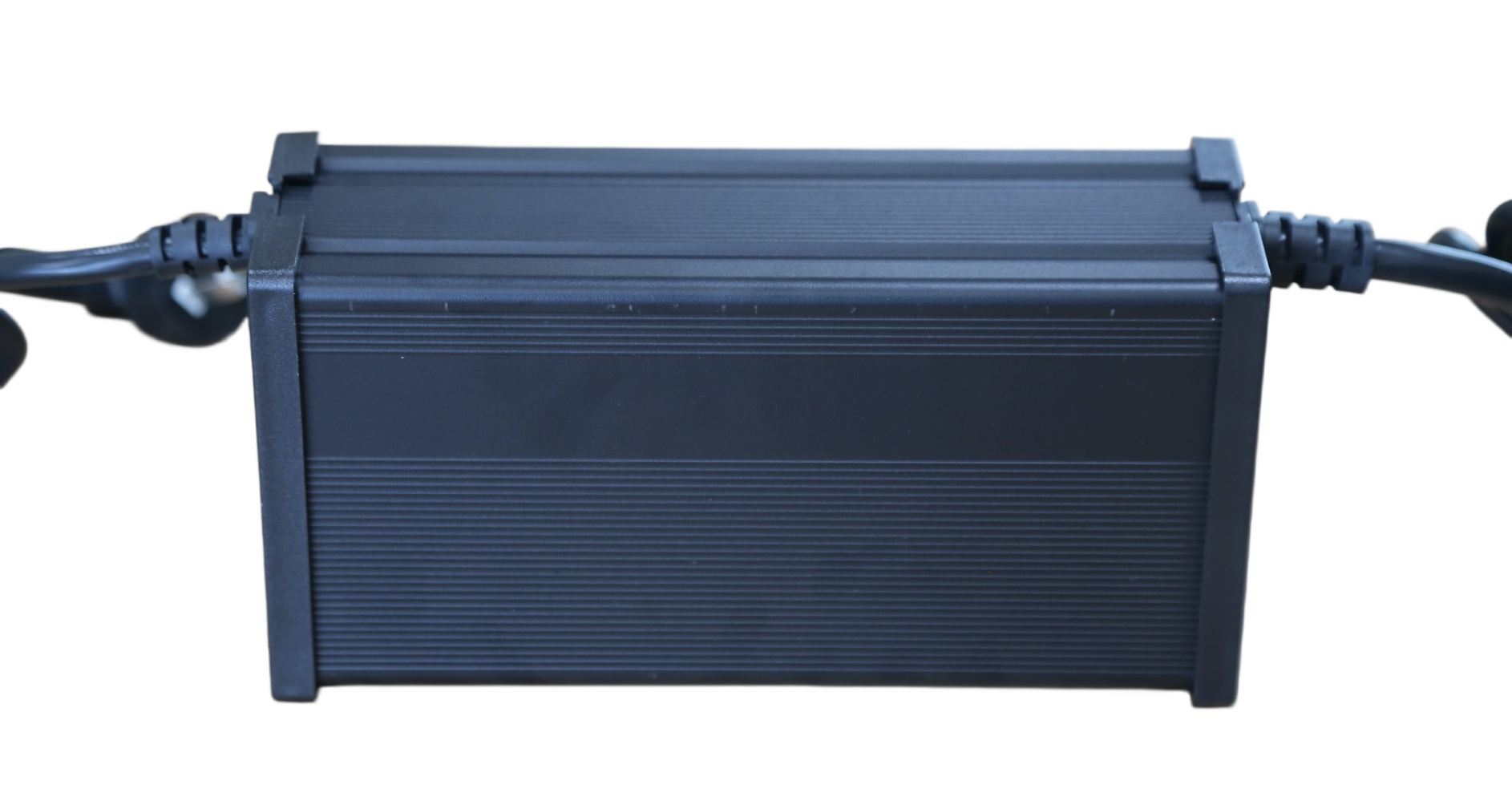
60V 15A Lithium Battery Charger
The 60V 15A lithium battery charger is designed for catalog-matched 70-120Ah packs with DC 71.4±0.2V and DC 15±0.2A output. Soft start, reverse-connection, timing, overtemperature, and short-circuit functions are listed for this model class, subject to final specification approval.
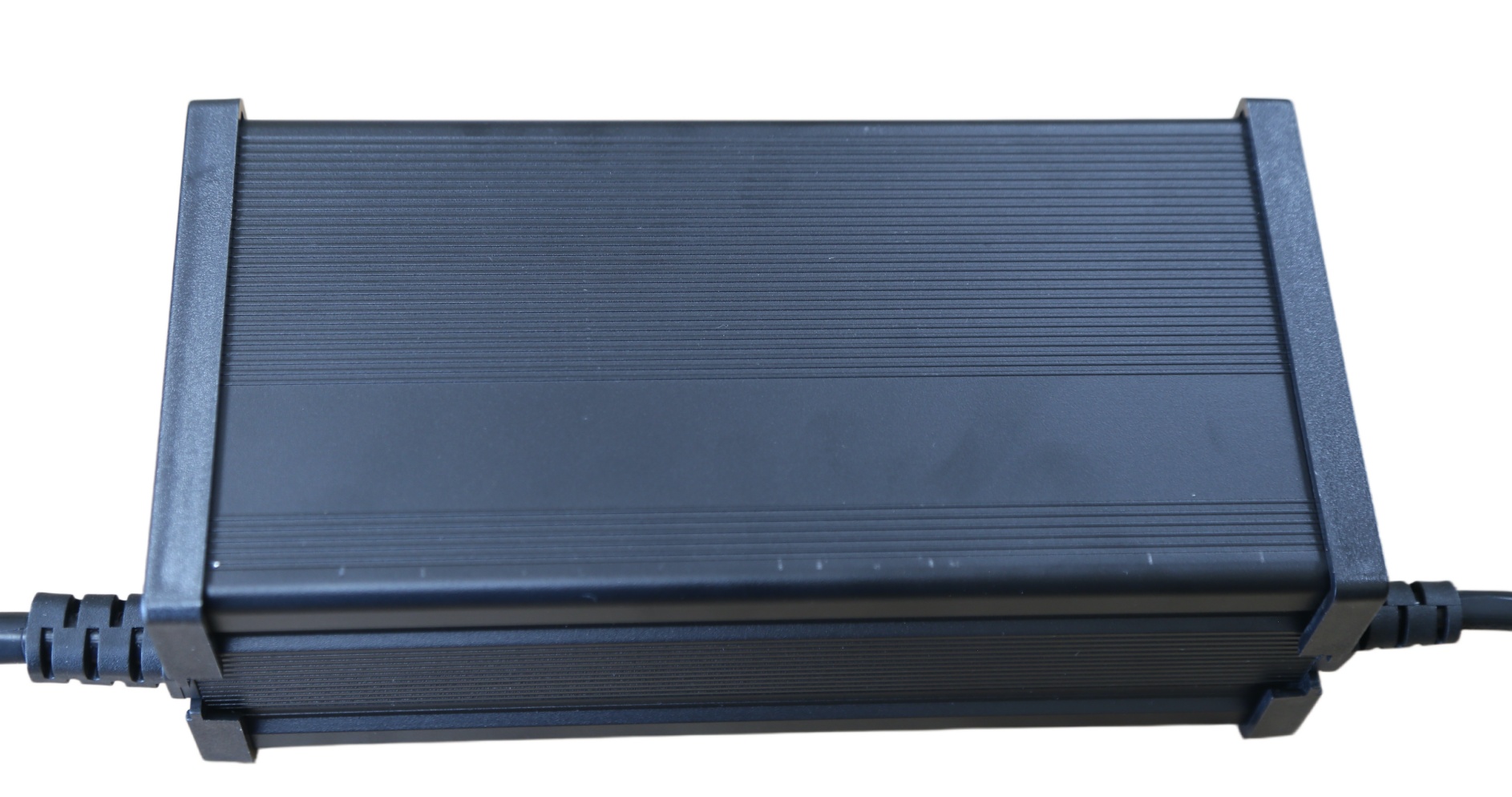
60V 25A Lithium Battery Charger
Linjia's 60V 25A lithium battery charger supplies DC 71.4±0.2V and DC 25±0.2A output for catalog-matched 120-200Ah packs. This high-current model requires project confirmation of the battery's maximum charge rate, BMS limit, connector, cable, cooling, and duty cycle before production.
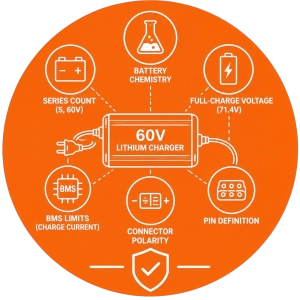
Battery and BMS Matching
Each 60V lithium charger is confirmed against battery chemistry, series count, full-charge voltage, BMS limits, connector polarity, and pin definition.
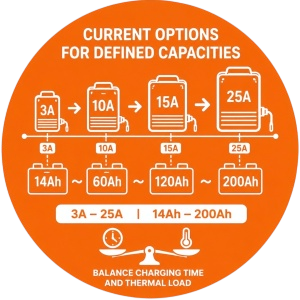
Current Options for Defined Capacities
Models from 3A to 25A cover catalog battery ranges from 14Ah to 200Ah, helping buyers balance charging time and thermal load.
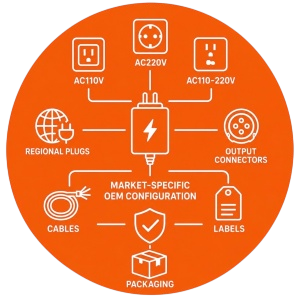
Market-Specific OEM Configuration
AC110V, AC220V, or AC110-220V input, regional plugs, output connectors, cables, labels, and packaging can be configured by order.
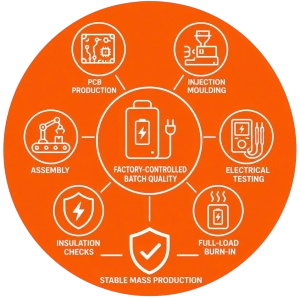
Factory-Controlled Batch Quality
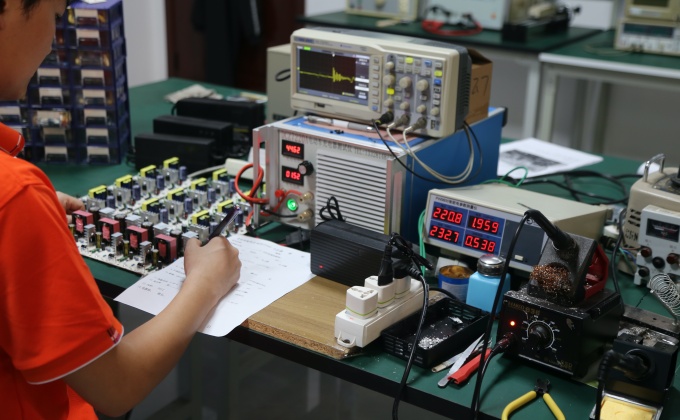
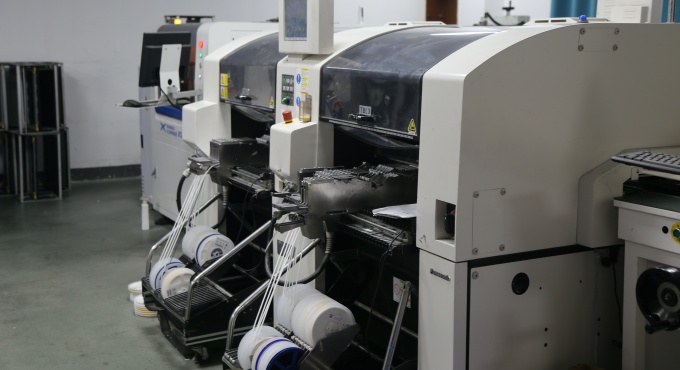
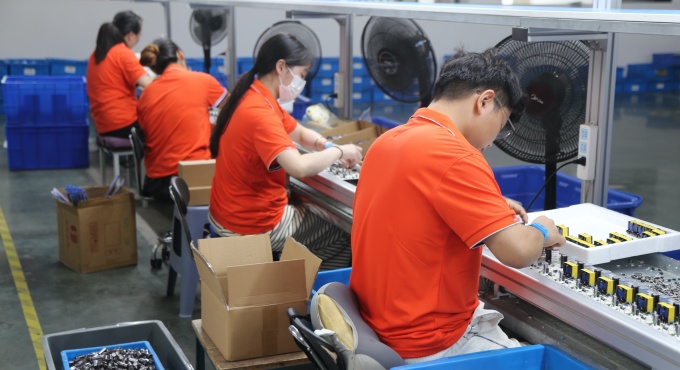
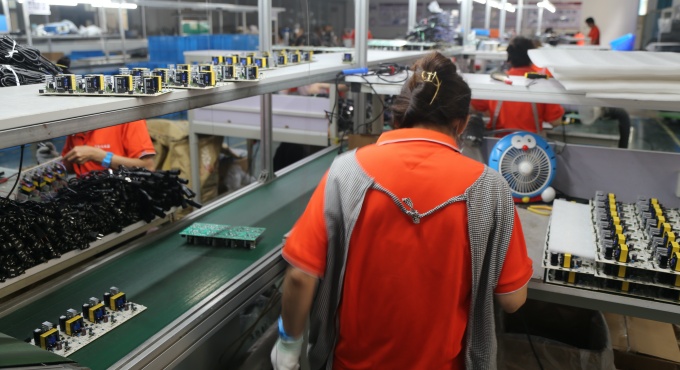
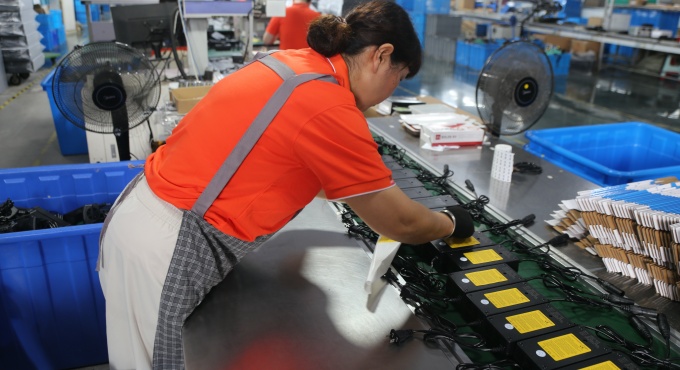
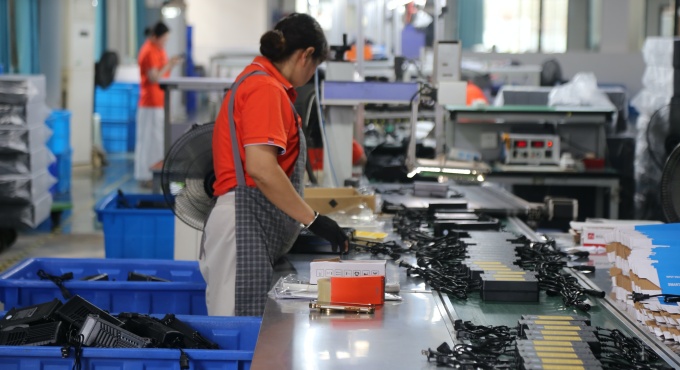
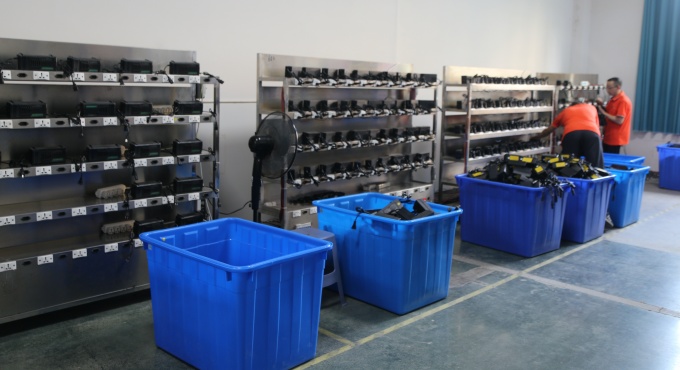
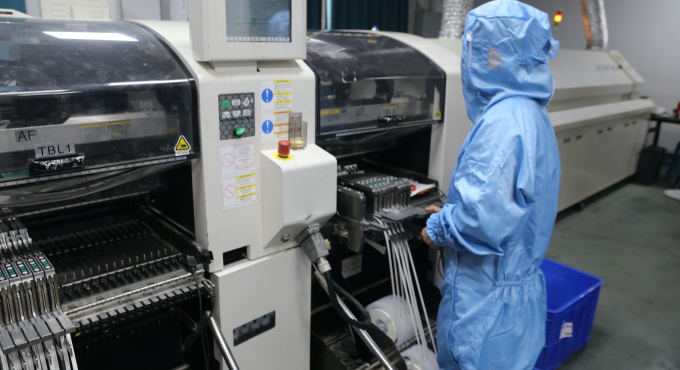
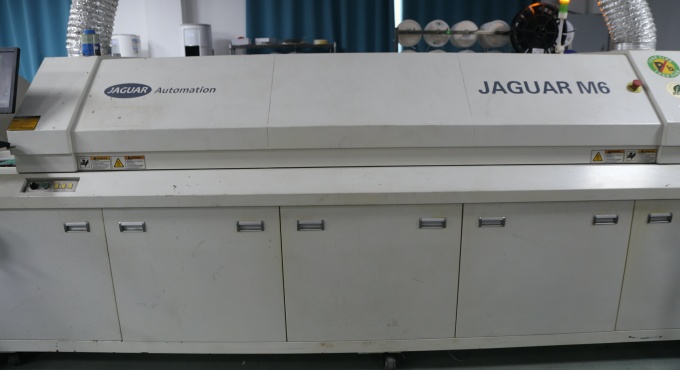
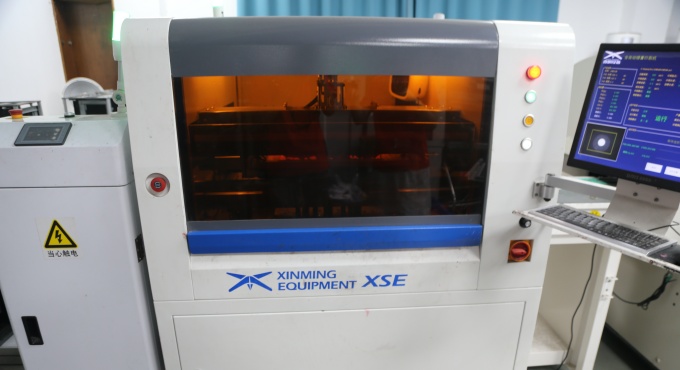
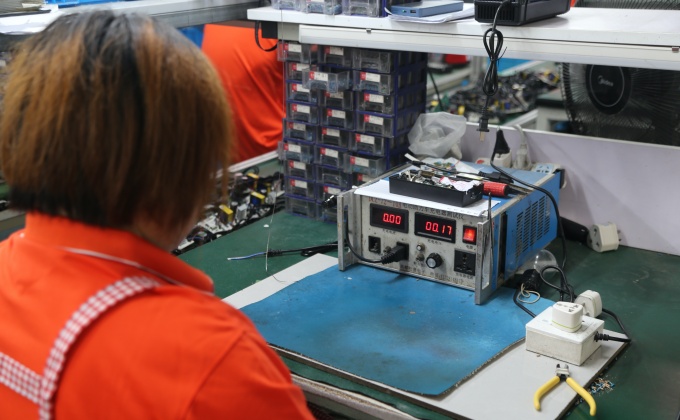
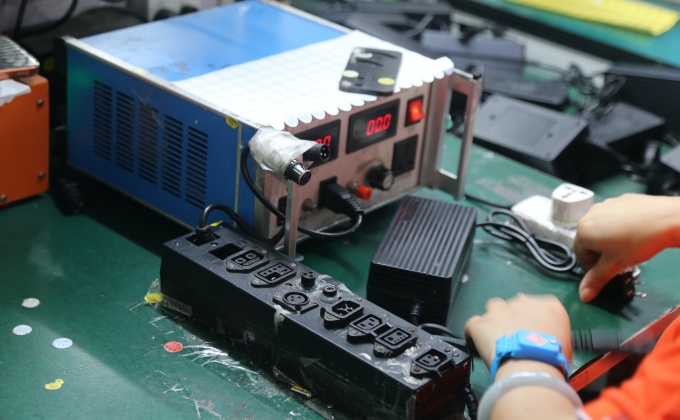
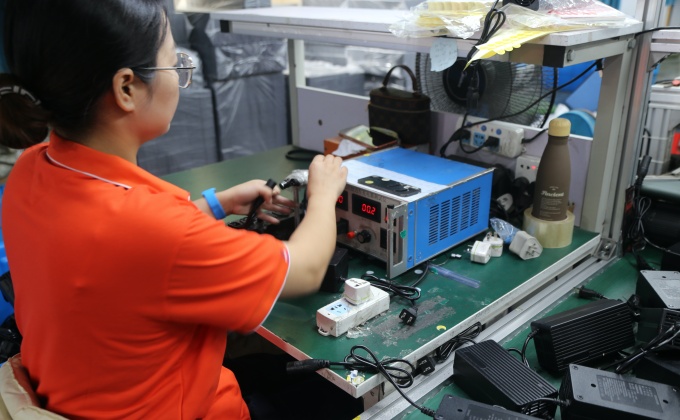
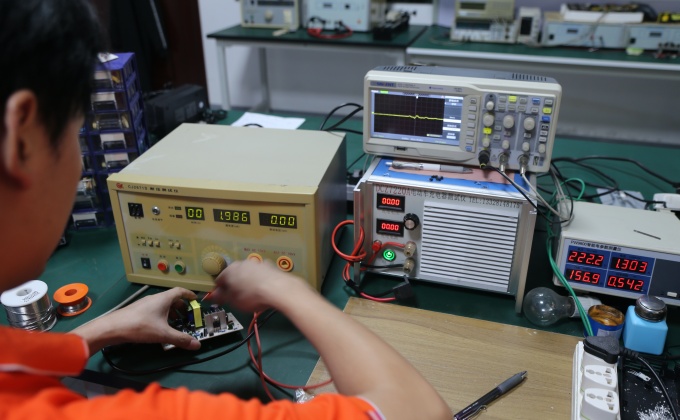
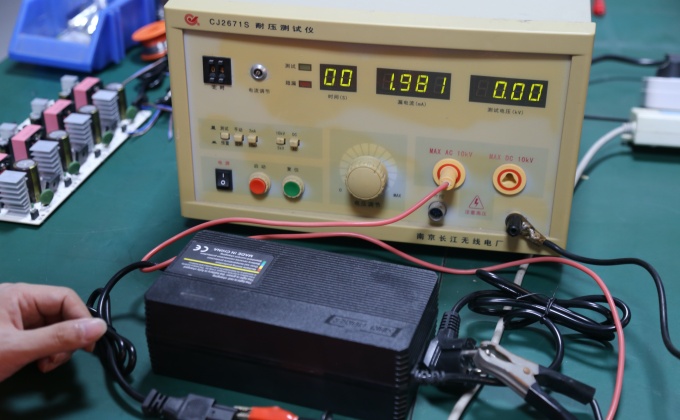
PCB production, housing injection moulding, assembly, electrical testing, insulation checks, and full-load burn-in support stable mass production.
How Correct 60V Lithium Charger Matching Reduces After-Sales Risk
A correctly matched 60V lithium battery charger supplies the full-charge voltage, current, and charging profile required by the actual battery pack. Confirming chemistry, cell series, capacity, BMS charge limit, connector, polarity, pin definition, cable rating, ambient temperature, and duty cycle before production helps buyers avoid incomplete charging, repeated BMS cutoff, excessive heat, damaged interfaces, and preventable field returns.
Configuration Options for Different Markets and Channels
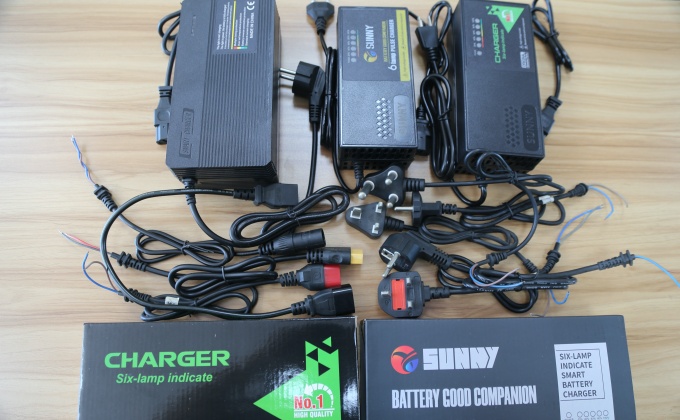
Different markets and sales channels may require fixed or wide AC input, a regional wall plug, a specific output connector, different cable lengths, local-language labels, private model codes, or branded packaging. Linjia supports OEM battery charger configuration so vehicle manufacturers, battery brands, importers, wholesalers, and distributors can keep approved electrical and branding specifications consistent across their product range.
Batch Stability Through Integrated Factory Control
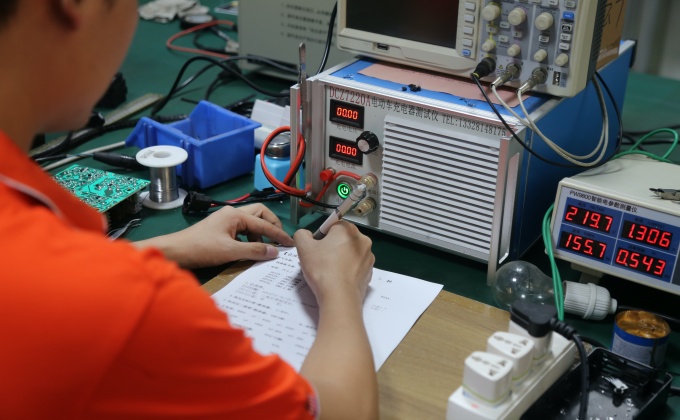
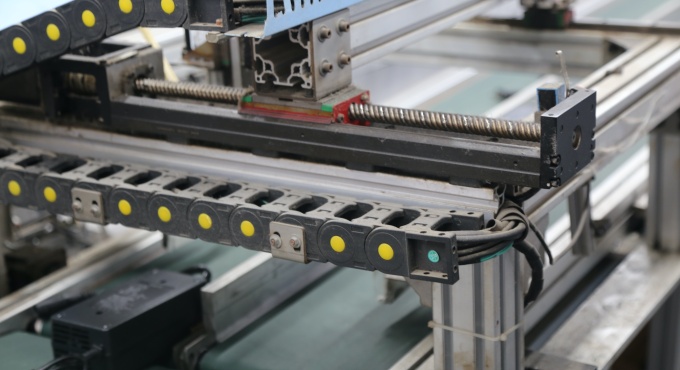
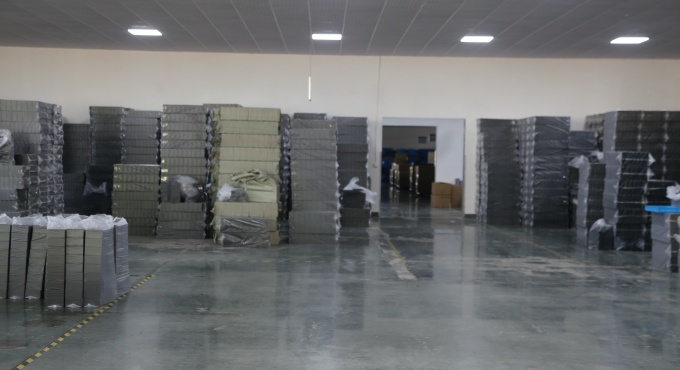
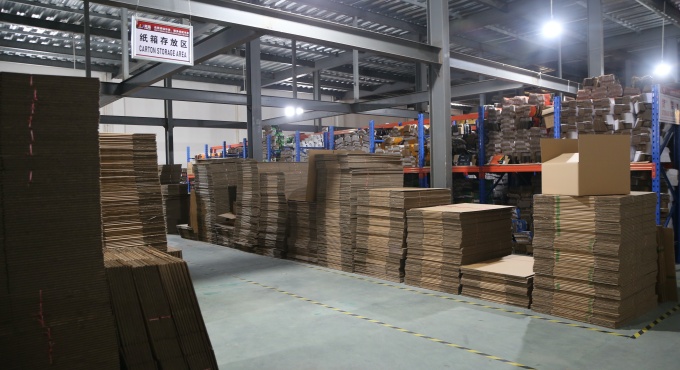
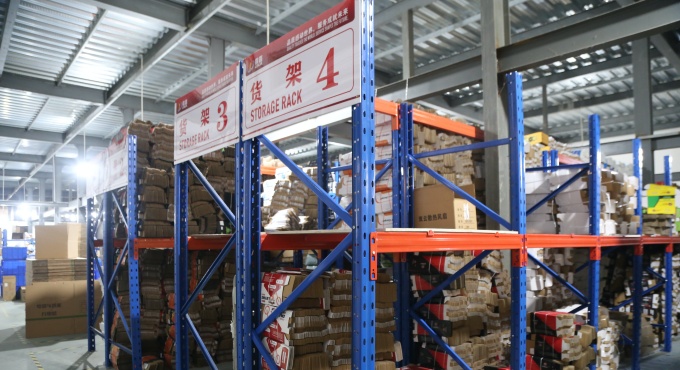
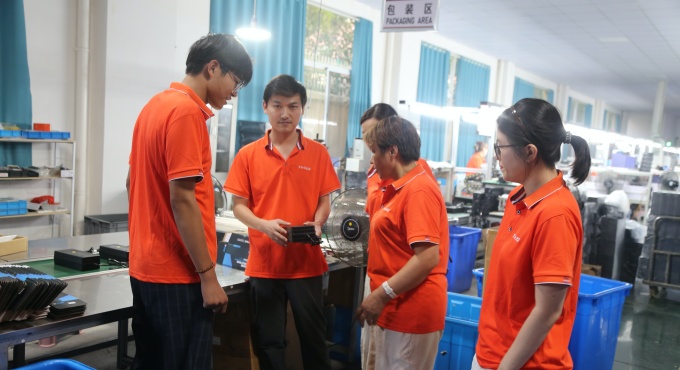
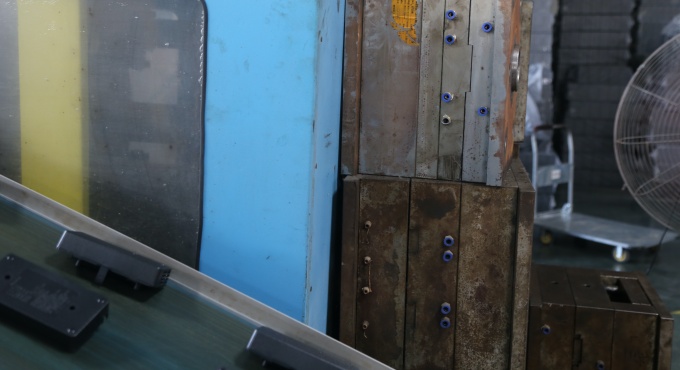
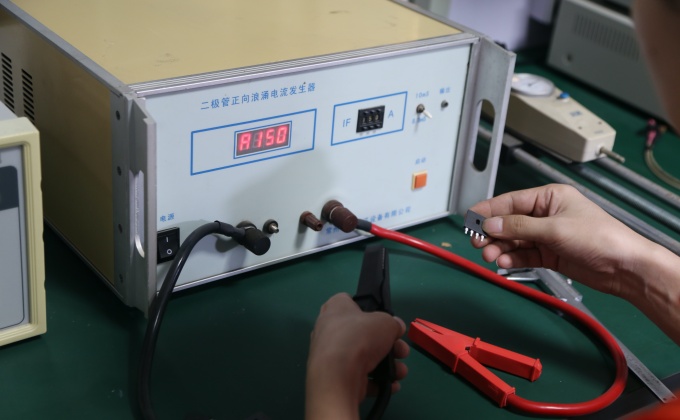
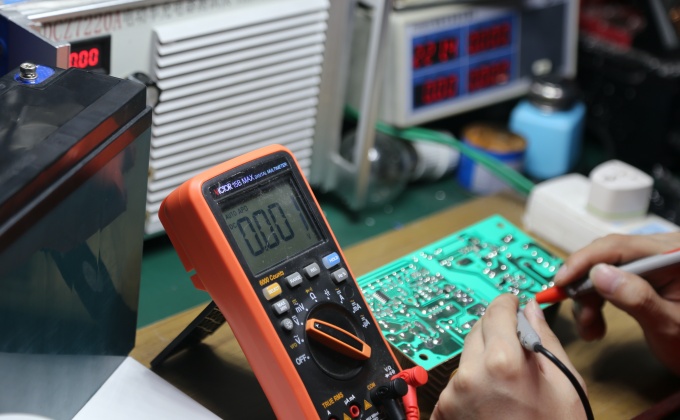
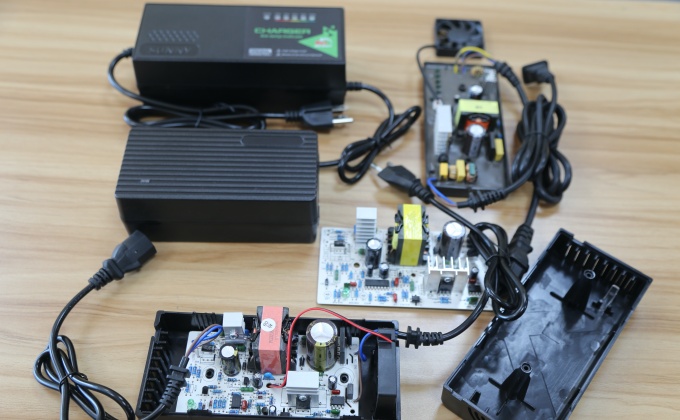
Linjia controls PCB production, in-house housing injection moulding, assembly, electrical testing, high-voltage insulation testing, and full-load burn-in within its manufacturing system. Approved specifications, connector samples, polarity records, labels, and packaging references are used to control production, helping reduce variation between the confirmed sample and mass-produced 60V lithium battery chargers.



Frequently Asked Questions About 60V Lithium Battery Chargers
What Are the Main Differences Between a 60V Lithium Battery Charger and a 60V Lead-Acid Battery Charger?
A 60V lithium battery charger and a 60V lead-acid battery charger use different charging profiles and must not be treated as interchangeable products. Lithium charging normally requires a precisely controlled full-charge voltage and current profile matched to the battery chemistry, cell series, and BMS. Lead-acid charging generally uses a different multi-stage process and voltage behavior.
The standard 60V lithium models in Linjia's catalog provide DC 71.4±0.2V output for compatible packs. A lead-acid charger marked 60V may operate across a different voltage range. Even when two chargers use the same connector, their charging logic may be incompatible. Buyers should confirm the battery label, cell chemistry, series count, full-charge voltage, capacity, BMS limit, and connector definition before ordering.
In Which Applications Are 60V Lithium Battery Chargers Commonly Used?
60V lithium battery chargers are commonly matched to electric scooters, electric motorcycles, E-rickshaws, other electric two- and three-wheelers, battery-powered equipment, and selected small energy storage systems. The product can only be used where the battery pack accepts the charger's full-charge voltage and current.
For vehicle manufacturers, battery brands, importers, and distributors, the application name is not enough for selection. Two products both described as “60V” may use different lithium chemistries, cell counts, BMS settings, connectors, or charging currents. Providing the battery specification sheet and connector details allows the charger supplier to check compatibility before samples or mass production.
Does the 60V Lithium Battery Charger Support Customization According to Equipment or Brand Requirements?
Yes. Linjia supports OEM and ODM customization based on the battery and target market. Project options can include charging voltage and current, charging profile, fixed or wide AC input, regional plug, output connector, polarity, pin definition, cable length and rating, housing, label, logo, private model code, and branded packaging.
For deeper ODM projects, Linjia can also support PCB design, structural development, product appearance development, mould development, and in-house housing injection moulding. The final scope depends on the technical requirements, order volume, validation plan, and any applicable certification or testing needs.
What Are the Common and Recommended Current Ratings for 60V Lithium Battery Chargers?
The catalog models on this page include 3A for 14-28Ah, 4A for 20-35Ah, 5A for 24-45Ah, 8A for 40-70Ah, 10A for 50-80Ah, 15A for 70-120Ah, and 25A for 120-200Ah battery packs. The 8A model is listed with a catalog output current of DC 7.8±0.2A; the other model classes follow their stated nominal current with the catalog tolerance shown in the approved specification.
These ranges are practical selection references, not universal rules for every battery. The final current should be checked against the battery manufacturer's maximum and recommended charge rate, the BMS charging limit, desired charging time, connector and cable capacity, ambient temperature, enclosure cooling, and expected duty cycle.
What Are the Common Structures of a 60V Lithium Battery Charger?
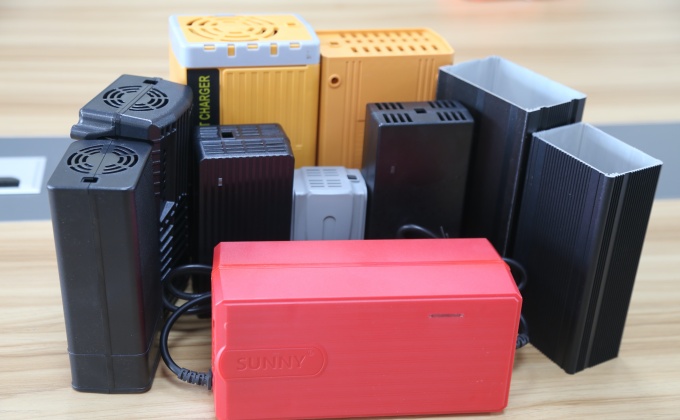
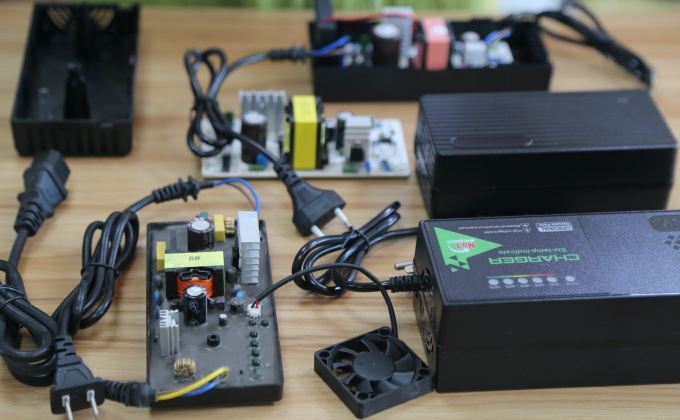
Common product structures include compact enclosed chargers for lower-current applications and larger housings for higher-current models. Depending on project requirements, Linjia can also evaluate naturally cooled, fan-cooled, potted, open-frame, SKD, or CKD solutions for local assembly and different operating environments.
The correct structure depends on output power, heat dissipation, dust or moisture exposure, installation position, transportation conditions, maintenance requirements, and target cost. A sealed-looking enclosure should not automatically be described as waterproof; any required ingress-protection level must be specified, designed, and verified for the particular project.
What Lithium Battery Systems Can a 60V Charger Be Matched To?
The standard models on this page are configured for DC 71.4±0.2V output and therefore require a lithium battery pack designed to accept that full-charge voltage. This voltage is commonly associated with a 17-series lithium-ion system charged to 4.2V per cell, but the actual battery specification and BMS limit must still be checked.
A nominal 60V LiFePO4 pack may use a different cell count and full-charge voltage, so it should not automatically be connected to the same charger. Linjia can assess a different charging profile as an ODM project after receiving the battery chemistry, series count, nominal voltage, full-charge voltage, capacity, recommended current, BMS requirements, and connector information.
What Cooling and Housing Systems Are Available for 60V Lithium Battery Chargers?
Cooling and housing selection varies with current, output power, ambient temperature, dust exposure, installation space, and continuous operating time. Compact lower-current models may use natural heat dissipation, while higher-current chargers may require a larger heat-dissipation structure or fan-assisted cooling. Potted structures can also be evaluated where additional environmental protection is needed.
The housing material, vent arrangement, component configuration, cable outlet, and thermal margin should be confirmed as one system. Buyers working in hot, dusty, or voltage-unstable markets should provide the expected temperature, duty cycle, indoor or outdoor placement, and ventilation conditions before the sample is approved.
What Plugs, Connectors, and Cable Accessories Can Be Supplied?
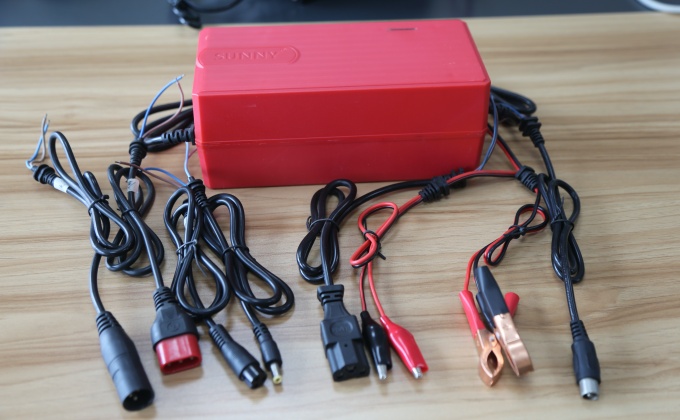
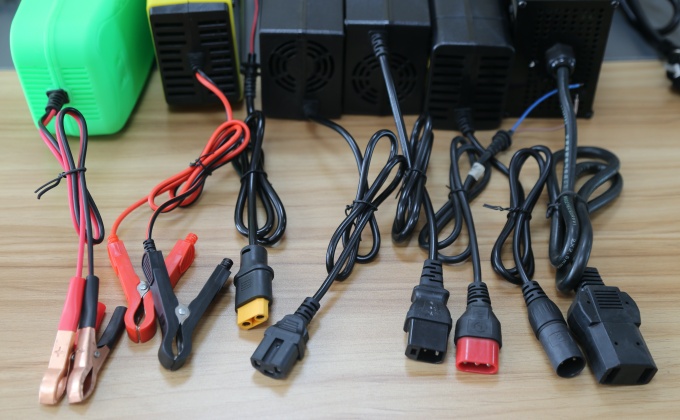
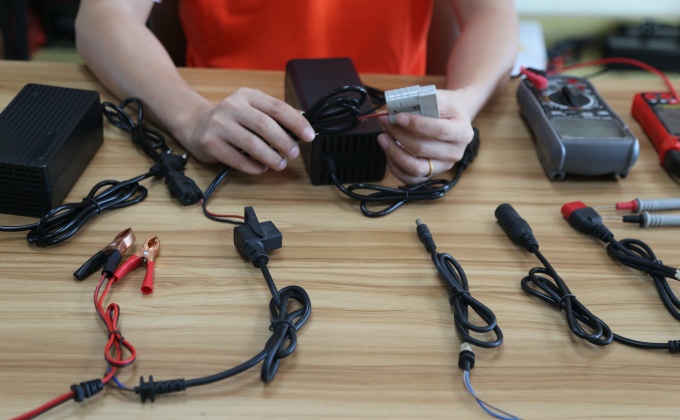
Linjia can configure regional AC plugs, output connectors, cable lengths, and cable ratings according to the destination market and equipment interface. Depending on the project, output options may include barrel-type, multi-pin, Anderson-style, clip, or other customer-confirmed connections. Availability and electrical suitability are checked before quotation and sampling.
The connector shell alone does not confirm compatibility. The positive and negative contacts, pin functions, contact-current capacity, keying, cable gauge, and mating connector must all be verified. A drawing, clear connector photos, or a physical sample is recommended for OEM production.
What Branding and Appearance Customization Is Supported?
OEM branding options can include the customer's logo, product label, local-language safety information, private model code, serial or batch information, instruction content, color box, carton marks, and branded packaging. Cable length, connector style, and selected housing details can also be configured within the approved technical scope.
For projects requiring a distinct appearance, Linjia can evaluate structural development and a private-mould housing. Tooling cost, development time, sample validation, order volume, surface requirements, and any certification impact should be confirmed before the project begins.
What Is the Difference Between Charging a 60V Lithium-Ion Battery and a 60V LiFePO4 Battery?
Lithium-ion and LiFePO4 cells have different nominal and maximum charging voltages. A charger designed for one chemistry or cell series may overcharge the other pack or stop before it is fully charged. The BMS provides pack protection, but it does not make an incorrectly matched charger safe or suitable.
For example, the catalog's DC 71.4±0.2V configuration corresponds to 17 cells charged to 4.2V each. A 60V-class LiFePO4 pack commonly uses another series count and charging endpoint. Buyers must confirm the battery manufacturer's specified full-charge voltage and current instead of selecting only by the “60V” name.
Does a 60V Lithium Battery Charger Include Electrical Protection Functions?
Yes, but the exact protection set varies by model and approved configuration. The catalog lists overvoltage, overcurrent, short-circuit, and timing protection for the 3A, 4A, 5A, and 8A model group. The 10A, 15A, and 25A model group lists soft start, reverse-connection protection, multiple timing protection, overtemperature protection, and short-circuit protection.
Required functions should be written into the confirmed specification rather than assumed from a general product name. If a project needs additional input protection, temperature control, a special shutdown condition, or communication with another system, Linjia should evaluate it during ODM development.
How Is Batch Safety and Quality Controlled Before Shipment?
Linjia uses standardized production procedures under its ISO 9001 quality management system. The control process includes incoming-material inspection, PCB and semi-finished testing, final electrical performance testing, high-voltage insulation testing, and full-load burn-in. Connector type, polarity, pin definition, labels, and packaging references can also be checked against approved order records.
For customized orders, the confirmed sample and signed specification should define the electrical output, protection requirements, input version, plug, connector, cable, housing, label, and packaging. These references help control variation between sampling and mass production. Certification or test-document coverage should be confirmed by model and destination market.
How Well Can a 60V Lithium Battery Charger Adapt to Different Input Power Conditions?
The catalog supports AC110V, AC220V, or AC110-220V input at 50-60Hz. A fixed-input model can suit a clearly defined market, while a wide-input version can support sourcing programs that serve more than one region. The correct wall plug must also be selected for the destination country.
For markets with frequent undervoltage, overvoltage, surges, high ambient temperature, or long operating periods, buyers should provide the expected conditions during development. Linjia can evaluate the input range, protection functions, component configuration, thermal design, and cable requirements for the project. Do not assume that a standard model covers extreme grid conditions without confirmation.
Can Connector Polarity and Pin Definitions Be Customized?
Yes. Output connector type, polarity, pin position, and cable definition can be configured after technical confirmation. This is especially important for multi-pin interfaces, where identical connector housings may use different positive, negative, signal, temperature, or enable-pin assignments.
Before production, buyers should provide a wiring diagram, connector drawing, clear photos showing the contact positions, or a physical mating sample. Linjia can record the approved definition and use it for sample verification and batch inspection. Connector polarity should never be guessed from appearance alone.
What Is the Expected Service Life of a 60V Lithium Battery Charger?
There is no single service-life figure that applies to every charger or market. Actual life depends on battery matching, charging frequency, load level, ambient temperature, ventilation, dust and moisture exposure, input-power quality, connector condition, component configuration, and user handling.
Selecting a charger with adequate thermal and electrical margin, keeping ventilation paths clear, using correctly rated cables and connectors, and avoiding repeated operation outside the approved conditions can reduce premature failures. Buyers with continuous-use or high-temperature applications should disclose the duty cycle during engineering evaluation rather than relying on a generic lifespan claim.
Is a 60V Lithium Battery Charger Prone to Overheating, Cable Damage, or Loose Connectors During Long-Term Use?
These problems can occur when the charger current is too high for the battery or BMS, when cables or connector contacts are undersized, when ventilation is blocked, or when the product is used in excessive heat, dust, moisture, or unstable power conditions. Repeated bending and poor mating can also loosen cables and increase contact resistance.
Correct current selection, suitable cable gauge, adequate connector contact capacity, controlled polarity, sufficient thermal design, and full-load validation help reduce these risks. During use, damaged plugs, discolored contacts, unusual odor, abnormal noise, or excessive temperature should be treated as stop-use conditions and checked by qualified personnel.
How Should a 60V Lithium Battery Charger Be Used and Maintained?
Use the charger only with the approved battery type, full-charge voltage, BMS, connector, and input supply. Follow the model-specific operating instructions, place the charger in a dry and ventilated location, keep air inlets and outlets unobstructed, and avoid covering it during charging. Do not assume that a potted or enclosed model has a particular waterproof rating unless that rating has been confirmed.
Inspect the plug, cable, connector, and housing regularly for damage, looseness, discoloration, or overheating. Disconnect the product from power before cleaning and use a dry, soft cloth; do not spray liquids into the housing or open the charger without authorization. If output behavior changes or the BMS repeatedly cuts off charging, stop use and recheck the battery-charger match.
Get an Instant Quote Now
We're Here to Answer All Your Questions
What Is Your Typical Production Lead Time?
Lead time depends on model, order quantity, component preparation, and customization scope. Standard models generally require less preparation, while new charging profiles, connectors, housings, moulds, certification work, or branded packaging may add development and validation time. The confirmed schedule is provided with the project quotation or order.
Do You Provide Plugs, Connectors, Cables, and Packaging with the Chargers?
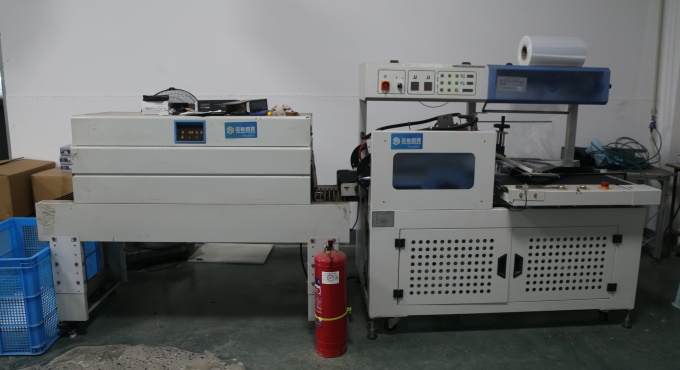
Yes. Linjia can supply regional AC plugs, output connectors, specified cable lengths and ratings, labels, instructions, color boxes, and export cartons according to the approved order configuration.
Can You Produce Chargers for Our Local Input Power and Market Requirements?
Yes. AC110V, AC220V, or AC110-220V input at 50-60Hz can be selected with the required regional plug. Environmental conditions and applicable certification or testing documentation are evaluated according to the model and destination market.
Do You Support OEM, ODM, or Private-Label Orders?
Yes. We support logos, labels, private model codes, packaging, plugs, connectors, cables, charging parameters, and selected housing configurations. New PCB solutions, structures, and private-mould housings can also be evaluated for ODM projects.
What Are Your Payment Terms?
Payment method, deposit ratio, balance timing, currency, and bank details are confirmed in the formal quotation or sales contract for each order. Please contact Linjia for the terms applicable to your model, quantity, and destination.